Christ: The Eternal Sanctuary & Meeting Place of Both God and Man
Download Edited and Structured Transcript of the Teaching
Enoch B Mnisi, DD
The Tangible Path to an Intangible God
Authentic communion with God is not a matter of private interpretation, subjective feeling, or individual preference. It is accessed through a singular, predetermined, and profoundly incarnational reality — a tangible path laid down by Jesus Christ and meticulously preserved through apostolic succession. In an age marked by the bewildering fragmentation of Christian belief and practice, it is imperative to recover the knowledge of this one true way. The assumption that we may approach God on our own terms, inventing our own forms of worship and doctrine, is a dangerous precedent that makes us laws unto ourselves and severs us from the life-giving stream of sacred tradition. This essay will explore the crisis of disunity that defines modern Christianity, articulate the foundational theological principle of God's use of material reality to convey spiritual truth, and trace the historical and doctrinal lineage of the one true faith — established by Christ, transmitted by the apostles, and preserved by the Church for two millennia.
Refutation of Subjective Worship
The contemporary Christian landscape is a testament to disunity. The proliferation of Protestant, Evangelical, and Charismatic denominations — each with its own distinct mode of worship and theological emphasis — presents a critical problem. This diversity, so often celebrated as richness, is in truth a sign of infiltration and deception. When one observes Church A, Church B, and Church C, all claiming Jesus as Lord yet presenting and worshipping Him in fundamentally different ways, a crucial question arises: which one is the true Church? They cannot all be correct, for the faith is one of union, not of diversity.
This fragmentation stems from the dangerous precedent of each group becoming a law unto itself — establishing its own liturgical protocols and theological frameworks, and then demanding that God accept them on those terms. This approach is a form of strange fire, born of the modern assumption that we can do or believe whatever we want. It is a profound error. The path to God is not a matter of human choice or invention; it must be predetermined by God Himself. Just as a patented invention has a specific design and function, the way to relate with God has been prescribed and patented by the one who saves us. We, as a fallen race, do not qualify to set the terms of communion; we can only become adherents of the order God has established.
This crisis of subjective worship obscures the singular, objective path God has provided. To resolve this confusion, one must first grasp the foundational principle that governs all of God's interactions with humanity: the use of the material to transmit the spiritual.
The Incarnational Principle: God's Ordained Use of Matter
Throughout salvation history, God has consistently employed a distinct methodology for making the divine accessible to fallen humanity — transmitting spiritual reality through physical, tangible means. This incarnational principle is not an afterthought but is integral to the administration of the Godhead, demonstrating that the Creator of matter chooses to use His own creation as a vehicle for grace.
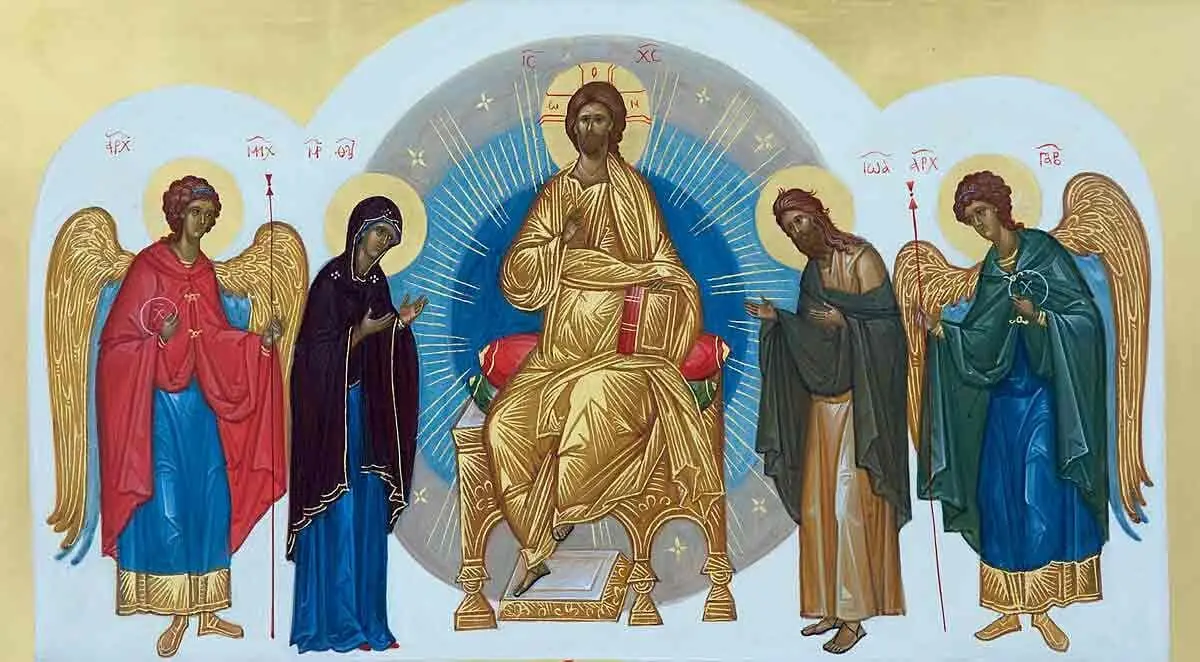
This pattern is evident in a series of clear biblical precedents. God, who breathed life directly into Adam, first chose to use the Tree of Life to impart immortality, establishing matter itself as a mediation for the impartation of spiritual reality. During the Passover, the physical blood of the lamb applied to the doorposts provided insulation from the angel of death, showing how a material element could convey the spiritual reality of deathlessness. Later, God commanded the construction of the Tabernacle — a physical, portable sanctuary designed to contain and localise His spiritual presence among men. He said to Moses, "There above the mercy seat, I will meet with you and commune with you" (Exodus 25:22). The Tabernacle became the designated meeting place for God and man. In the New Testament, Christ is that Tabernacle — the sanctuary and eternal meeting place of both God and humanity. God by Christ reaches man, and man by Christ reaches God. The Theos and Adam are eternally home in Christ. He is the designated location of communion and union between the divine and the human; He is the one through whom God is made accessible to man.
Jesus Christ institutionalised this same principle in the Church through four foundational incarnational sacraments — not mere symbols, but the physical reference points through which believers access the spiritual realities they signify. Baptism is the act of being marked into salvation through water. The Church itself is a physical, embodied organism that localises Christ's presence on earth. The Written Word is the material component of divine wisdom which, when genuinely engaged, serves as a mirror of transformation. And the Eucharist is that central mystery wherein believers partake of Christ's body and blood for life and immortality — fulfilling, in the most complete sense, what the Tree of Life once signified to Adam. These physical sacraments are the ordained channels through which we make contact with divine reality, a principle that finds its ultimate fulfilment in the person of Jesus Christ Himself.
Christ the Ark: Divine-Human Communion
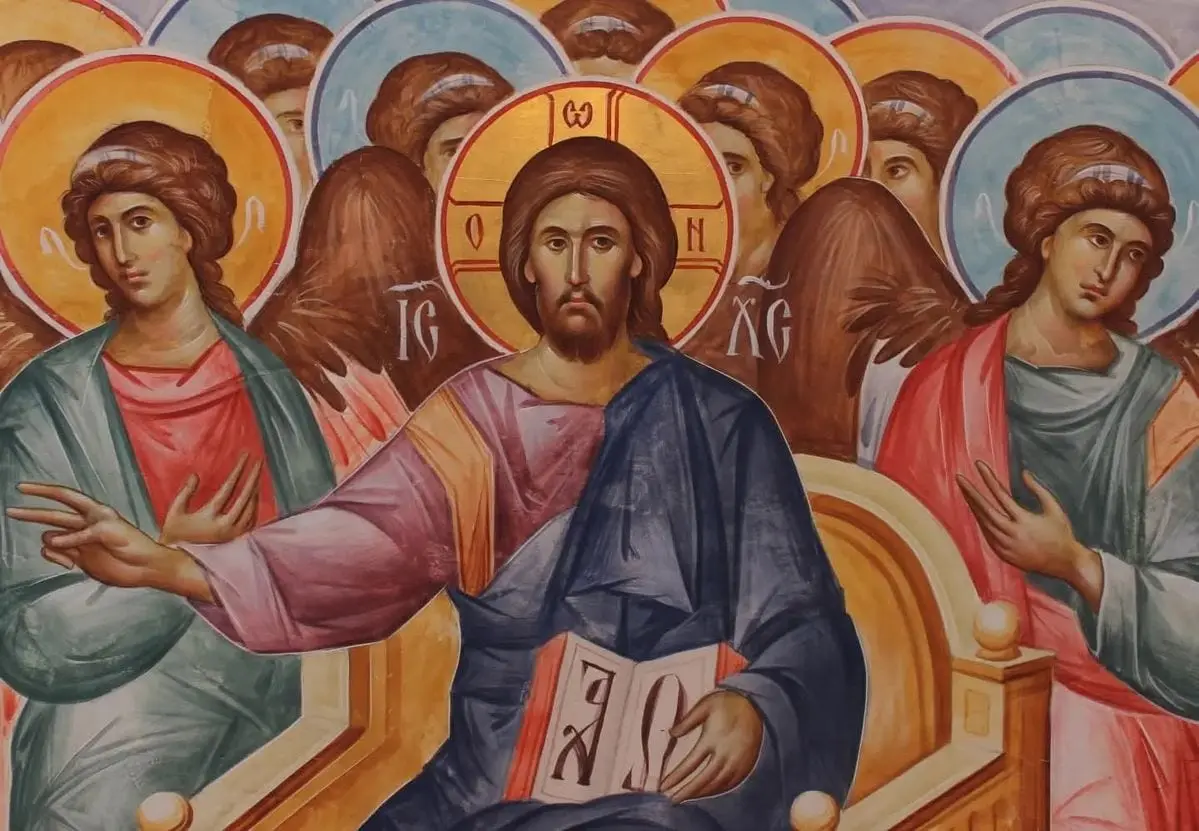
Jesus Christ is the final, complete, and perfect expression of the incarnational principle. All previous types and shadows — the Tree of Life, the Passover lamb, the Tabernacle — find their ultimate meaning and fulfilment in Him. To grasp the Christian faith, one must understand Christ as the true Tabernacle, the very locus of divine-human communion.
The typology between the Ark of the Covenant, as detailed in Exodus 25, and the person of Christ illuminates this truth with extraordinary precision. The Ark contained the Testimony — the written Word of God — while Christ is the living Word, the LogosLogosThe eternal Word of God, through whom all things were made, who became flesh and dwelt among us (John 1:1–14).. The Ark was topped by the Mercy Seat, the dwelling place of God's glory; Christ is Himself the dwelling place of that glory and the means of mercy for a fallen world. The Ark was the designated meeting place for God and man within Israel's wilderness journey; Christ is the ultimate meeting place where God and man are reconciled in eternity. As the Ark moved with Israel through the wilderness, so Christ is the perpetual means by which God touches man and man touches God.
The theological implications of this typology are immense. Christ is the essential vehicle both for God and for man. Within God's chosen plan of salvation for a fallen, physical creation, the incarnation became the necessary and ordained vehicle for communion. God could not save humanity as a disembodied spirit; because man fell in a physical state, salvation had to come through a physical reality. God, therefore, had to assume what we might call the flesh factor — taking on the very material properties of the creation He intended to save.
By becoming the Word made flesh, Christ fulfils and finalises all previous incarnational mysteries. He is the true Tree of Life, the ultimate sacrificial Lamb, and the perfect Tabernacle. In His person, the old sacrifices and rituals are rendered obsolete, for He is the reality to which they all pointed. Christ is now the sole, tangible touchpoint between the divine and the human, and having established Himself as this meeting place, He then established a physical body on earth to continue His presence and preserve His truth: the Church.
The Apostolic Church: Preserver of the One True Faith
The Church is not a nebulous spiritual concept or a loose collection of like-minded individuals. It is a divinely instituted, physical organism with a specific structure and a divine mandate — to be, in the words of Scripture, "the pillar and the ground of all truth." Christ established this body to be the vessel through which His life, doctrine, and authority would be transmitted through the ages. The sole criterion for a church's legitimacy is its direct, unbroken connection to Christ through Apostolic Succession.
Apostolic Succession is the order of succession that begins with Christ, who commissioned the apostles, who in turn ordained their successors. This is the divine chain of authority. As Christ Himself declared, "he that receives you receives me." A church that cannot trace its lineage directly back to the apostles is not part of the one Church founded by Jesus Christ — it is a breakaway, a law unto itself.
A historical and doctrinal audit reveals that only two churches today possess this unbroken apostolic succession: the Roman Catholic Church and the Eastern Orthodox Church. However, following the Great Schism, the Roman See broke away from the original apostolic consensus, becoming the originator of a separate Western ecclesial tradition. It is therefore the Eastern Orthodox Church that has stood for two thousand years as the preserver of the faith that was once laid down unto the saints. To understand the current state of Christian disunity, one must examine the key historical moments at which this original unity was fractured.
The Great Fractures: Tracing the Historical Roots of Heresy
Heresy is not merely a difference of opinion; it is a deliberate choice to oppose established truth. Understanding the great historical schisms is crucial, for they represent profound and consequential departures from the one faith established by Christ.
The first great fracture was the Schism of 1054, which permanently divided the Church. The two primary points of contention were papal authority and the Filioque clause. The Roman See's unilateral addition of the phrase "and from the Son" (Filioque) to the Nicene Creed — asserting that the Holy Spirit proceeds from both the Father and the Son — destabilised the received revelation of the Trinity. Theologically, this implied that the Father and the Son share something with each other that the Holy Spirit does not share with them, thereby undermining the co-equality of the three divine persons. Unwilling to compromise this essential doctrine, the other four ancient patriarchal sees held to the original Creed, and it was the Roman See that chose to break away from the conciliar whole.
The second cataclysmic fracture came with the Protestant Reformation of the sixteenth century. Its principal figure, Martin Luther, became in many ways a victim of his own cause. Driven by his doctrine of sola fide — justification by faith alone — he sought to remove the Book of James from the New Testament, because its declaration that "you are justified by faith and works" directly contradicted his theological framework. Lacking the resolve for so radical an excision, he instead moved James to the end of the Bible, altering the established canonical order to suit his doctrinal preference. The Protestant movement went further still, removing several books from the Old Testament — the Deuterocanonicals — siding with post-Christian Jewish councils who had expunged these texts because they were, in the assessment of the early Church, embarrassed by the testimony of Jesus Christ contained within them.
This tradition of removing and subtracting has defined Western Christianity ever since, producing the bundle of confusion visible in the church landscape today. These historical departures from established truth have left countless believers disconnected from the authentic, participatory life of faith. The answer is not to invent newer interpretations but to return to the original way of participation.
Theosis Through Participation: Rituals of Reality
Christian life is not a static, mental assent to a set of beliefs. It is a participatory, relational, and communal reality with the divine Trinity through the incarnate Logos. Salvation is a continual process of transformation — what the Church Fathers called theosisTheōsisNot that we become God by nature, but that by grace we are drawn into His life: “partakers of the divine nature” (2 Peter 1:4)., or deification — achieved through active, ritual engagement with the mysteries of Christ. Significantly, the believer's primary focus should not be on fighting sin directly. The entire soteriological process is reframed by a single governing principle: the weakening of sin is communion with Christ. The more one participates in the life of Christ through the prescribed means, the less power sin holds. Without participation, there can be no transformation.
The Eucharist stands at the centre of this participatory life as the central life force of the Church. By partaking of Christ's body and blood, believers are infused with immortality and incorruptibility. It is also a cosmic revelational act; in partaking, we are revealing and showing forth His death — making it not only a memorial to ourselves but a declaration to all of creation, a re-presentation of the death and sacrifice of Christ in the sight of the whole created order.
The Written Word functions as the material component of divine wisdom. Meditating on Scripture is not merely an intellectual exercise; it is an act of looking into a mirror of transformation, allowing the Spirit of God to progressively conform the believer to the image of Christ. The Church Assembly, for its part, is the communal gathering of the faithful where believers are washed by the water of the Word — the place where Christ's presence is localised and experienced collectively, not merely individually. Baptism remains the foundational sacramental act, marking a person into salvation and grafting them into the Body of Christ. And Ordered Prayer, embodied most fully in the Lord's Prayer, provides a structured, Christ-ordained path of communion that is superior to spontaneous expression because it aligns the one praying with the perfect will of God as taught from the lips of the incarnate Word Himself.
This ancient path of participation is the only sure way to experience the fullness of the life that Christ came to give. Rather than striving to conquer sin by direct confrontation, one must enter into communion — and find that communion itself does the conquering.
Reclaiming the Ancient Path to Life
The path to God is not a maze of subjective opinions but a single, tangible, and incarnational highway established by Christ. True communion with the divine demands our active participation in the apostolic faith — not a passive adherence to fragmented, modern interpretations that have severed themselves from their historical and doctrinal roots. This ancient way is built upon unshakable theological pillars: the incarnational principle, which affirms God's use of matter to convey grace; the reality of Christ as the true Sanctuary and meeting place of God and man; and the Apostolic Church as the divinely appointed vessel and preserver of this truth.
To embrace this reality requires profound humility. We must become repentant for our ignorance, having inherited traditions from those who, perhaps, did not themselves know the fullness of the faith. This is a call to move beyond a notional, merely mental Christianity — and to cultivate a deep yearning for the historical traditions that safeguard the faith that was once laid down unto the saints. It is a call to become active participants in the divine mystery, driven by a hunger for living within the incarnational truths and the mysteries of Christ, so that His life and incorruptibility might pulsate through our being for the glory of God the Father.