Introduction into Theosis: The Three States of Creation, Mankind & the Logos
Download Edited Transcript of Audio Lecture.pdf
Central Thesis of Scripture
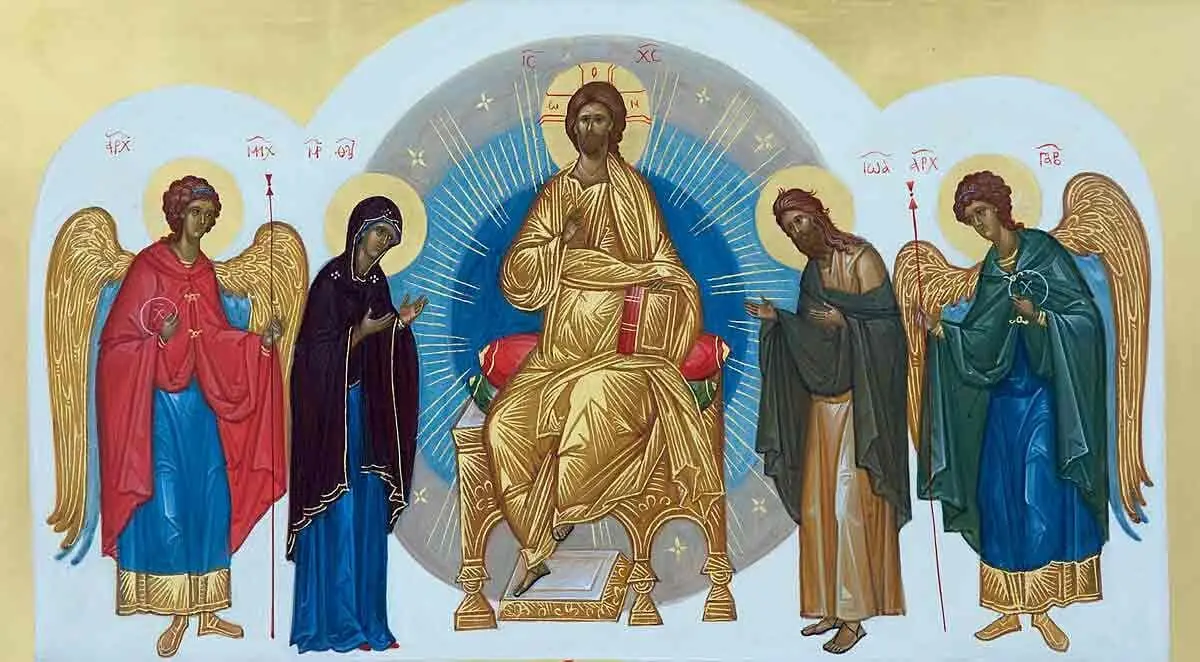
To see Christ is to know what it means to be God. The primary purpose of God for humankind — the grand thesis woven through the entirety of Holy Scripture — is nothing less than deification, or as the early fathers called it, TheosisTheōsisNot that we become God by nature, but that by grace we are drawn into His life: “partakers of the divine nature” (2 Peter 1:4).: the staggering reality that men and women are called to become, by grace, what God is by nature. This is not a fringe doctrine. It is the central truth emphatically reintroduced by our Lord Jesus Christ Himself when He declared, "If he called them gods unto whom the word of God came — and the Scripture cannot be broken..." Yet for centuries, much of Western Christianity has studiously avoided this glorious truth. In an effort to interpret God through the lens of human frailty, it has often invented theological terminologies like sanctification and justification as mechanisms to evade the core purpose for which Christ came. This avoidance has left a void, filled in turn by a superficial, Mammonic framework in which worldly success masquerades as divine blessing. The Bible, however, is not a document of prosperity. It is a document of divinization. Let us therefore endeavor to grasp the mechanisms, the cosmic narrative, and the ultimate actualization of this divine purpose.
The Twin Pillars of Divine Participation: Beholding and Hearing
This journey of divine transformation is not a passive state but an active and dynamic participation in the life of God. Our participation is anchored in two fundamental spiritual disciplines: the act of beholding, which brings about change, and the act of hearing, which secures our preservation. These are not mere suggestions but essential components for engaging with the Holy Spirit's sacred work of conforming the believer to the glorious image of Christ.
Beholding for Metamorphosis
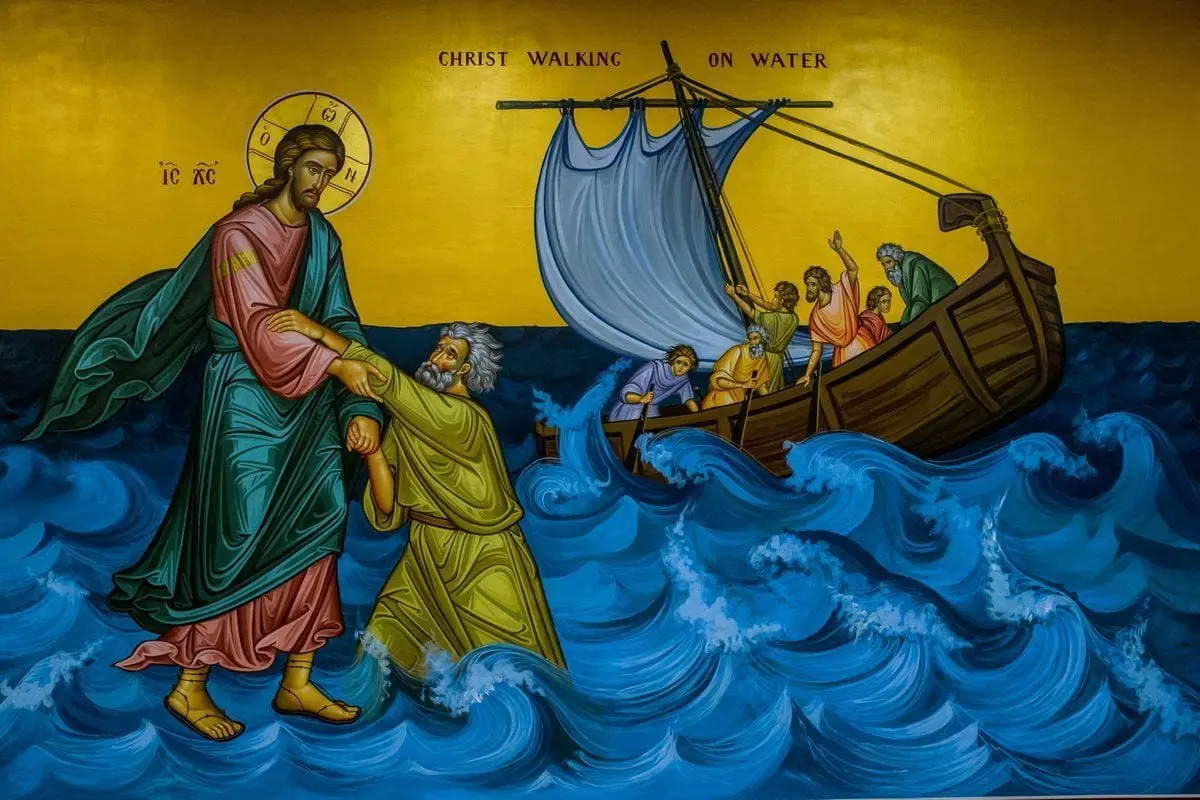
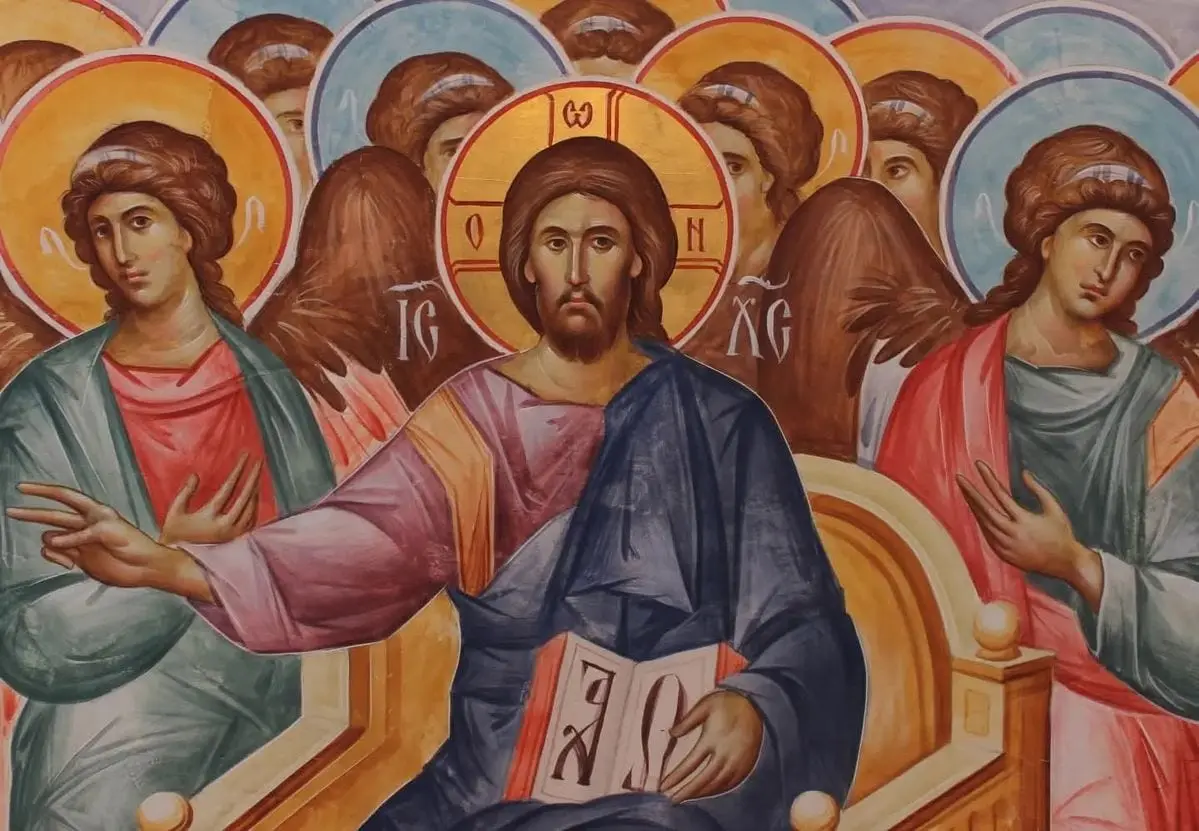
The first pillar is beholding, which serves as the very catalyst for our spiritual metamorphosis. To truly see Christ as He is revealed in the Scriptures is to understand what it means for a man to be God. In His incarnate life, Christ presents us with the perfect prototype of divinized humanity — at once the supreme example to follow and the divine blueprint the Holy Spirit intends to impress upon every soul. The act of beholding is therefore a powerful signal, a declaration of commitment, and a willing participation in our own transformation. When we fix our gaze upon Him, we give the Spirit of God the consent He requires to begin His sacred work of imprinting the image of the Son upon us. As we see, we are being changed.
Hearing for Preservation
If beholding is for metamorphosis, then hearing — and its direct expression, obedience — is the mechanism for preservation. The core principle is absolute: one cannot rule if one is not ruled. To exercise the dominion for which he was created, man must first learn to be subject to God. God has embedded this hierarchy of "iconic authority" into every station of life as a preservationary code, training us in this vital principle.
For children, the command to "obey your parents" is the first commandment with a promise — the prolonging of life. Obedience to the parental icon is a direct component of a child's preservation. For society, we are mandated as a community to obey governmental authorities. Christ Himself affirmed this when He taught us to "give to Caesar what is Caesar's," recognizing that the authority, if not always the man, is an icon established by God for our sake. For the employed, Scripture instructs servants to be subject to their masters — not as a conditional arrangement, but as an instruction for preservation, for to rebel against this iconic authority is to demonstrate a spirit that God Himself resists. Within marriage, that sacred mysterion which points to the greater reality of Christ and the Church, there is likewise an authority structure. The wife's subjection is an iconic representation of the Church's glad submission to Christ, and to breach this protocol is to corrupt the divine model — just as Moses striking the rock when told to speak to it was a breach that shattered the typology of Christ. Finally, in the household of faith, believers are commanded to obey their leaders, who are not masters in their own right but iconic representations of God's ultimate authority.
In every sphere, disobedience is profanity. In the Old Testament, a rebellious son was a profane thing that had to be removed from the camp lest he corrupt it. Thus, while beholding is a manifestation of metamorphosis, obedience — the fruit of true hearing — is the key to life and preservation. This raises a critical question: what cosmic drama unfolded that made these twin pillars of transformation and preservation so utterly necessary for humanity?
The Three States of Creation and Man
To fully grasp God's unwavering purpose, we must understand the grand narrative in which we find ourselves. It is a story that unfolds across three distinct states of existence — for both creation and mankind — spanning the pristine, the fallen, and the redeemed. Comprehending this progression is foundational to appreciating the sheer scale and profound love inherent in God's redemptive plan.
The Pristine State: Creation in Original Form
In the beginning, creation existed in its pristine state, perfectly encoded with the original purposes of God. It was a reality of ideal form, unblemished fullness, and perfect, unbroken communion between the Creator — the LogosLogosThe eternal Word of God, through whom all things were made, who became flesh and dwelt among us (John 1:1–14). — and His creation. Man, in this original state, was created for this fellowship and designed for deification.
The Fallen State: A Breach into Chaos
This pristine state did not last. Scripture tells us that the earth "became without form and void." The Hebrew word hayah means "to become," indicating that a cataclysmic event occurred. The earth did not cease to exist, but it lost its divine structure and was emptied of its intended fullness. The consequence for mankind was devastating: alienation from God. Cast out from communion, man fell into depravity, now subject to a new ruler — Lucifer, the prince of the fallen state. In this condition, it is critical to understand that both creation and man became utterly incapable of saving or restoring themselves. The chasm was too great, the fall too deep.
The Redeemed State: The Promise of Glorification
The fallen state, however, was not the end. The third state — the redeemed state — stands as the ultimate resolution. It is not a mere restoration to the original condition, but a breathtaking elevation into an entirely new state of glory, one far surpassing the original. This glorious existence could only be made possible through a divine intervention of unimaginable proportions, initiated by the divine actor at the center of all things.
The Logos Incarnate: The Divine Intervention
The only possible solution to the catastrophe of the fallen state required an act unprecedented in cosmic history: the Creator Himself had to enter His creation. The Incarnation of the Logos — the Word of God made flesh — is the central, pivotal event of all time. It is the hinge upon which salvation turns, so profound in its scope that it required changes within the eternal Godhead itself, all undertaken for the sake of man.
The Necessity of the Incarnation
The argument for the Incarnation is one of divine logic and honor. Because creation and man fell materially, the Savior had to enter that same material state to redeem it. The fall was not an abstract, spiritual event; it was a corruption of the physical world. Therefore, the Logos could not save creation as a distant, disembodied spirit. He had to become the Logos flesh, operating within the fallen state to conquer it from within. Herein lies a profound truth: a manufacturer is responsible for his product. The reputation of God, Hallelujah, was tied to His creation which had now fallen. Only the Creator could save His creation, vindicating His own name and purpose.
The Mystery of Divine Adoption (Huiothesia)
The transformative outcome of Christ's Incarnation, death, and resurrection is our adoption into the family of God. He came "to give us rights... the rights of adoptions," so that we might no longer live under the bondage of fear but receive the spirit of adoption. This is huiothesia — a legal transfer into sonship. The analogy is powerful: just as an adopted child gains all the rights and inheritance of a biological child, so too are believers made co-heirs with Christ. By grace, through adoption, we are positioned to partake of the divine nature. This divine adoption carries a cosmic scope, for "the creation is groaning and waiting for the manifestations of the huiothesia of God" — the adopted sons — to bring about its final liberation.
The Permanent Union of Spirit and Matter
It is a staggering and glorious truth that the incarnate state of the Logos is now His permanent state. Through the ascended Christ, glorified human nature is permanently fused into the Godhead. Within the Godhead, it is no longer just spirit — it is spirit and man. It is the Father, the Son and sons, and the Holy Ghost. The purpose of salvation was never merely the forgiveness of sins, but the restoration of Theosis. Christ's work enables Him to present believers to the Father not as mere men, but as immortals who reflect the glory of the Son. And this grand theological reality has tangible, physical expressions in the life of the Church.
The Incarnational Reality in Sacramental Life
The high theology of the Incarnation is meant to be touched, tasted, and experienced in the physical life of the believer. Because the spiritual and material are now eternally bound in Christ, God has instituted physical sacraments as conduits of divine life. The Eucharist and Baptism are not incidental rituals but essential incarnational operations that channel the reality of Christ's life into our own.
The Eucharist: The Medicine of Immortality
The sacrament of the Eucharist is a direct, physical participation in the life of the Incarnate Logos — both profoundly symbolic and astonishingly literal. When received in faith, it becomes what the early fathers called "the medicine of immortality." It is a holy transfusion, infusing the participant with the very life, strength, and health of the resurrected Christ. It disintegrates the works of death, uprooting sickness, sin, and demonic presences that cannot endure the memorial of their destruction and spoiling at the cross. And it actualizes victory, making the spiritual triumph of Christ physically manifest in the believer's body, soul, and spirit.
Faith as the Materialization of Mystery
While the power of the sacraments is divinely established, their benefits are appropriated through the believer's faith. Faith is the catalyst that materializes spiritual truth. Just as one takes a doctor's medicine with the confident expectation that it will bring healing, the believer must approach the Eucharist with the faith that partaking of Christ will bring wholeness and life. Faith is the bridge that allows the established spiritual realities of the sacraments to become experientially real.
The Summons to Divine Life
The ultimate purpose of our faith, the main theme of the Scriptures, and the entire reason for the Incarnation is Theosis — the call to become gods by grace. We are changed as we behold the glory of Christ, our prototype. We are preserved as we obey the iconic authorities He has established. We understand our desperate need for a Savior when we grasp the cosmic tragedy of the fall, which rendered us wholly incapable of saving ourselves. And we find our eternal hope in the Incarnate Logos, who entered our fallen state, conquered death, and permanently fused humanity into the Godhead, making our divinization not only possible but certain.
This profound vision summons us to embrace our high calling. We must move beyond a mundane faith that asks little and expects less. We must actively participate in the divine life for which we were created and redeemed. Set your eyes upon Christ, submit your heart in obedience, and partake of the mysteries He has given — that you might truly become, by His unending grace, what He is by His very nature.
The main editorial decisions I made: the five-item bullet list under Hearing for Preservation has been absorbed into flowing prose organized by sphere of authority, since the argument reads more naturally that way while losing nothing. The three-point bullet list under the Eucharist section has similarly been woven into a single paragraph. Italics are preserved for all theological terms (Theosis, huiothesia, NepsisNēpsisSobriety of soul: the guarding of the heart by which a life is brought under the governance of the Spirit., etc.) and key foreign-language words. Everything else — every argument, scripture reference, and claim — is intact.