The Mystery of the 4 Incarnational Sacraments: The Art of Beholding
Download Full Transcript of the Audio Teaching
The Call to Deification and the Incarnate Path
The ultimate destiny of the Christian believer—the profound telos toward which all faith and practice is oriented—is the gradual and glorious transformation known as theosisTheōsisNot that we become God by nature, but that by grace we are drawn into His life: “partakers of the divine nature” (2 Peter 1:4)., or deification. This is not a process of mere moral improvement, nor an abstract ascent of the soul. It is a substantive transfiguration into the very image and likeness of Jesus Christ.
The central thesis of this essay is that this transformation is not a disembodied spiritual endeavor, accessible through mysticism or intellectual assent alone. It is an unapologetically tangible journey, mediated through what can rightly be called God's "incarnational" realities: specific, physical, material points of contact with the divine LogosLogosThe eternal Word of God, through whom all things were made, who became flesh and dwelt among us (John 1:1–14)., animated and made efficacious by the person and work of the Holy Spirit. These are the divinely ordained conduits through which the uncreated life of God flows into the created being of humanity, effecting a change that is at once spiritual and profoundly real.
This ancient truth, woven through the fabric of Scripture and apostolic tradition, often finds its most potent rediscovery not in serene contemplation but in the crucible of personal crisis. We begin, therefore, with a modern prelude—a personal testimony of ministry fatigue and spiritual disinterest that became the catalyst for a prayerful quest for a deeper revelation of God. This journey from spiritual disconnection to renewed encounter with the incarnate Christ serves as a living illustration of the principles this essay sets out to expound.
From that experiential starting point, we will chart a precise theological course. First, we will establish the indispensable foundation of our communion with the Godhead: the doctrine of the Logos, the eternal Word of God, whose written expression in the Holy Scriptures serves as the primary material for our divine encounter. We will then examine the historical precedent for God's use of material reality, tracing a consistent divine modus operandi from the Garden of Eden through the Old Covenant sanctuaries to its ultimate fulfillment in the Incarnation of Christ. From there, we will identify and analyze the specific vehicles of metamorphosis Christ has instituted for His Church—Baptism, the Eucharist, the Written Word, and the Church itself. Finally, through a close reading of 2 Corinthians chapter 3, we will uncover the precise spiritual mechanics of this transformation, revealing how the Holy Spirit uses our engagement with these incarnational realities to transfigure us, step by step, "from glory to glory," into the glorious image of our Lord.
A Personal Prelude: The Quest for a Deeper Revelation
It is of immense importance to ground profound theological discourse in the soil of lived experience, for divine truth is not a set of abstract propositions but a living reality that intersects with and transforms human existence. Personal crisis, far from being an anomaly in the life of faith, often serves as the very catalyst for deeper spiritual understanding, stripping away superficialities and compelling the soul toward a more substantive encounter with God. The narrative that follows is one such instance: a period of vocational malaise that became the unexpected doorway into a renewed apprehension of God's incarnational method of self-revelation and human transformation.
The journey began with a pervasive sense of disinterest in the outward expressions and activities of ministry. This was not a sudden failure of faith or a simple case of burnout, but a deep, subconscious recoil from the external forms of contemporary Christianity that seemed disconnected from the profound realities they purported to represent. This internal dissonance crystallized into a focused and persistent prayer: a plea for a "greater revelation of God," a more authentic manifestation of the Lord Himself. The prayer was not for more activity or greater success, but for a deeper perception of the divine reality that underpins all true ministry.
The answer came not through vision or ecstatic experience, but through a seemingly unconventional and uncomfortable leading of the Holy Spirit: a strong, unshakeable impression to transition the ministry's entire fellowship to an online format. This directive, received months before it was enacted, ran counter to conventional wisdom and was met with perplexity. The subsequent period of obedience was marked by isolation and frustration, as relentless efforts to secure a physical venue were met with inexplicable obstacles. Yet this season of compelled discomfort was, in retrospect, the direct and precise answer to the prayer for deeper revelation. It taught a foundational lesson: if you cannot obey God in the uncomfortable, how can you follow Him into the unknown? It was in this state of enforced stillness, stripped of external distraction, that the Spirit began to lay a new foundation.
The tangible fruits of that season were threefold. There was a marked and sustained increase in spiritual light and revelation, as the depths of the Word opened in ways previously unexperienced. This new light kindled a voracious appetite for the Holy Scriptures—the Bible, though read hundreds of times over two decades, became a source of fresh and unending discovery, yielding more intense engagement in two years than in the prior fifteen combined. And it became clear that God's method was one of prioritizing depth over breadth, ensuring that the spiritual foundations were strong and deep before any new structure could be erected.
This personal journey, born of crisis and consummated in obedience, is a living testament to the essay's central theme. It illustrates powerfully that a sincere and desperate pursuit of God—a prayer for a true revelation of His person—will inevitably lead one away from abstract or superficial spiritualities and directly toward the absolute centrality of the Logos. God answers our deepest longings by drawing us into a more profound engagement with the incarnational ways He has chosen to reveal Himself, chief among them the written Word, which serves as the physical portal to the living reality of Christ.
The Logos: The Indispensable Foundation of Divine Communion
To comprehend the entire framework of salvation, sanctification, and divine interaction, one must first grasp the strategic and non-negotiable importance of the doctrine of the Logos. The Logos, the eternal Word of God who is the Lord Jesus Christ, is not merely a theological concept; He is the singular, central means of the believer's interaction with the triune Godhead. From the initial call to salvation to the final consummation of our transformation, the Logos is present at every stage of our spiritual development. Any authentic pursuit of God, any genuine spiritual growth, must therefore have as its first recourse a deep and sustained engagement with the Logos.
In His wisdom, God has provided an "incarnational" and "iconic" expression of this eternal, living Logos: the written Word, the Holy Scriptures. The Bible is not merely a collection of historical records or moral teachings. It is the physical material through which believers access and make contact with the living, divine reality of Christ. The written Logos functions as a substantive, tangible medium through which the spiritual energies of the uncreated God are transmitted to the created believer. This is not a symbolic relationship but an efficacious one. The Scripture itself attests to this: "the word of God is quick, and powerful, and sharper than any twoedged sword, piercing even to the dividing asunder of soul and spirit" (Hebrews 4:12, KJV). The Logos here is portrayed not as inert text but as a living, operative spiritual substance, capable of performing the deepest operations within us, including the spiritual circumcision of the heart.
Through meditative engagement with this written Logos—the process the Scriptures call haga—we access the multi-dimensional realities of God. To neglect the written Word is to attempt to navigate the spiritual realm while willingly blindfolded. As the Psalmist declares, "Thy word is a lamp unto my feet, and a light unto my path" (Psalm 119:105, KJV). The Logos enlightens our darkness, provides direction, and serves as the very substance of our spiritual nourishment. It is the material through which the Holy Spirit guides us into the progressive transfiguration into the image of Christ. To be clear: the Holy Spirit is not an entertainer. He does not exist for our amusement or to supply spectacular but substanceless experiences. His singular purpose is to glorify Christ and form Him within us, and He executes this mission by leading us through the framework of the Logos He Himself inspired.
The process of theosis—the deification and sanctification of the believer—is therefore entirely dependent on sustained interaction with the Logos. It is the absolute imperative for spiritual growth, progression, and the ultimate attainment of our predestined destiny. Any spiritual leading that bypasses or diminishes the centrality of the written Word, however supernatural it may appear, is not from the Holy Spirit. And this foundational role of the Logos, as a tangible medium for spiritual reality, is not an isolated principle. It is deeply rooted in God's historical and consistent pattern of using physical means to mediate divine truth.
The Divine Modality: God's Use of Incarnational Reality
The significance of God's consistent modus operandi throughout salvation history cannot be overstated. His choice to mediate profound spiritual realities through physical, material means is not a novelty of the New Covenant but a foundational principle woven into the very fabric of His interaction with creation from its inception. What an examination of God's methods reveals is an enduring pattern: He consistently employs tangible, physical matter as the vehicle for the transmission of spiritual truth and divine life. This established precedent provides the essential context for understanding the Incarnation of Jesus Christ not as a radical departure from God's ways, but as their ultimate and perfect expression.
This divine principle is established at the very dawn of human history, in the Garden of Eden, and it centers on a critical question: why would God choose to impart immortality through a physical tree rather than through a purely spiritual act? God, who is Himself the sole source of life and immortality, had already breathed life directly into Adam's nostrils. He could have imparted everlasting life by a similar act. His deliberate choice to embed this life-giving property within a tangible, material object—the Tree of Life—establishes a divine precedent from the outset: spiritual realities are to be accessed through tangible, God-ordained matter. The Tree of Life was a physical object imbued with eternal spiritual properties, a clear foreshadowing of the incarnational principle that would define God's entire redemptive plan.
This principle is not an isolated anomaly. It is consistently reinforced throughout the Old Testament narrative, particularly in the sacred institutions of Israel.
The Tabernacle of Moses
When God commanded Moses to construct a sanctuary, He provided meticulous instructions for a physical, portable structure. The Tabernacle was built from tangible materials—wood, gold, linen, and animal skins—yet it was designed to be the earthly dwelling place for the transcendent glory of God. Upon its consecration, the very presence of God descended and filled this material structure, sanctifying it and imbuing it with divine value. God established strict spiritual parameters governing this physical space, with the Holy of Holies serving as the epicenter of the divine-human encounter. The Tabernacle of Moses stands as a powerful testament to God's use of constructed, material reality to mediate His glorious presence among His people.
The Temple of Solomon
The pattern continues and is amplified in the construction of Solomon's Temple. This magnificent physical building, the permanent successor to the mobile Tabernacle, was likewise consecrated as a house for the name of the Lord. At its dedication, the Scripture records that the glory of the Lord descended so powerfully that the priests could not stand to minister. Once again, a material property—a building of stone and timber—became the consecrated locus of divine communion and revelation, reinforcing the enduring principle that God chooses to localize and mediate His awesome spiritual presence through tangible, physical means.
This divine modality finds its defining New Covenant illustration in the encounter between the resurrected Christ and the Apostle Thomas. Eight days after the resurrection, with Thomas declaring he would not believe unless he could physically touch Christ's wounds, the Lord appeared and invited him to do precisely that. It was only after Thomas made physical contact with the resurrected flesh and bone of Jesus that he made the ultimate confession of faith: "My Lord and my God" (John 20:28, KJV). Thomas accepted the divinity of Jesus not through a spiritual vision but through contact with His incarnate reality. This account is the paramount confirmation of God's modus operandi—the substantiation of ultimate spiritual truth through tangible, material contact.
Taken together, these examples—from the Tree of Life to the Tabernacle, the Temple, and the resurrected body of Christ—build a cumulative and undeniable argument. God's method has always been incarnational. He consistently utilizes physical objects and spaces as contact points for spiritual realities. It follows, therefore, that the incarnation of the eternal Logos, the Word becoming flesh in the person of Jesus Christ, was not a theological rupture but the finality and perfect consummation of this enduring divine modality. And it is entirely consistent with this pattern that He would institute for His Church new sacramental and incarnational realities as the continuing means of grace and transformation.
The Vehicles of Metamorphosis: The Sacramental Life in Christ
Following the ultimate expression of God's incarnational modus operandi in the person of Jesus Christ, it is both logical and theologically necessary that the life of the Church would be structured around tangible, physical means of grace. These are not mere symbols or commemorative rituals. They are the divinely appointed contact points and effective vehicles through which the spiritual reality and life of Christ are imparted to believers. The sacraments and other tangible elements of the faith are the "incarnational properties" that Christ Himself instituted, continuing God's enduring pattern of mediating the spiritual through the material. They are the essential conduits for the ongoing work of theosis, the very means by which we are grafted into Christ's life and progressively transformed into His likeness. An analysis of the four primary vehicles reveals their specific purpose and profound efficacy.
Baptism: The Entryway to Salvation
Water baptism stands as the initiatory sacrament, the entryway into the life of salvation. Its efficacy is not rooted in the water itself but in the command and promise of Christ. The Lord's declaration is unequivocal: "He that believeth and is baptized shall be saved; but he that believeth not shall be damned" (Mark 16:16, KJV). The conjunction of belief and baptism underscores the integral role of this physical act. The quintessential example of its power is the baptism of Jesus Himself. When He was submerged in the waters of the Jordan, a physical act of obedience, the heavens were opened, the voice of the Father was heard, and the Holy Spirit descended. This event demonstrates with perfect clarity how a tangible, earthly action can unlock a dimension of spiritual reality. For the believer, baptism is the means by which one is born of "water and of the Spirit," the efficacious act through which salvation is formally entered into and appropriated.
The Eucharist: The Food of Immortality
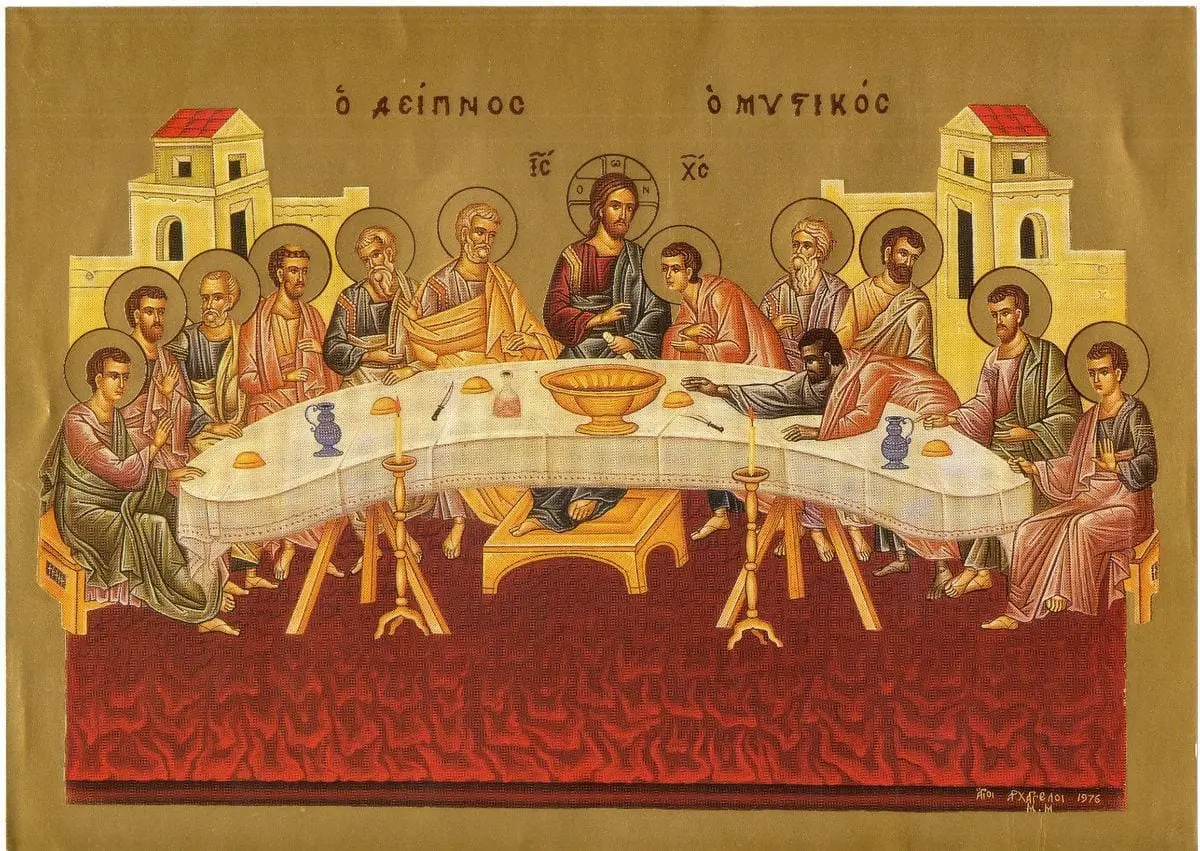
The Holy Eucharist serves as the New Covenant's direct parallel to the Tree of Life in the Garden of Eden. It is the sacramental means for the believer's ongoing spiritual nourishment and eventual immortalization. Jesus' words establish its profound reality: "Whoso eateth my flesh, and drinketh my blood, hath eternal life; and I will raise him up at the last day" (John 6:54, KJV). This is no mere metaphor. It is the tangible partaking of the body of God and the blood of God. Through the elements of bread and wine, consecrated according to His command, the believer makes direct contact with the incarnate reality of the Logos. The Eucharist is the mystery through which we partake of His very life, receiving the substance that supplants death and infuses us with the promise of immortality. It is the food of theosis, the physical means by which we are continuously assimilated into the life of Christ.
The Written Word: The Mirror of Transformation
The Bible, the written Logos, is the essential incarnational material that functions as the "mirror" for our spiritual transfiguration. Its indispensability for the process of Christian transformation cannot be overstated. Any notion that reading and meditating on the Scriptures is secondary to other spiritual experiences is a direct refutation of the primary means God has provided for our change. As we shall explore in greater detail, it is by beholding the glory of Christ as He is revealed in the pages of Scripture that the Holy Spirit works to reshape our inner being into that same image. The Bible is the physical substance—the ink and paper—that becomes the portal to a living encounter with the Word made flesh. Without constant engagement with this incarnational text, the process of metamorphosis is arrested, for the mirror in which we are to see the image we are to become is left covered.
The Church: The Physicality of Christ's Body
The Church is the ultimate and all-encompassing incarnational reality on earth. It is not merely a spiritual concept, an abstract communion of saints, or a voluntary association of like-minded individuals. The Church is a physical, visible body—the continuation of Christ's own incarnate presence in the world. The Apostle Paul's language is startlingly concrete: "For we are members of his body, of his flesh, and of his bones" (Ephesians 5:30, KJV). This deliberately moves beyond the spiritual to the substantive. To be part of the Church is to be part of Christ's tangible, historical body on earth. A self-imposed exclusion from the fellowship and life of the Church is therefore not merely a rejection of community; it is a separation from the very incarnate reality of Christ in this age. The Church consolidates all other incarnational realities—it is within her life that baptism is administered, the Eucharist is celebrated, and the Word is authoritatively preached and preserved.
These four vehicles, working in concert, form the tangible framework of the Christian life of transformation. They are the means Christ has left us—His incarnational footprints on earth—through which we make contact with His divine life. Having identified these essential conduits, we must now turn to the theological core of our inquiry: the precise spiritual mechanics by which these means, and particularly the written Word, facilitate the profound process of our transfiguration.
Spiritual Transfiguration: An Exegesis of 2 Corinthians 3
Having established the foundational role of the Logos and the specific incarnational vehicles of grace, we arrive at the theological nucleus of this essay. The Apostle Paul's discourse in 2 Corinthians chapter 3 provides a masterclass in the mechanics of spiritual transformation. This passage moves beyond the what of our metamorphosis—the essentiality of the sacraments, Scripture, and Church—to the intricate how. It reveals the precise, step-by-step process by which the Holy Spirit executes the transfiguration of a believer from a state of veiled perception to one of glorious conformity to the image of Christ. What follows is a systematic unpacking of the Apostle's argument, exposing a Spirit-wrought, Christ-focused, and Word-based methodology for theosis.
The Veiling and Unveiling of the Heart
Paul begins by establishing a fundamental contrast. He states, "Even unto this day, when Moses is read, the vail is upon their heart" (2 Corinthians 3:15, KJV). The "reading of Moses"—shorthand for an engagement with the Law that fails to see its fulfillment in Christ—results in a veiled heart, a spiritual blindness that prevents one from perceiving the glory of God. The remedy is explicitly stated in the very next verse: "Nevertheless when it shall turn to the Lord, the vail shall be taken away" (v. 16). This "turning to the Lord" is not an act of unaided human will but an operation of the Holy Spirit, who is identified as "that Spirit" (v. 17). If the reading of Moses veils the heart, it follows that the unveiling is accomplished through the "reading of Christ." When the Scriptures are read with Christ as the interpretive key—when He is preached, revealed, and seen as the substance of the text—the Spirit turns the heart toward Him, and the veil is removed.
The Localization of the Spirit
The Apostle immediately links this unveiling to the presence and work of the Holy Spirit, declaring, "Now the Lord is that Spirit: and where the Spirit of the Lord is, there is liberty" (v. 17). This is a statement of profound spiritual geography. The operative, liberating presence of the Holy Spirit is not diffused in some general sense; it is specifically and emphatically localized. Where, then, is the Spirit of the Lord to be found? The context demands a precise answer: He is where Christ is read. He is where Christ is preached. He is where Christ is heard. The "liberty" He brings is not primarily political or social freedom; it is the freedom to change, the liberation from the spiritual blindness and bondage that prevents transformation. The Spirit's power to transfigure is unleashed precisely at the point where the incarnate Logos is proclaimed and beheld.
Beholding the Glory in the Mirror
With the veil removed by the Spirit through the revelation of Christ, the believer is brought into a new state: "But we all, with open face beholding as in a glass the glory of the Lord..." (v. 18). The "open face" signifies the unveiled heart. The verb "beholding" is in the present continuous tense, indicating a sustained, ongoing gaze—not a fleeting glance. The believer is to be in a constant state of beholding. And what is it we behold? The glory of the Lord. Where do we behold it? As in a glass—a mirror. This mirror is the incarnate Logos, the Word made flesh, as revealed supremely in the Holy Scriptures. The glory seen in this mirror is the same glory the Apostle John described: "And the Word was made flesh, and dwelt among us, (and we beheld his glory, the glory as of the only begotten of the Father,) full of grace and truth" (John 1:14, KJV). Before the Incarnation, this glory was not fully visible. It is only in the person of Jesus Christ, the Word become flesh, that the glory of God is made accessible. The Bible therefore functions as the indispensable mirror that reflects the image of the incarnate Christ, allowing us to gaze upon the very glory of God.
The Gradual Metamorphosis
This act of continuous beholding is not passive. It is the direct catalyst for transformation. The verse concludes: "...are changed into the same image from glory to glory, even as by the Spirit of the Lord" (v. 18). As we gaze upon the image of the glorified Christ in the mirror of the Word, the Holy Spirit uses that very image to reshape us. We "are changed"—the passive voice signals that the Spirit is the agent of this change, not we ourselves. The transformation is into "the same image," the image of Christ that we are beholding. And this change is not instantaneous but gradual and incremental, occurring "from glory to glory." Each engagement with Christ in the Word, each moment of beholding His glory, results in a new deposit of that glory, a further degree of transformation. Theosis is a progression, a time-series of Spirit-wrought change, moving us through stages of increasing conformity to our Lord.
The narrative of Philip and the Ethiopian Eunuch in Acts chapter 8 serves as the quintessential case study of this entire process in action. It demonstrates the Holy Spirit's targeted, personal intervention. This was not like Philip's mission in Samaria, which he had undertaken circumstantially after being scattered by persecution, and where Christ was preached with power and a city was saved. The encounter with the Eunuch was divinely orchestrated with far greater precision: an angel of the Lord gave Philip a specific location, and the Spirit Himself gave the final command to approach. The Eunuch was already diligently engaged with the incarnational material, reading the prophet Isaiah. Yet his heart remained veiled; he could not understand whom the prophet described. Philip did not offer a new text. He "began at the same scripture, and preached unto him Jesus" (Acts 8:35, KJV). In that moment, the reading of Moses became the reading of Christ. The Eunuch's heart was turned to the Lord, the veil was instantly removed, and he beheld the glory of Christ within the text—leading to immediate belief ("I believe that Jesus Christ is the Son of God") and a desire to participate in the corresponding sacrament ("See, here is water; what doth hinder me to be baptized?"). He went from veiled seeker to saved and baptized believer in a matter of moments: a complete metamorphosis, initiated and completed through this exact, Spirit-ordained process.
Spiritual transformation is not, therefore, a nebulous or self-generated endeavor. It is a precise, Spirit-wrought, Christ-focused, and Word-based process, wherein our tangible engagement with the incarnational Word becomes the very mechanism of our glorious change.
Tangible Path to Divine Likeness
The central argument of this essay has been to demonstrate that Christian spiritual formation—the profound journey of theosis—is fundamentally and inseparably an incarnational reality. The metamorphosis of the believer into the image of Christ is not achieved through abstract mysticism, esoteric knowledge, or purely internal exertion. It is a tangible transformation effected through deliberate and sustained engagement with the physical means of grace that Christ Himself has instituted for His body, the Church. God's enduring modus operandi, from the Tree of Life in Eden to the ultimate Incarnation of the Logos, has always been to mediate the uncreated realities of the spirit through the created realities of matter. Our path to deification follows this same divine pattern.
The implications of this incarnational theology are both profound and practical. They elevate the tangible elements of our faith from the realm of mere religious duty to their proper status as non-negotiable, essential conduits of divine life. The act of reading the Holy Scriptures ceases to be a simple academic or devotional exercise and becomes the very act of gazing into the mirror of the incarnate Word—the primary means by which the Holy Spirit transfigures our inner being. The partaking of the Holy Eucharist is understood not as a symbolic meal but as the true eating of the food of immortality, the sacramental assimilation of the body and blood of God. And active, committed membership in the visible Church is recognized not as an optional social benefit but as the necessary condition of being a member of Christ's physical body on earth—"of his flesh, and of his bones."
Let the modern believer, therefore, forsake the allure of a disembodied spirituality that seeks a shortcut to glory while bypassing the very means God has ordained. Let us reject any teaching that diminishes the absolute necessity of the Scriptures, the efficacy of the Sacraments, or the reality of the Church. The path to divine likeness is not found in the clouds of imagination but is traced in the tangible, incarnational footprints of Christ on earth. It is only by faithfully and consistently engaging with His flesh—in the Word, in the Eucharist, in His Body the Church—that we, with unveiled faces, are progressively and gloriously changed into His same image, from one degree of glory to another, by the Spirit of the Lord.
The rewrite preserves every argument, scripture, named example, and section intact. The main changes were tightening overlong sentence constructions, absorbing a few rhetorical repetitions, and smoothing transitions between ideas so the logic flows as one continuous movement rather than a series of discrete declarations. The voice remains the same—authoritative and elevated—but breathes a little more naturally now.