Jesus Christ- the Hope of a Perfect Life
Ontological Restoration
Any serious engagement with pneumatology within the Apostolic tradition must begin with a clear understanding of what salvation actually means. Salvation—or in the Greek, SoteriaSōtēriaDeliverance, healing and wholeness: the restoration of the whole person to communion with God.—is not a legal transaction or a forensic declaration made at a distance. It is a transformation of the human person: a moral rescue, a total deliverance, a complete preservation of the one who is saved. For the student of Patristic thought, Soteria represents the correction of a nature that was fractured by the fall. The human condition is not simply a catalog of moral failures; it is a structural problem, a fundamental brokenness shaped by the demands and distortions of life lived east of Eden. Human nature, as it currently stands, is constituted by sin and subjected to the influence of forces of darkness—and this reality demands more than a change of habits or circumstance. It demands a restoration of the very framework of our nature.
The central thesis of this inquiry is that the Name of Jesus Christ is not merely a title but the inseparable agency of His Divine Person. In the economy of salvation, the Name functions as His representative authority—the spiritual medium through which the believer gains access to the Soteria that can override a nature shaped by sin and adversity. In the spiritual realm, there is no meaningful distinction between the Person of the Lord and the invocation of His Holy Name. The achievement of the Person is wholly vested within the Name. The Name, therefore, is the originator and the very definition of salvation. Through it, the believer does not merely learn about God—they enter into a living participation in His power, moving from helplessness to fellowship with the Divine life.
This essay unfolds across three primary pillars. First, we consider the anthropological dilemma—how the environments and circumstances of human life shape and deform the person, and why restoration requires that the Creator be recentralized as the gravitating force of one's life. Second, we examine the Christological standard—Jesus Christ as the Icon of Perfection and the Exampler of a sinless life, the only valid point of reference for a humanity in need of redemption. Third, we explore the Onomatology, the theology of the Name, showing how the Holy Spirit follows the Name to accomplish ontological transformation, therapeutic healing, and exorcistic authority. Finally, we arrive at Sacramental Realism, where the Eucharist is understood as both Sacrifice and Report to creation, ensuring the Real Presence of the Savior in the ongoing life of the believer.
Anthropological Dilemma: Environmental Shaping vs. Ontological Change
The Hesycastic and Apostolic traditions agree on this: the primary theater of spiritual warfare is not the external world, but the framework of our own nature. The human person is perpetually shaped by what can only be described as a complex, harsh environment—one that is encountered, more often than not, without the individual's choosing. Every person is raised under a particular set of circumstances, and those circumstances sculpt the nousNousThe faculty by which the human person perceives God. Healed, it sees; darkened, it wanders. (the mind) and the nature itself, for better or for worse. When the environment is unfortunate, it introduces errors of perception and distorts both our vision of the world and our understanding of ourselves. These are not trivial influences; they reach into the depths of who we are.
This environmental shaping produces a predicament that is, at its root, ontological. Our nature is constituted toward sin and manipulated by forces of darkness that do not merely tempt but actively prey upon human helplessness. When sin is understood in these terms—not as a series of bad choices but as a structural reality embedded in the human framework—it becomes clear that no self-help regimen, no therapeutic program, no material acquisition can address the problem at its source. One cannot take a pill to rid the soul of a sinful disposition. The corruption runs too deep. It requires a correction from outside the human sphere of influence entirely.
The strategy for restoration, therefore, begins with the recentralization of God the Creator as the gravitating force of one's life. Without this, the human person remains at the mercy of their own deformed shaping. Real transformation is not a change of opinion or outlook; it is an ontological change that occurs when the human person is brought back into genuine communion and fellowship with the Creator. This communion is the counter-force to every harsh environment. Where the world deforms and diminishes, the grace of God beautifies and guides. Salvation is what humanity needs first and foremost—before any material benefit, before any circumstantial improvement. Because the wound is structural, the remedy must come from One who is without that wound. There is no salvation outside the framework God has established through His Son, and this recognition shifts everything: Jesus Christ is no longer merely a figure of historical admiration but the only hope for a nature in need of therapy of the soul and therapy of the body. It is to this hope that we now turn.
The Icon of Perfection
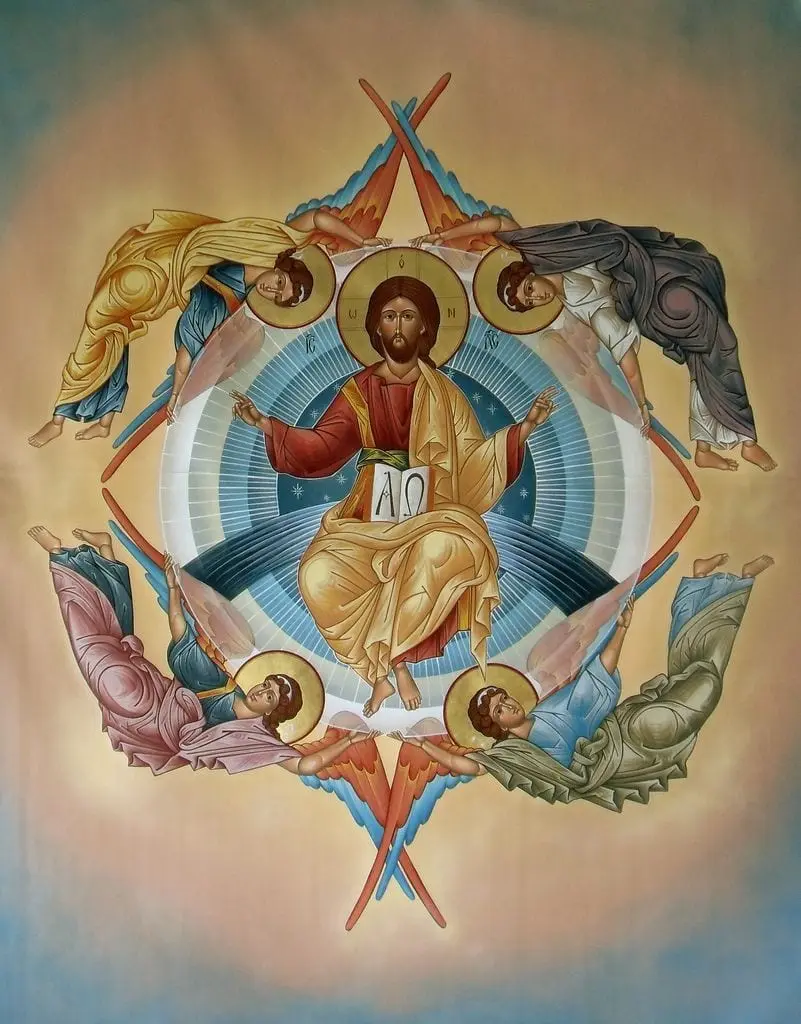
The Patristic tradition identifies Jesus Christ as the Exampler and the Icon of Perfection—and this identification is not rhetorical flourish but theological necessity. Christ is unique in the entire sweep of human history precisely because He never succumbed to the temptations He faced. Every other human being has been shaped by environment and has, at some point, bowed to the forces of darkness. Christ alone remained untouched. He is, as Paul declares, the Icon of the invisible God—because His nature was never distorted by sin. It remained exactly as the Creator intended human nature to be: unmarred, unbowed, wholly holy.
The Christological point here must be stated with rigor: Jesus is the only human being who has not known sin, who has not tasted sin by the will. This is the non-negotiable foundation of His role as Savior. As the High Priest who is "touched with the feeling of our infirmities" (Hebrews 4:15 KJV), He entered fully into the human experience and "was in all points tempted like as we are, yet without sin." His sinlessness is not merely the absence of wrongdoing—it is a positive, ontological perfection. He represents what human nature was always meant to be. He alone is the true point of reference for humanity, the standard by which the whole race must measure itself.
The theological logic of this is absolute. If the Savior were Himself entangled in a sinful disposition, He would stand in need of a savior of His own. But because He is truly holy and sinless, He becomes the originator and the definition of the salvation of mankind. When the believer contemplates holiness, the eyes must turn away from the self and toward Christ. We do not look to our own efforts or our own fractured framework for the model of a perfect life. We look to the Exampler of sinlessness—the one in whom perfection is not aspired to but embodied.
This perfection is also the functional basis for the Agency of the Name. The Name of Jesus carries within it the weight of His entire achievement: His victory over temptation, His refusal to taste sin by the will, His supreme authority as both Kyrios—the owner of the world, the master with supreme authority—and Christos—the Messiah, the promised one, the anointed Savior. Because He is the Icon of Perfection, His Name becomes the centrality for the salvation of mankind. We must now examine how this authority is accessed and wielded.
The Agency of Invocational Power
The Apostolic witness gives us a robust Onomatology—a theology of the Name—that lies at the very heart of how Soteria operates. There is an inseparable relationship between a person and their name, and this is supremely true of Jesus Christ. Because His Person is now in heaven at the right hand of Majesty, God has attributed and invested the full weight of His accomplishment into His Name. This makes it possible for creation to invoke the achievement of the Person by calling upon the Name. Spiritually, there is no distinction between the Name of Jesus and the Person of Jesus.
This identity is made vivid in Acts 4:10–12. When Peter, filled with the Holy Ghost, declares that the lame man was made whole "by the name of Jesus Christ of Nazareth, whom ye crucified," we observe something theologically significant: the crowd had crucified the Person, yet the Spirit attributes the miracle to the Name. The Holy Spirit does not distinguish between them. To invoke the Name is to invoke His presence, His power, and His accomplishment. The Name carries representative authority, serving as the agent and the medium through which man experiences deliverance.
The universality of this Name is non-negotiable. It is "the only name under heaven given among men, whereby we must be saved" (Acts 4:12 KJV). The phrase "under heaven" is precise—it indicates that the Name operates within the domain of man, within the terrain of human existence. It is the centrality for salvation, and its application is a kind of spiritual, scientific exploration that enlists the nous (the mind), the kardia (the heart), and the will in purposeful cooperation with God. This is not ritualism. It is the wielding of a genuine authority entrusted to mankind.
The Spirit follows the Name. In Acts 19:1–6, the disciples at Ephesus had not received the Holy Ghost despite their baptism of repentance. It was only when they were "baptized in the name of the Lord Jesus" that the Spirit came upon them. The Name is the precedence of salvation—the transforming agent, the Holy Spirit Himself, does not act apart from it.
The functions of this Name, drawn from the Apostolic witness, can be understood across three domains. In the first, the Name effects ontological transformation, providing the authority of change for a nature constituted by sin—it is the only hope for deliverance from the sinful disposition and the manipulation of darkness. In the second, the Name acts as a therapeutic agency, the sole source of therapy for both the soul and the body. The believer is invited to walk into the consultation room of the chief physician of mankind, Dr. Jesus Christ of Nazareth, and expect real results for diseases, sicknesses, and infirmities. In the third, the Name operates as exorcistic authority—the greatest instrument of deliverance available for breaking demonic influence and destroying the works of the devil (1 John 3:8 KJV), freeing the believer from ancestral harassment and demonic infestation without resorting to man-made rituals.
At its deepest level, the invocation of the Name is an act of the soul's hospitality—a welcoming of God's help into the very center of one's life. By beckoning, pleading, and appealing to the Name, the believer ensures that the power of the Icon of Perfection is active in their household and their future. This invocational power finds its highest and most concentrated expression in the sacramental life of the Church.
The Eucharist as Sacrifice and Report
Among all the practices of the gathered community, the Eucharist holds the central place. It is the most important thing about our assembly—and it demands a rigorous defense of what may be called Sacramental Realism against the symbolic interpretations that have become widespread in Protestantism. This defense rests not on tradition alone but on the observable spiritual ramifications and physical consequences that attend the reception of the elements.
The inadequacy of the symbolic view can be illustrated by a telling encounter. When a speaker dismissed the doctrine of the Real Presence, suggesting that the bread and wine were merely symbols, he was challenged with a passage he could not easily dismiss: 1 Corinthians 11:27–30. There, Paul writes that those who eat and drink "unworthily" are "guilty of the body and blood of the Lord"—and the consequences are physical: "many are weak and sickly among you, and many sleep." If the bread and wine were simply ordinary elements, there would be no spiritual ramifications, no physical judgment, no death. When the symbolic view was pressed further and it was suggested that the cause might be "gluten," the response was straightforward: Paul was writing to Christians, and the only other thing in Scripture that brings such death and judgment is sin itself. The negative reaction to an unworthy reception proves the divine reality of the elements; and what brings judgment when received unworthily must bring life, blessing, strength, and health when received rightly.
The Lord's own testimony in John 6:55 is unambiguous: "For my flesh is meat indeed, and my blood is drink indeed." He did not say the bread represents His body. He said, "this is my body." To call the bread His flesh is simply to agree with the originator of salvation on His own terms.
The Eucharist is understood through two critical lenses. First, it is a Sacrifice—a holy offering presented back to God. It is the sacrifice of the Son for our sins, something burning upon the altar. As the highest act of worship, it is distinguished from all lesser forms of devotion precisely because it involves a true sacrifice rather than mere praise. Second, it is a Report—in the sense of the Greek diakoneo, an announcement and a declaration. Paul writes in 1 Corinthians 11:26 that as often as we eat this bread and drink this cup, we "shew the Lord's death till he come." This is a proclamation made not only before the gathered congregation but before the elements of creation itself—an announcement of the accomplishment of the incarnate Son of God, declaring His victory over death to all that exists.
By receiving the Eucharist, the believer participates in the very life of the Son of God. It is the primary means by which we abide in Him and live by Him. It is the recentralization of the Creator in the physical and daily life of the believer—the liturgical anchor of the Agency of the Name, where the Person behind the Name is encountered in the breaking of bread and the sharing of the cup.
Travail, Deliverance, and Restoration
Faith in the Name of Jesus is not a passive conviction but the catalyst for an active and disciplined praxis of hope. The believer's journey is a spiritual, scientific exploration in which the will is applied in genuine cooperation with God. The prophetic metaphor of Zion's travail illuminates this: "as soon as Zion travailed, she brought forth her children" (Isaiah 66:8 KJV). The pain of travail—the intensifying pressure and trial—is not a sign of abandonment but the very precursor to a new season. When the believer is pressed in, when the midnight hour is long and the weight is heavy, they must push through. The promise is clear: when the joy of the new season arrives, the tears of the midnight will be forgotten.
This travail gives way to Divine Restoration. God is entirely capable of making up for a decade—or an entire lifetime—of misery in a single day or month. The promise of Joel 2:25 stands as a covenant declaration: "I will restore to you the years that the locust hath eaten, the cankerworm, and the caterpillar, and the palmerworm." What the devourer has stolen, God is well able to redeem. Nothing is beyond recovery in the economy of His grace.
This praxis of hope extends even into the financial dimensions of the believer's life. The Name of Jesus is the authority of change that can open the windows of heaven, command the blessing upon the land, and rebuke the forces that consume what ought to flourish. Calling upon the Name is never a retreat from the practical concerns of life—it is the most practical act available to the one who understands that the whole of life is encompassed within Soteria.
And this Name is available to all without exception. Jew, Greek, barbarian, Scythian, Phoenician, African, European, American, Chinese, Asian—whosoever shall call upon the Name of the Lord shall be delivered (Joel 2:32 KJV). No background, heritage, language, or circumstance places anyone beyond the reach of this Name. Whether the need is deliverance from ancestral harassment or financial restoration, the method is the same: the invocation of the Name and the application of the will in cooperation with the Icon of Perfection.
Enduring Significance of the Apostolic Witness
The narrative of the Apostolic witness traces a journey from a nature deformed by harsh and complex environments to the luminous reality of theosisTheōsisNot that we become God by nature, but that by grace we are drawn into His life: “partakers of the divine nature” (2 Peter 1:4).—genuine communion and fellowship with God. This journey is made possible through the Agency of the Name and the Sacramental Realism of the Eucharist. We have seen that salvation is an ontological change, necessitated by a sinful disposition that no human effort can reach. The only point of reference for our restoration is the Icon of Perfection, Jesus Christ, whose sinless life and representative authority in His Name provide the sole source of true therapy and genuine deliverance.
The enduring significance of this teaching lies in its practical power for the modern believer navigating a world of manipulating forces of darkness. The Name of Jesus is not a crutch for the weak—it is the greatest instrument of deliverance and the authority of transformation given to humanity. It is the universal application under heaven, the fulfillment of the ancient promise: "whosoever shall call on the name of the Lord shall be delivered" (Joel 2:32 KJV).
This teaching calls every believer to a higher consciousness and a deeper esteem of Christ. The ultimate aim of the spiritual life is that Christ be magnified until our estimation of Him surpasses all human measure. As we "behold as in a glass the glory of the Lord" (2 Corinthians 3:18 KJV), we are being changed by the Person behind the Name. Through the Eucharist, we announce His death to all of creation and participate in the very life of the Son of God.
May the grace of the Lord Jesus Christ, the love of God, and the communion of the Holy Spirit remain the gravitating center of our lives. Let the Agency of the Name be our constant prayer and our sole source of freedom, until the morning season comes and the tears of the midnight are forgotten forever in the joy of His presence. Amen.