The Cause of Human Suffering, Repentance & God’s Salvation
The Question Every Soul Must Answer
There is a question that has haunted every generation of human beings, regardless of culture, religion, or philosophical tradition. It is not an abstract question, it is one that erupts from the most intimate depths of lived experience. Why do we suffer? Why, when no one is born desiring evil, does evil become so commonplace in human life? Why, when every parent dreams of flourishing for their child, do so many children find themselves ensnared in addiction, ruin, and destruction? Why does the pursuit of goodness so frequently collapse into the practice of its opposite? These are not merely academic puzzles. They are the questions that rise unbidden in the dark hours , why me, why this, why now? , and for which the world has furnished no satisfying answer.
This essay argues that the cause of human suffering is not accidental, environmental, or sociological in its ultimate root. It is theological and ontological. Human suffering flows from the misuse of the free will, specifically from sin, understood as the deliberate or habituated orientation of the human will away from God, who is himself the source of all life, wisdom, and virtue. That is the diagnosis. The remedy, equally theological and equally absolute, is the substitutionary atonement of Jesus Christ, the second Adam, who, by absorbing the full judicial consequence of human transgression upon himself, opens a way of repentance, healing, and restoration to all who look to him. The argument proceeds from first principles: the proper epistemological framework for understanding life, the nature and consequences of sin, the archetypal revelation of redemption in the bronze serpent of Numbers 21, its fulfillment in the suffering servant of Isaiah 53, and the perpetual participation in that redemption made available through the Eucharist. These are not discrete topics loosely assembled. They constitute a single, coherent theology of the human condition.
The Epistemological Crisis: Why We Cannot See Ourselves Clearly
Every error in human life begins with an error in understanding. Before a man can live rightly, he must think rightly, and before he can think rightly, he must possess a correct framework through which to interpret reality. This framework , the set of foundational assumptions by which a person reads experience, makes judgments, assigns value, and charts a course of action, is what may be called, in classical terms, an epistemology. Every human being operates by one. The question is not whether a person has an epistemological framework, but whether the one they have is true.
The tragedy of human existence in its fallen state is that the framework most naturally available to us is a corrupted one. We are born into particular nations, families, and historical moments with limited and often severely distorted access to the knowledge that truly governs life. Our background conditions our perception. Our traumas shape our interpretations. Our cultural inheritance, laden as it often is with falsehood, superstition, and the philosophies of a world that has largely organized itself against God, fills the vacuum where genuine knowledge should reside. What flows from a corrupted framework is a corrupted life: corrupted decisions, corrupted relationships, corrupted values, and ultimately corrupted destiny. The man who does not know the truth cannot live in the truth, however sincerely he desires goodness.
This is precisely why the scriptures locate the destruction of human life not in poverty or disease or persecution, but in ignorance, specifically, ignorance of God. "My people are destroyed for lack of knowledge" (Hosea 4:6) , and the knowledge in view is not generic information but the knowledge of God himself. The reason this particular ignorance is so catastrophic is that God is not merely the giver of life, wisdom, and virtue , he is himself their source and substance. Wisdom is not a principle that exists independently of God and that God merely understands supremely well. Wisdom is an emanation of God's own being, an energy of his divine nature flowing outward into creation. To be separated from God is therefore not simply to be without a useful reference point , it is to be cut off from the very fountain of the qualities that make human life coherent, just, and flourishing. Life without God is not inferior life; it is, in its deepest sense, not life at all.
It follows that a correct epistemology cannot be manufactured by human reason alone. The mind unaided by revelation cannot exceed its own limitations. Something must bridge the gap between the fragmentary, conditioned, and finite capacity of the human intellect and the truth that exceeds it. That something is faith, specifically, the faith of our Lord and Savior Jesus Christ communicated through the scriptures and the life of the Church. Faith is not the abandonment of reason but its completion. It does not make reason unnecessary; it supplies reason with what reason cannot supply for itself, namely, a true account of reality, of God, of man, and of the world. Faith is the epistemological gift by which God levels the playing field for humanity across all nations, ages, and conditions of birth. It is available to all and sufficient for all. And without it, the apostle declares, it is impossible to please God, not because God is capricious, but because without faith a human being cannot even arrive at the framework within which pleasing God becomes intelligible.
The practical consequence of this analysis is urgent. A Christian must not merely believe casually in Christ. A Christian must recognize that the faith of Christ is not one option among many philosophical frameworks available in the marketplace of ideas. It is the singular, divinely given lens through which all other knowledge must be examined, tested, and either received or discarded. Where that lens is absent or distorted, the soul lives in what the scriptures call darkness, not metaphorically, but ontologically. The decisions made, the values adopted, and the character formed in the absence of this light will inevitably bear the marks of that darkness.
The World, a Theatre of Rebellion: Demonic Religion and the Suppression of Truth
If the knowledge of God is essential to human life and flourishing, then it follows that the primary strategy of any force hostile to God would be the suppression, corruption, or displacement of that knowledge. This is precisely the logic the scriptures reveal. The world, as a system, is not a neutral arena within which Christianity and other philosophies compete on equal terms. It is a theatre actively arranged in opposition to the truth.
The Psalmist, in the ninety-sixth Psalm, articulates a judgment that is at once astonishing and clarifying: "For all the gods of the nations are idols" (Psalm 96:5) , or, in the rendering of the Septuagint and other ancient witnesses, demons. This is not a polemical overstatement. It is a structural theological claim. Behind every system of worship that has not received the endorsement of the Lord, the Creator of the heavens and the earth, there stand spiritual beings, fallen angelic powers, who have positioned themselves as objects of reverence, sacrifice, and devotion for the nations of the earth. They have done so not because they are gods in the ultimate sense, but because they seek the worship and allegiance that belongs properly to God alone. Every religious system past, present, or future that does not center on the God who made the heavens is therefore not merely a human error, it is, in the final theological analysis, the worship of demonic powers.
This is not to deny the sincerity of those who worship within such systems, nor is it to dismiss the genuine human longing for the divine that every religion, however corrupted, reflects. It is to say that sincerity does not sanctify the object. A man may sincerely drink poison and still die of it. The test of religious truth is not the devotion of its adherents but the identity and nature of its object. There is, the scriptures insist, only one God who is the Creator , "But the LORD made the heavens" (Psalm 96:5) , and it is to him alone that worship is legitimately and salvifically directed.
This analysis opens onto the broader strategy of the demonic. If there is one truth and many counterfeits, the most effective way to suppress the one truth is not to eliminate it, that would only concentrate attention upon it, but to surround it with such an abundance of alternatives that it is lost in the noise. Demonic strategy is the strategy of proliferation: many religions, many philosophies, many ideologies, many intellectual frameworks, each carrying a grain of plausibility, each demanding attention and allegiance, and each serving the common purpose of diverting humanity from the true God. The availability of many choices does not indicate openness; it indicates deception.
The institutional seat of true worship, the scriptures teach, has never been broad. In the era of the Old Covenant, God chose one nation, Israel, as the vessel of his self-revelation among the nations. In the era of the New Covenant, following the rejection of that revelation by a portion of Israel, God grafted the believing nations into that covenant through the person and work of Jesus Christ, constituting the Church as the new Israel and the custodian of the true faith. These are the only two communities in the history of the world that have borne the divine designation as God's possession. This exclusivity is not a statement of cultural superiority; it is a statement about the seriousness of truth. There is a God who has spoken, who has acted, and who has identified the community of his covenant people. It is within that community, Christianity, together with its root in Mosaic Judaism, that the authentic knowledge of God is preserved and transmitted.
This is why, as the apostle John declares, "the whole world lieth in wickedness" (1 John 5:19), and why Paul identifies a spirit "that now worketh in the children of disobedience" (Ephesians 2:2) , a spirit that actively cultivates in human culture every variety of rebellion, lasciviousness, and anarchy against the divine order. The world is not simply imperfect. It is, in its systemic, organizational character, arranged against God. The Christian who does not perceive this will find themself continuously vulnerable to the world's seductions: its entertainment, its sports, its philosophies, its institutions, all of which carry, embedded within their structure, a subtle orientation away from the Creator. The Lord's warning is precise and sober: "If the world hate you, ye know that it hated me before it hated you" (John 15:18). The posture of the world toward true faith is not indifference but hostility.
The story of the three Hebrew boys in the book of Daniel is the scriptural paradigm for the Christian's navigating this hostility. Nebuchadnezzar, the supreme embodiment of the antichristian world-system, erected an image of himself and commanded every person in his kingdom to bow before it under penalty of death. This command placed the three young men , Shadrach, Meshach, and Abednego, men of royal blood from the conquered nation of Israel, already stripped of their homeland and their freedom, at a crossroads of ultimate loyalty. They chose faithfulness over survival, allegiance over accommodation. "We will not serve thy gods, nor worship the golden image which thou hast set up" (Daniel 3:18). This is the spirit of martyrdom: not the seeking of death, but the willingness to receive it rather than compromise the claims of God. They were cast into the furnace, and there , in the very instrument of their judgment , they encountered a fourth figure, one whose appearance was "like the Son of God" (Daniel 3:25). The fire had no dominion over them. Death had no sovereignty in the presence of Christ. What Nebuchadnezzar's own testimony confirmed was what Israel had always known: this God, the God of the Hebrews, is the true God. The world's threats are real, but they are not final.
The Root of Human Suffering: Free Will, Sin, and the Rebellious Will
Having established the epistemological context , the necessity of the knowledge of God and the world's systematic opposition to it , we are now equipped to address the central diagnostic question: what is the cause of human suffering?
The answer the scriptures provide is simple but enormously consequential. Human beings suffer because of sin. And sin, in its most precise definition, is the exercise of the free will against the precepts and purposes of God.
This must be understood carefully. God created both the angelic beings and human beings as free agents , creatures possessed of genuine volitional capacity, able to choose, decide, and act on their own accord. This was not an oversight in the design of creation; it was a deliberate and glorious act of divine generosity. God desired not automatons but persons , beings capable of genuine love, genuine obedience, and genuine communion. Love that is coerced is not love. Obedience that is mechanically compelled is not virtue. For there to be genuine relationship between Creator and creature, the creature must be free to choose.
But this same freedom that makes love and virtue possible also makes rebellion and sin possible. A third of the angelic host , the Luciferian faction , exercised that freedom against God. They moved from worship to rebellion, from creaturely service to creaturely autonomy, and in doing so transformed themselves from servants of the light into agents of darkness. This angelic rebellion is the ultimate background to the human story: it did not initiate human sin, but it provided the context, the instrument, and the seduction through which human free will was led to its catastrophic misdirection in the garden of Eden.
When Adam and Eve, in the exercise of their free will, disregarded the commandment of God and ate of the forbidden fruit, the consequences were not merely personal. They were ontological and anthropological , meaning they touched the very being of humanity, altering the structure of human nature at its deepest level. Sin did not merely produce guilt in the first human pair; it introduced into the human constitution a permanent disorder of the will , a bias toward self-assertion, rebellion, and the displacement of God from the center of human existence. Every human being born into this world inherits not only the guilt implications of that first act but the disordered nature that resulted from it: a will that is, without the grace of God, habitually and persistently oriented away from its Creator.
This disordered will is the source of human suffering. Suffering is death delayed. When sin entered the world through the rebellion of the will, death entered with it , not immediately, not all at once, but as a sentence that executes itself progressively through time. Every disease, every grief, every addiction, every fractured relationship, every personal and social catastrophe is a symptom of this root condition: a will that has been alienated from God, the source of life. Diseases are not arbitrary afflictions; they are consequences of a separation. Suffering is not random; it is the inevitable fruit of an estranged nature. And where God is absent, the demonic does not leave a vacuum , it moves in. The enemy of human souls seeks to occupy precisely the spaces where the presence and governance of God have been displaced.
This is not to say that every individual instance of suffering is the direct result of a specific personal sin. The scriptures do not permit so mechanical an equation. Abel was righteous, and he was murdered. The servants of God have suffered throughout history not for their wickedness but on account of their faithfulness. Job suffered not because he had sinned but because the enemy was permitted to test him. What the teaching affirms is that suffering in principle belongs to the fallen order , that it has no place in the world God originally created and intends ultimately to restore. Suffering is the shadow of death that fell over creation when the will of man separated itself from the will of God. That shadow falls on all who live in a fallen world, whether they are personally guilty or personally innocent in any given instance. The solution is not to trace every particular grief to a particular transgression. The solution is to understand the systemic reality of the fall and to find the remedy that addresses it at its root.
The story of Noah confirms this ontological reading. The world of Noah's day had been given over so completely to violence and corruption that God determined to destroy it and begin again. Yet Noah , of whom the scriptures testify that "Noah was a just man and perfect in his generations, and Noah walked with God" (Genesis 6:9) , was found righteous and was preserved. Righteousness here is not moral perfection in an abstract sense. It is the alignment of the human will with the divine will , the orientation of a person's decisions, values, and life toward God. It is this alignment that constitutes righteousness before God, and it is this alignment that constitutes the only genuine protection against the destructive consequences of the fallen order. The same pattern plays out in Sodom and Gomorrah: a civilization given over entirely to wickedness, with the will of its inhabitants so thoroughly bent against God and nature that destruction became the only possible divine response.
The cumulative testimony of these archetypes is consistent and severe. A human being cannot live in health, flourishing, and genuine freedom while estranged from God. The will without God does not become neutral; it becomes actively destructive , to the self and to others. "There is a way which seemeth right unto a man, but the end thereof are the ways of death" (Proverbs 14:12). The will separated from God will always find a way that seems plausible, seems liberating, seems right , and will always, in its own time, arrive at ruin.
The Archetype of the Bronze Serpent: Judgment, Repentance, and Substitution
The book of Numbers, chapter twenty-one, provides what may be the most luminous pre-Christian archetype of the theological drama of sin, judgment, repentance, and redemption available anywhere in the Hebrew scriptures. Its clarity is stunning , not because it is explicit, but because it is precisely structured to reveal the pattern that will be fulfilled in Christ.
The narrative is brief in its setting. The people of Israel, following their victory over the Canaanite king Arad, grew impatient in their journey through the wilderness. They turned, as they had turned before, against God and against Moses: "And the people spake against God, and against Moses, Wherefore have ye brought us up out of Egypt to die in the wilderness? for there is no bread, neither is there any water; and our soul loatheth this light bread" (Numbers 21:5). The response of God is immediate and devastating: "And the LORD sent fiery serpents among the people, and they bit the people; and much people of Israel died" (Numbers 21:6).
This is judgment. The people sinned against God , not for the first time, not for the last time , and the judgment of God fell upon them in the form of venomous serpents. The mechanism is significant: what afflicts them is not an arbitrary plague but a living instrument of death that bites them from within the very environment through which God was leading them. Sin did not bring an external catastrophe upon them from outside history; it released within their own situation the mortal force that sin always carries. The serpent is the judgment of God manifested as natural consequence, and it kills.
But then something remarkable occurs. The people repent. "Therefore the people came to Moses, and said, We have sinned, for we have spoken against the LORD, and against thee; pray unto the LORD, that he take away the serpents from us" (Numbers 21:7). Repentance here is not sentiment. It is the specific acknowledgment of specific sin combined with a turning toward the proper mediator and a petition for divine mercy. They do not simply feel sorry; they name the wrong, they own the responsibility, and they seek the intercession of the one whom God has appointed to stand between them and him.
God's response to this repentance is the command that will become the central typological key to the entire teaching: "And the LORD said unto Moses, Make thee a fiery serpent, and set it upon a pole: and it shall come to pass, that every one that is bitten, when he looketh upon it, shall live" (Numbers 21:8). Moses fashions a serpent of bronze , an image in the form of the very creature that was slaying them , and raises it upon a pole. Every Israelite who had been bitten, who turned and looked upon that raised serpent, was healed and lived.
The theological mystery embedded in this transaction is profound. Why would God instruct the construction of an image that resembled the instrument of judgment? The answer lies in understanding what the raised serpent signifies: it is the concentration and localization of divine judgment. The judgment that was executing itself distributively, biting person after person throughout the camp, is now gathered up and fixed upon one image, one location, one point. The serpent on the pole becomes the place of substitution , the locus to which divine judgment is transferred, so that those who in repentance look toward it are relieved of the penalty they were bearing individually. Judgment does not simply evaporate. It cannot. The righteousness of God demands that transgression be answered. But in mercy, God provides an object upon which the judicial weight may fall, so that the people, by the act of repentant looking, may be released from what would otherwise destroy them.
Sin produces judgment. Repentance turns the face toward the divine provision. The provision absorbs the judgment. And life flows back to the one who was dying. This is the skeleton of redemption , visible here, centuries before Bethlehem, in the Sinai wilderness.
Jesus himself identified this connection with absolute precision: "And as Moses lifted up the serpent in the wilderness, even so must the Son of man be lifted up: That whosoever believeth in him should not perish, but have eternal life" (John 3:14–15). He is the fulfillment of the type. He is the bronze serpent. He is the one who is lifted up upon a pole , upon a cross , so that all who have been bitten by the serpent of sin, all who have felt the poison of transgression working death in their souls, may look to him in repentance and live.
Several elements of the archetype deserve particular attention as they carry over into their fulfillment. First, the image on the pole was fashioned in the form of the serpent , that is, in the form of the instrument of judgment. This corresponds to the apostle's declaration that Christ was made "in the likeness of sinful flesh" (Romans 8:3): he who had no sin took upon himself the form of the condemned. He appeared as one under judgment , because he was bearing it on behalf of others. Second, the looking was required. It was not sufficient to know that the bronze serpent had been raised. The bitten Israelite had to turn, had to direct his gaze toward the provision. This is the figure of faith , active, directional, volitional. The remedy exists; it must be appropriated. The Christ has been crucified; he must be looked to. Repentance and faith are not automatic. They are the movement of the will toward the divine provision.
Third , and perhaps most importantly , the remedy was available to every person bitten, without exception. There was no qualification of worthiness, no threshold of prior righteousness. The only requirement was that one had been bitten (which all were) and that one looked (which all could). This is the universality of the redemption Christ offers: "For God so loved the world, that he gave his only begotten Son, that whosoever believeth in him should not perish, but have everlasting life" (John 3:16). The offer is not restricted. The provision is sufficient. The call is universal. What is required is the looking , the repentant, trusting, faith-directed gaze toward the one who was made judgment on our behalf.
Isaiah 53: The Suffering Servant and the Logic of Substitution
If Numbers 21 provides the structural skeleton of redemption, Isaiah 53 provides the flesh upon that skeleton , the full prophetic portrait of the one in whom the archetype finds its human and divine embodiment. Written seven centuries before the crucifixion, the fifty-third chapter of Isaiah is among the most extraordinary passages in the entire canon of scripture, for it describes with biographical specificity a figure whose entire existence is defined by the bearing of another's punishment.
The prophet opens with a question that carries within it the weight of human unbelief: "Who hath believed our report? and to whom is the arm of the LORD been revealed?" (Isaiah 53:1). The report that is about to be delivered is so counterintuitive, so contrary to every human expectation of what divine power and divine favor should look like, that the prophet himself anticipates the incredulity of those who hear it. The arm of the Lord , the instrument of divine power and intervention , will be revealed not in conquest, not in splendor, not in the triumphant appearance of a sovereign, but in the suffering and degradation of a servant.
The portrait that follows is one of deliberate humiliation: "For he shall grow up before him as a tender plant, and as a root out of a dry ground: he hath no form nor comeliness; and when we shall see him, there is no beauty that we should desire him. He is despised and rejected of men; a man of sorrows, and acquainted with grief: and we hid as it were our faces from him; he was despised, and we esteemed him not" (Isaiah 53:2–3). The Messiah whom God sends is not the kind of figure who compels admiration by appearance. He carries no visible marks of divine favor. He is disfigured, rejected, passed over. The reason for this is now clear in the light of Numbers 21: he has come in the form of the judgment , bearing in his person the marks and weight of the condemnation that belongs to the human race, so that what falls upon him need not fall upon them.
The prophet then moves to the doctrinal center of the entire passage: "Surely he hath borne our griefs, and carried our sorrows: yet we did esteem him stricken, smitten of God, and afflicted. But he was wounded for our transgressions, he was bruised for our iniquities: the chastisement of our peace was upon him; and with his stripes we are healed" (Isaiah 53:4–5). Three couplets, each one a study in substitutionary exchange. He bears our griefs; we judged him afflicted by God for his own sin. He was wounded for our transgressions , not his, which were non-existent, but ours. He was bruised for our iniquities. The chastisement that was the price of our peace was laid upon him. His stripes are the currency with which our healing was purchased.
This is the logic of substitution: the righteous bearing the judicial consequence that belongs to the unrighteous, so that the unrighteous may receive the standing that belongs to the righteous. Paul will later compress this entire architecture into a single sentence: "For he hath made him to be sin for us, who knew no sin; that we might be made the righteousness of God in him" (2 Corinthians 5:21). The exchange is absolute. Christ receives what we deserved. We receive what he merited. This is not an ethical violation; it is the supreme exercise of divine wisdom , the wisdom that, as the teaching has established, surpasses the wisdom of any creature, including the creature Lucifer who was created with perfect wisdom. The creator has more wisdom than the created. And the creator's wisdom devised a solution that the created mind could not have anticipated: the full satisfaction of divine righteousness through the voluntary, loving, and perfect self-offering of the Son of God, such that mercy and justice do not merely coexist but are achieved simultaneously in a single act.
Isaiah continues: "All we like sheep have gone astray; we have turned every one to his own way; and the LORD hath laid on him the iniquity of us all" (Isaiah 53:6). This is the universal diagnosis stated in the simplest possible terms. The language of going astray, of turning to one's own way, returns us directly to the analysis of sin as the misdirection of the free will. Every human being who has ever lived has, in some measure, turned to his own way , has placed his own judgment, his own desires, his own appetites above the known will of God. The iniquity that results from that universal turning was laid , actively, deliberately, by divine choice , upon the one who bore it willingly. "He was oppressed, and he was afflicted, yet he opened not his mouth" (Isaiah 53:7). He did not protest. He did not resist. He was, in the fullest sense, the obedient second Adam , the one whose will was perfectly aligned with the will of the Father at every point where the first Adam's will had been catastrophically misaligned.
The implications are both cosmic and intensely personal. Cosmically, what Christ accomplishes in his passion is the satisfaction of the entire accumulated debt of the human race before the court of divine righteousness. There is no transgression so ancient, no iniquity so profound, no rebellion so entrenched, that it exceeds the scope of what he bore at Calvary. The wrath of God that would have been the destiny of every human soul , the judgment that, like the fiery serpents in the wilderness, was working death through the body of humanity , was gathered up and exhausted upon him. Sin has been judged, in Christ, totally and eternally. The penalty has been paid. The substitution is complete.
Personally, what this means is that there is no individual anywhere on earth who stands beyond the reach of this provision. The man furthest from God, the woman most deeply entangled in sin, the life most thoroughly wrecked by the accumulated consequences of a will long separated from its Creator , none of these are beyond the mercy that flows from the cross. What is required is what has always been required: to see the pole, to acknowledge the wound, and to look. To call upon the name that was given to him precisely for this purpose: "Thou shalt call his name JESUS: for he shall save his people from their sins" (Matthew 1:21).
Perpetual Participation in the Life of the Redeemer
The redemption accomplished on the cross is not merely a historical fact to be acknowledged at a cognitive distance. It is a living reality to be entered, inhabited, and continuously appropriated. This is the meaning and purpose of the Eucharist , the sacrament by which the Church participates in the ongoing, self-giving life of its Lord.
On the night of his betrayal, the Lord Jesus, gathered with his disciples, took bread, blessed it, broke it, and gave it to them with the words: "Take, eat; this is my body" (Matthew 26:26). In the same manner, he took the cup and said: "Drink ye all of it; For this is my blood of the new testament, which is shed for many for the remission of sins" (Matthew 26:27–28). The institution of this sacrament is not incidental to the theology of redemption. It is its liturgical expression , the means by which the body of Christ, gathered in every generation, does not merely remember a past event but enters into communion with the living Christ in whom that event inheres eternally.
The Lord's own teaching on this is unambiguous: "Whoso eateth my flesh, and drinketh my blood, hath eternal life; and I will raise him up at the last day" (John 6:54). He speaks of real participation in his life through the sacrament , not a symbolic gesture, not a mere memorial, but an actual communion of the believer's being with the being of Christ. The bread, blessed and offered in his name, is his body indeed; the cup is his blood indeed. Through this participation, the life of Christ flows through the entire body of the Church, sustaining it, nourishing it, connecting each member to the head and to one another.
The Eucharist is, in this sense, the answer to the condition diagnosed throughout this essay. If human suffering flows from a will separated from God , from the estrangement of the creature from the Creator who is himself life , then the Eucharist is the ongoing, sacramental remedy for that estrangement. It is the recurring moment in which the believer, as an act of deliberate faith and will, turns toward Christ, declares allegiance, and receives into himself the very body and blood of the one who bore his sin. In the Eucharist, the looking toward the bronze serpent becomes a liturgical act. The wound is shown forth. The judgment absorbed by Christ is proclaimed. The healing flows.
This is why the apostle declares that in this sacrament the Church "shew the Lord's death till he come" (1 Corinthians 11:26). It is not nostalgia; it is proclamation. It is not merely backward-looking remembrance; it is the continuous, living testimony that the one who died for the sins of the race ever lives to make intercession for those who come to God by him. "Wherefore he is able also to save them to the uttermost that come unto God by him, seeing he ever liveth to make intercession for them" (Hebrews 7:25). The Eucharistic table is the earthly correlate of that heavenly intercession , the place where the Church, in time, joins herself to what Christ perpetually does in eternity.
The Only Remedy for the Only Disease
The inquiry with which this essay began , why do we suffer? , has received an answer that is complete in its diagnosis and inexhaustible in its remedy. Human beings suffer because the free will, God's greatest gift to his creatures, was misdirected from its Creator toward the creature's own autonomy, and this misdirection introduced into human nature a permanent disorder , sin , from which every disease, every grief, every ruin flows as its natural and inevitable consequence. Suffering is not arbitrary. It is not meaningless. It is the shadow of death that attends a will alienated from the source of life.
The world, in its systemic character, does not provide the solution; it perpetuates the problem. Its many religions, philosophies, and ideologies , however sincerely held , are, at the level of their ultimate spiritual allegiance, instruments of the same demonic rebellion that initiated the human fall. They multiply the noise through which the single clear voice of truth must press. Only Christianity , the faith that centers on the incarnation, passion, death, and resurrection of Jesus Christ , carries within it the knowledge that saves, because only in Christianity is the true God worshiped and his true remedy proclaimed.
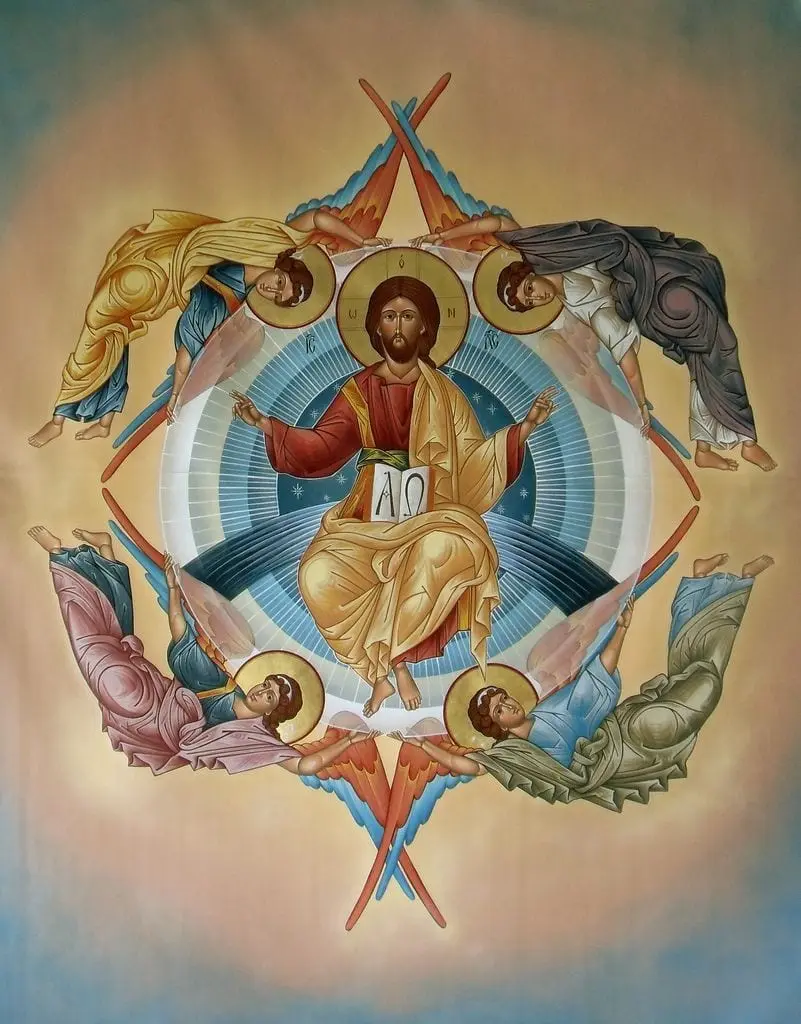
That remedy is not a philosophy, not a practice, and not a principle. It is a Person. Jesus of Nazareth , who is not merely a figure of history but the eternal God incarnate, the one who was before Abraham was, the I AM who appeared to Moses, the Ancient of Days clothed in human nature , is the second Adam whose perfect obedience reverses the catastrophe of the first Adam's rebellion. He is the true Israel, obedient where the nation failed. He is the true Moses, interceding for the people before the Father. He is the bronze serpent raised upon a pole, onto whom the judgment of the entire race was concentrated, so that all who look to him in repentant faith may live. He is the suffering servant of Isaiah, wounded for our transgressions and bruised for our iniquities, so that by his stripes we are healed.
No failure falls outside the scope of his remedy. No transgression exceeds the range of his atonement. No soul has wandered so far that it cannot find its way back through his intercession. "It shall come to pass, that whosoever shall call on the name of the LORD shall be saved" (Joel 2:32) , and he has been given a name, above every name, that is the salvation of all who invoke it. "For to which of the angels said he at any time, Sit on my right hand, until I make thine enemies thy footstool?" (Hebrews 1:13). The exaltation of Christ is the confirmation of his sufficiency. The one who bore the judgment now bears the crown, and from that throne he extends salvation to every generation.
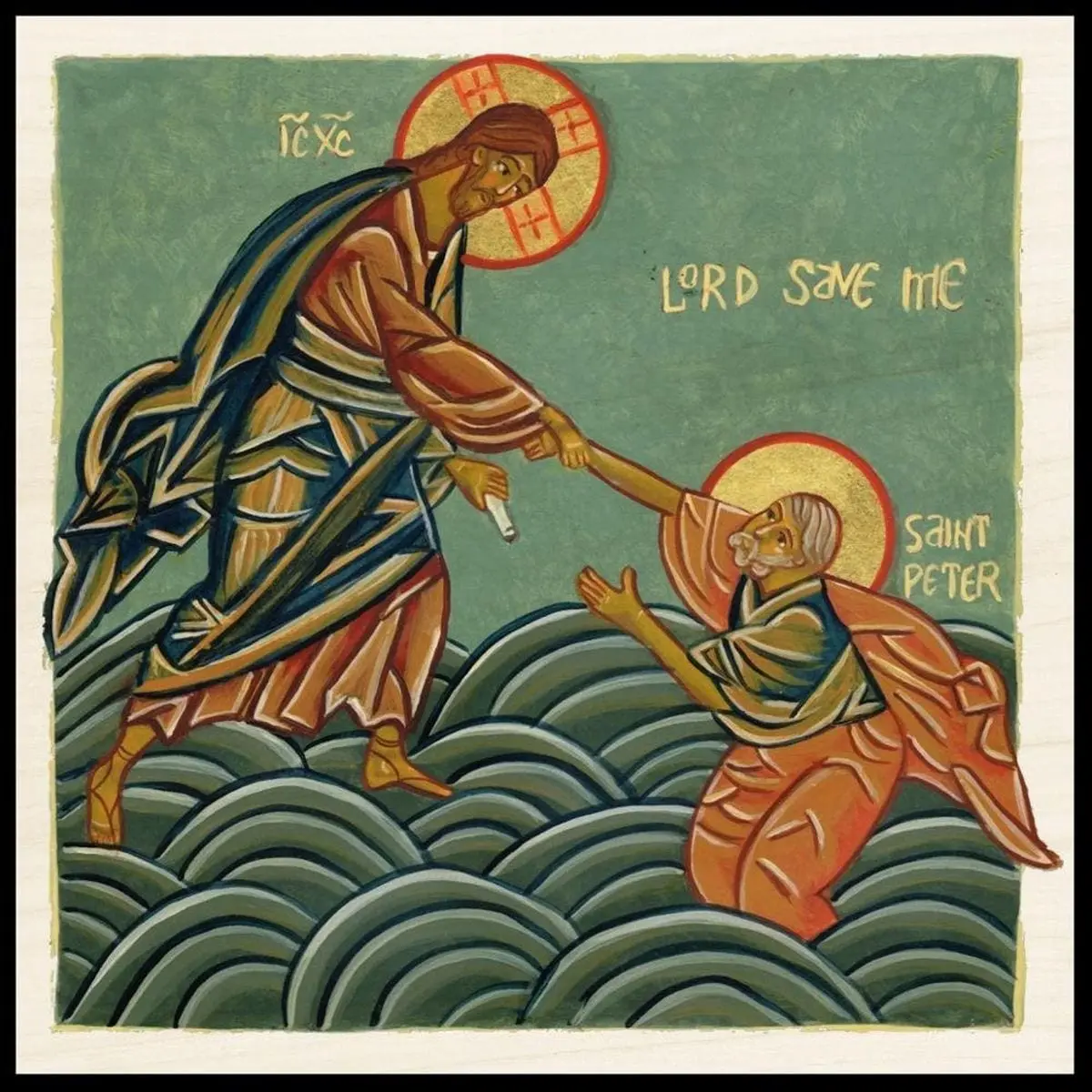
The practical implication for the believer is not passivity but persistence. We will fall, because the will is still frail, the flesh still weak, and the world still hostile. What repentance requires is not perfection but direction , not a will that never errs, but a will that, when it errs, returns. "For a just man falleth seven times, and riseth up again" (Proverbs 24:16). The only failure that cannot be remedied is the one that refuses to return. There must never come a moment in the life of the believer when the mind cannot find its way back to Christ. Whatever mountain presents itself, whatever wave threatens to overwhelm, whatever fire is kindled , look to him. Not to the mountain, not to the wave, not to the fire, but to him. For in him the judgment has already been absorbed. In him the serpent has already been rendered impotent. In him the sting of death has been swallowed up in victory.
The knowledge of God , the correct epistemological framework, the true philosophy, the governing reality by which life is to be understood and lived , is ultimately and entirely this: Jesus Christ of Nazareth, the same yesterday, and today, and forever, is Lord. He is the life of the world. And in him there is no suffering that is the final word.
Based on the teaching: The Cause of Human Suffering, Repentance & God’s Salvation