The Curse of Unbelief and Rewards of Faith
The Intersection of Kairos and the Human Will
Within the architecture of divine providence there exists a profound and often misunderstood tension between the sovereign intent of the Creator and the necessary cooperation of the human will. This tension is nowhere more palpable than during a Kairos—that appointed, pregnant moment of visitation where the eternal purposes of the Almighty intersect with the linear realities of a nation. As the Patristic tradition makes clear, God's governance of history is not a unilateral imposition but a synergistic dialogue. This essay examines the strategic character of our current theological moment, particularly as it concerns the nation of Azania—South Africa—a land standing at the precipice of an eschatological transition.
The central thesis of this discourse is that Azania stands at a pivotal juncture, moving from the realm of oral prophecy—the "words heard"—to the domain of material reality—the "works seen." Yet this transition is not a passive inevitability. In the economy of the Kingdom, the manifestation of divine promise is predicated upon a specific mechanism: the labor of faith. This labor is not an attempt to earn God's favor; it is the essential alignment of human volition with divine decree. We find ourselves at the turning of a page, where the prophetic vision of the Ascending Christ provides a strategic roadmap for the nation, and the human response of prayer provides the spiritual energy requisite for the Spirit's material intervention.
To navigate this transition, three foundational themes must be explored. First, we examine the prophetic vision of the Ascendant Christ—its symbolism and its implications for national purging. Second, we redefine prayer, not as a sentimental religious act but as force production: a technical signaling that taps into the frequencies of the Divine. Finally, we address the theological imperative of Spudazzo—the diligent labor required to enter the Rest. We shall discover that Rest is not the absence of activity but the cessation of autonomous self-effort in favor of total, persuaded alignment with the Divine Will. The catalyst for this entire reflection is a specific and startling vision of the Christ who moves to occupy the highest seats of power.
A Prophetic Vision for a Nation in Transition
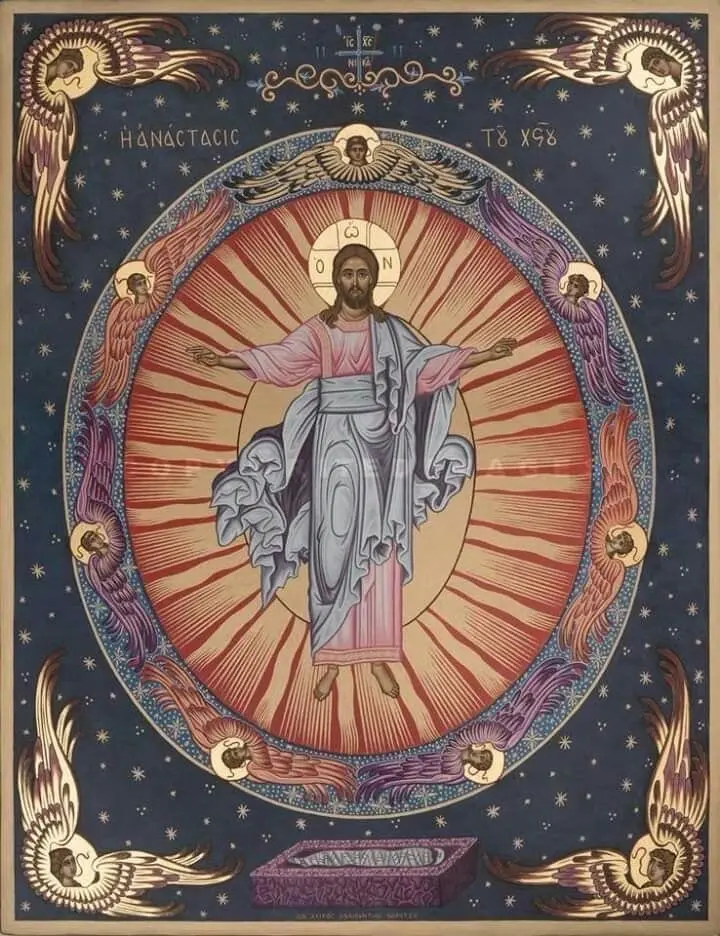
Prophetic vision functions as more than mystical experience; it is a strategic roadmap for national destiny. In the Patristic sense, vision is the theoria of divine intent, providing the specifications for what is to be established and what is to be uprooted. In the vision received during recent intercession, the Lord Jesus Christ was seen climbing a great set of stairs, ascending toward the highest seat of authority in the land. This movement signifies an ontological shift—from divine observation to divine occupation. For a century the eyes of the Pantokrator have been upon this nation, but the vision announces that the era of observation has concluded. The era of establishment has begun.
The symbolism within the vision is both historically and theologically weighty. As Christ ascended, diverse obstacles were placed in His path by the old foe—spiritual and systemic forces intended to arrest His progress. Yet the vision discloses the absolute supremacy of His intent: as He approached each obstacle, it did not merely move but dissolved, evaporating into the air. This demonstrates the impassibility of the divine purpose—no obstacle can retain its form in the presence of the Ascending King. The observation of His footprints and the sandals upon His feet serves further as a demarcation of His physical-spiritual presence in the land. He is walking the ground of the nation, claiming the territory as His own.
Of paramount significance is the identification of the nation as Azania. The etymological and theological weight of this name provides the key to the nation's standing in the divine economy: "I heard it from the Lord... the Lord called this nation Azania. You know what it means? Heard by God. Wow. Heard by God. And I see it's also the name of the Levite and the father of Yeshua. It means Yahweh has heard. Yahweh has heard." This name connects the nation to the Levite tradition of consecrated service and to the Messianic lineage of Yeshua. It signals that the travail of the nation has reached its culmination; the cries of the righteous have penetrated the heavens.
Yet this visitation brings with it the Axe of Judgment, and here we must distinguish carefully between the pruning of the past and the total uprooting of the present. In the biblical account of Nebuchadnezzar's tree, the Lord left roots so that the kingdom might be restored after the king's humility. The current decree for Azania is far more severe. The Spirit of God declares that He will leave no roots in the tree of the old foe—specifically, the communist and socialist spirit that has attempted to prevail in the land.
The implication of this vision is a clarion call: we are entering a season of radical separation. Just as Christ ascended the stairs to the highest seat, there is an impending uprooting and planting. This era marks the end of a century of divine patience and the commencement of a season of replacement, where the commotions of the earth are but the sounds of the Lord dethroning and enthroning. Yet this divine movement is not a solo performance. It calls forth a specific human response—a technical signaling through the mechanism of prayer.
Prayer as Force Production
In a cosmos governed by God's profound respect for the human will, the strategic necessity of human petition is absolute. While God is inherently sovereign, He operates within a self-imposed legal framework of Divine Self-Limitation. He has given the earth to the sons of men, as declared in Psalm 115:16: "The heaven, even the heavens, are the Lord's: but the earth hath he given to the children of men." Divine intervention in the human sphere is therefore often contingent upon a human beckoning. God does not trespass upon the private property of the human will; He requires a signal to authorize His action in our material realm.
This necessitates a formal theological refinement of what prayer is. We must move beyond the sentimental view of prayer as a mere expression of need and understand it as force production—the act of tapping on the frequencies of God. When a believer prays from a state of righteous alignment, they are producing the spiritual energy, the force, that the Spirit of God utilizes to manipulate material reality. This is the very essence of James 5:16: "The effectual fervent prayer of a righteous man availeth much." The phrase "effectual fervent" implies an active energy production—energoumenē—suggesting that prayer is the energy the Spirit works with.
We must also distinguish between God's sentiments and His interventions. God is an empathetic Creator who groans with our groaning and feels the pain of our injustices. But divine empathy does not automatically trigger divine action. If empathy alone were sufficient, the world's suffering would have ceased at the Cross. Action requires a signal. Without the tapping on the divine frequency through petition, the sentiments of God remain in the heavenly sanctuary, unable to cross the threshold into physical experience. Prayer provides the legal and spiritual conduit for that transition.
To maximize this force production, the Holy Spirit emphasizes the power of corporate unity—the three-strand cord. When the righteous join hands and hearts, the spiritual force produced is not merely additive but exponential. Unity creates a spiritual thickness, a barrier against the prevalence of wickedness, preventing the old foe from finding a breach in the national wall. This follows the biblical logic of Leviticus 26:8, where five shall chase a hundred and a hundred shall put ten thousand to flight. Collective prayer changes the spiritual physics of the nation, allowing the voice of Zion to permeate the atmosphere and signal the Lord to dethrone and enthrone with a thunderous judgment that individual prayer might not alone trigger.
Ultimately, however, the force of prayer is inseparable from the condition of the heart that produces it. If the heart is cluttered with the "ifs" of doubt or the noise of unresolved self-reliance, the signal is jammed. Force production requires a foundation of absolute belief, and it is precisely here that the greatest barrier to divine entry must be confronted.
Unbelief: The Barrier to Divine Entry
Unbelief is not a passive lack of information; it is a malignant cancer that robs the believer of the joy and power inherent in the life of God. In the arena of spiritual warfare, unbelief acts as a strategic inhibitor, preventing entry into the very promises God has already supplied. Theologically, unbelief—apeitheia—is more than doubt; it is a state of being unpersuadable. It is an active disobedience, an obstinate refusal to be moved by the sway of God's intentions.
The scriptural diagnosis of the Israelites in the wilderness is unambiguous. Hebrews 3:19 declares: "So we see that they could not enter in because of unbelief." The Land of Promise existed; the giants were defeatable; the logistics of the journey were provided by the Manna and the Pillar. The failure was not one of divine supply but of human unpersuadability. They took the opposite side of the divine decree, positioning themselves in active opposition to God's stated purpose. To stand at the border of what God has promised and turn back is not merely timidity—it is a form of spiritual provocation.
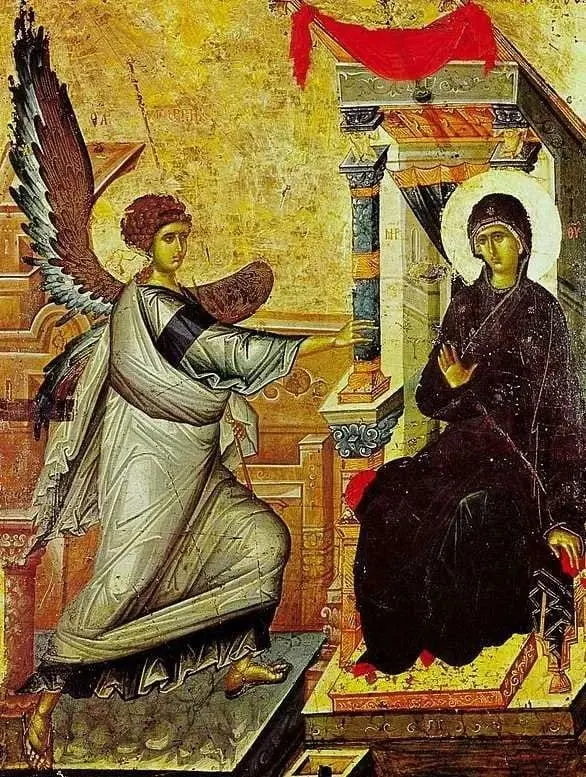
This dynamic becomes clearer when the state of unbelief is set against the state of belief. Where unbelief is obstinate—rigid in tradition, refusing to be moved by the Word—belief is persuadable, open to the sway of God's intent and flexible to His Spirit. Pharaoh's hardening in Exodus stands as the archetype of the first; Mary's response, "Be it unto me according to thy word," stands as the archetype of the second. Where unbelief is oppositional—taking the contrary side of the divine decree—belief is allied with God's purpose, as Caleb and Joshua were allied against the ten fearful spies. Where unbelief is regressive, falling back into the spiritual cancers of the wilderness generation, belief is progressive, advancing into the Rest and the fulfillment of promise, as described in Hebrews 6:12. And where unbelief tempts God—asking "Can He deck a table in the wilderness?" while standing beneath the cloud of His presence—belief honors God, approaching with the conviction that He is, and that He rewards those who diligently seek Him.
The sobering conclusion of this anatomy is that approaching God in a state of unbelief constitutes a spiritual provocation that results in failed entry. The promises of God are supplied according to His sovereign counsel, but their fulfillment in the individual life is transactionally dependent upon belief. One may stand at the very borders of Azania's new era and yet die in the desert of the old because the heart remains unpersuaded. This is precisely what makes the labor of Spudazzo not merely advisable but strategically necessary.
Spudazzo: The Strategic Necessity of Laboring for Rest
The writer of the Epistle to the Hebrews presents an apparent paradox in Hebrews 4:11: "Let us labour therefore to enter into that rest, lest any man fall after the same example of unbelief." To the modern mind, labor and rest are mutually exclusive. But in the Greek text the word rendered "labor" is Spudazzo (σπουδάζω), which carries the sense of haste, diligence, and the earnest expenditure of energy. The theological depth of this term reveals that Rest is a state that must be fought for.
In the mechanics of the Kingdom, this labor functions as the preventative mechanism against falling into the cancer of unbelief. The Rest in view—the Sabbath-rest or katapausis—is the state in which the promise has materialized and the believer no longer exerts faith for its manifestation because the work is done. But to reach that cessation of self-effort, one must first exert the force of spiritual diligence. This labor is not secular employment; it is the expenditure of energy into the sanctity of faith. As the scripture declares: "There remaineth therefore a rest to the people of God. For he that is entered into his rest, he also hath ceased from his own works, as God did from his. Let us labour therefore to enter into that rest, lest any man fall after the same example of unbelief." (Hebrews 4:9–11)
The labor here is the work of keeping the mind aligned with divine specifications despite the commotions of the material world. Slothfulness in this spiritual work is the primary cause of ministerial and national failure. When a believer ceases to labor in the Word and in prayer, they become unpersuadable. They begin to look at the palm trees of the wicked rather than the Axe in the hand of the Lord. In the Kingdom, nothing is produced without work, and the primary work—the ergon of the believer—is the work of faith. This work is determinative; it governs the entire transactional nature of our dealings with the Divine.
Transactional Faith and Material Outcomes
Faith is inherently transactional. While God's promises are made according to His own sovereign counsel, their fulfillment in the life of the individual is determined by the status of that individual's faith. Belief is the regulator of the believer's life, the metric of all spiritual progress. A person cannot advance in the Kingdom beyond the level of their internal persuasion. This explains why two individuals can hear the same prophetic word, yet only one experiences the material outcome.
A precise and sobering illustration of this is the Gold Prophecy of August 2021. The word was specific: "Buy gold; gold will reach 4,000." At the time of the utterance the price of gold stood at approximately 1,900. By 2024 it had neared the 4,000 mark, exactly as predicted. The implication is unmistakable: the word was true for everyone who heard it, but it produced wealth only in those who acted upon it. Hearing is not believing; action is the only valid evidence of persuasion. Those who did not act remained poorer—not because God failed to speak or to act, but because their unbelief barred their entry into that specific rest of provision.
This illustrates what 2 Corinthians 4:13 calls the Spirit of Faith: "We having the same spirit of faith, according as it is written, I believed, and therefore have I spoken; we also believe, and therefore speak." Faith requires an absolute alignment of heart and mouth. Abraham was renamed Father of Many Nations long before Isaac was conceived. He had to speak the absolute reality of the promise while the circumstantial reality of his body and Sarah's womb contradicted it entirely. To speak only what one sees in the natural is to lack the Spirit of Faith altogether.
For those navigating the current Kairos of Azania, the instruction is to act before the rain. Consider Elijah in the book of Kings. He heard the sound of the abundance of rain while the sky was still a cloudless blue. He did not wait for the storm to break before he began his labor of prayer. He sent his servant seven times to look for a sign, and when the sign appeared as only a cloud the size of a man's hand, he acted as though the deluge was already upon him. This is the pattern: isolate the specific word God has given for the season; labor in persuasion, applying that word to the heart through meditation and prayer until fully persuaded; align the utterance with the God-outcome rather than the situational obstacle, eliminating the "ifs" of doubt; and then execute in alignment—taking the physical actions that correspond to the prayed-for outcome, whether buying gold, preparing ground, or laying the first stone.
Constructing the Vessel for the Promise
God frequently employs constructive terms in His dealings with humanity: building, edifying, framing, constructing. These terms carry a unified implication—that the spiritual life is not an accident of fate but an organized effort. The Builder's Mandate is this: while God provides the vision and the raw materials in His Word and His Spirit, the believer is responsible for the assembly.
The metaphor of Noah's Ark provides the governing strategic lesson. God determined to save a remnant from the flood, but He did not build the boat Himself. He gave Noah the specifications—the length, the breadth, the height, and the specific wood to be used (Genesis 6:14–16). The principle is clear: what you are waiting for to save you must be built by you. Noah's safety was the result of his meticulous obedience to the divine specifications. Had he not labored to build, the promise of salvation would not have materialized for him, despite God's undiminished intent to preserve him.
The Tabernacle of Moses and the Temple of Solomon confirm this pattern; neither structure descended from heaven as a finished edifice. Both were built by human hands following divine patterns. God told Moses in Exodus 25:8, "And let them make me a sanctuary; that I may dwell among them." The dwelling of God—the promise—was contingent upon the building of the sanctuary—the labor. There is a sharp and non-negotiable distinction between promises landing as passive expectation and promises being built through active obedience. The Wise Builder, as Christ Himself defines him in Matthew 7:24, is the one who hears the word and does it.
The framework of this wise building involves three things. First, listening carefully to the specifications—discerning the precise how, when, and what of God's instructions for the nation and the individual. Second, deliberate effort: organizing one's life, finances, and prayers around the divine project rather than personal convenience. Third, structural integrity: ensuring the work is done in the Spirit of Faith, so that when the commotions and judgments come, the structure—whether a business, a family, or a ministry—survives the storm. To enter the rest of the finished building, one must first endure the labor of the construction site, fully persuaded of the Architect's plan before the first stone is laid. As we consider the nation of Azania and our own lives, the mandate is one and the same: we must become builders of the promises we seek to inhabit.
The Culmination of the Spirit and the Turning of the Page
We find ourselves at a moment of spiritual and national culmination. The travail of the nation is coming to an end, and a changing of the guard is imminent. The vision of the Ascending Christ over the high places of Azania is a definitive signal that the prayers of the righteous—spanning more than a century—have reached their appointed frequency. The page is turning, and the judgments of God are beginning to manifest. The Lord is like a man with an axe in His hand, and He will chop down the tree of the old foe from its very roots, leaving nothing of the communist and socialist spirit to revive.
Yet the enduring significance of this teaching lies in the inescapable responsibility of the individual believer. While the destiny of the nation as Azania—Heard by God—is secured in the heavenly archives, the entry of the individual into that destiny is predicated on their personal labor of faith. One cannot hold the Sovereign accountable for a lack of produce if one has refused to labor in the field of belief. The Gold Prophecy of 2021 stands as a permanent witness: God provides the way and the hidden riches, but only those who are persuaded will walk the path to possess them.
As we move forward into this new era of uprooting and planting, let us return to the first principle of divine approach: "But without faith it is impossible to please him: for he that cometh to God must believe that he is, and that he is a rewarder of them that diligently seek him." (Hebrews 11:6)
God is known by the judgments He declares and the faith He finds in His people. Let us therefore reject the "if" of doubt and the sloth of unbelief. Let us exert ourselves in the spirit of Spudazzo, laboring to enter that rest, building our arks according to the specifications of the Spirit, and speaking the absolutes of the Kingdom. The page has turned. The Christ has ascended the stairs. The sound of the abundance of rain is here. It is time to act in alignment with the God who has heard.
Benediction: May the Lord bless the thick blanket of His presence over this nation. May unity—the impenetrable force of the Spirit—prevail among the righteous. We have declared His counsels and His revelations of intent. Let us labor, let us build, and let us enter into the Rest of the Almighty. Amen.