Mysteries of the Rhema of God
The Spirit's Intent and the Vision of Perfection
In much of modern Christian theology, the Holy Spirit has been reduced to the periphery of human experience — perceived as little more than a source of emotional consolation or a facilitator of ecstatic phenomena such as tongues or prophecy. But a rigorous examination of the divine economy reveals something far more consequential. The Holy Spirit is not a passive comforter; He is the sovereign architect of human perfection. His primary mission is the systematic development of the believer toward the stature of Christ — a state of ontological maturity that transcends the limitations of the natural man. This vision of perfection is the central objective of the Spirit's indwelling, a divine imperative driving the believer beyond rudimentary spiritual existence into the plenitude of Christlike maturity. To misunderstand this mission is to misunderstand the very reason for the Spirit's presence within the human vessel.
Christianity, rightly understood, is not a humane endeavour, a social philosophy, or a mere ethical system. It is a supernatural divine institution — a kingdom not of this world, governed entirely within the jurisdiction of the Spirit. The Holy Spirit functions as the government of the Christian man and woman: a sovereign authority that guides, forms, and leads the believer. This reality shifts the identity of the person entirely, from a worldly citizen subject to natural laws and human governance, to a spiritual son under the absolute reign of God. As the scripture declares: "For as many as are led by the Spirit of God, they are the sons of God" (Romans 8:14). This leading is the definitive criterion of sonship — a life surrendered to the Spirit's jurisdiction.
The Spirit's role can be understood through the Greek concept of emparipatio, from which we derive the idea of perambulation — the act of surveying a fence or territory to claim and secure its boundaries. The Holy Spirit perambulates the believer; He surveys the territory of the soul, claims it as His possession, and establishes the government of heaven within the individual. You are His territory; you are His possession.
The ultimate aim of this divine indwelling is the total formation of Christ within the human vessel. The body is the temple of the Holy Spirit — a localized residential address for the Divine Presence — and His indwelling is not merely for habitation but for total reign. He is to become the very life and immune system of the believer, manifesting all the possibilities of Christ Jesus until the believer arrives at epignosis — a knowledge that does not merely inform the mind but alters the very essence of the knower. This transformation is the work of the Spirit, and the faculty through which we access this higher reality is faith.
The Epistemology of Faith
To navigate the transition from the material to the spiritual, one must adopt an epistemology that transcends the limits of scientific gnosis. Natural knowledge is restricted to the observations of the third-dimensional world. Faith, by contrast, operates in a higher dimension, enabling the human spirit to access realities that remain entirely oblivious to the natural mind. Faith is the essential faculty in the school of revelation — providing a consciousness of realities that are unseen yet foundational. It is the substance that acclimatises the human spirit to the habitation of the Unseen, awakening the believer to a dimension of life he was previously unaware of.
The seminal definition of this faculty is found in the Epistle to the Hebrews: "Now faith is the substance of things hoped for, the evidence of things not seen" (Hebrews 11:1). The word substance is a translation of the Greek hupostasis, which refers to the essential ingredient, the foundational matter, or the standing-under of a thing. Faith is not the object of hope itself; it is the proof of its existence in a higher realm — the assurance and validation that the unseen reality is tangible. Equally, the word evidence (elenchos) carries the weight of legal proof, a conviction that stands up under scrutiny. Faith thus serves as internal evidence of God's reality, proving to the believer what the physical senses cannot perceive.
This creates a sharp distinction between the material dimension and what must be recognised as the parent realm — the originator dimension from which everything visible proceeds. Faith is the evidence precisely because it connects the believer to this originator dimension. Indeed, the very fact that a believer possesses faith is itself the evidence that the unseen God exists. Without faith, the unseen remains inaccessible; with faith, the spirit is sensitised to the frequency of the divine. Faith is what gives the believer consciousness of unseen realities, fulfilling the scriptural command to "reckon now yourselves alive unto God" (Romans 6:11) — an awakening from the death of naturalism into the vibrant reality of the Spirit. This internal conviction is not a mere psychological state but a spiritual necessity, for it is through faith that we understand how the physical world is framed by the invisible.
Katartizo: The Repair and Framing of the Aions
The construction of the cosmos and the alignment of an individual life are both accomplished through the application of the Word of God — specifically, the RhemaRhēmaThe word of God addressed to a person in the present: “faith cometh by hearing, and hearing by the word of God” (Romans 10:17). of God. Scripture provides a technical description of this process: "Through faith we understand that the worlds were framed by the word of God, so that things which are seen were not made of things which do appear" (Hebrews 11:3).
The Holy Spirit's choice of the Greek word katartizo, translated here as framed, is deliberate and precise. This term appears only five times in the New Testament, and its meaning is specific: to mend, to repair, to complete, or to make whole. It is the same word used when the disciples were mending their nets (Matthew 4:21). By choosing katartizo over the general word for creation (ktizo), the Spirit reveals that the Rhema of God is active in the continuous repairing and aligning of the aions — the generations, time-structures, and destinies of human lives.
Many believers find their lives in a state of skewed aions: misalignments in which careers, marriages, and personal paths have deviated from the divine blueprint. A person may be living a life that was never ordained by the wisdom of God — a life that is, in the deepest sense, a lie, a deviation from the will of the Father. For such a life, the Rhema of God acts as a divine source code that enters the timeline to repair, mend, and realign the individual's path with the Father's original intention. This is the grace of katartizo: that even after years of error, a life can be framed back into the will of God. However, this framing does not occur in a vacuum. It requires a medium — a Matrix — through which the invisible Word can materialise into the visible world.
The Matrix of Materialization
The transition of the Word from the spiritual realm into the physical implies a Matrix or Womb — a theological interface between the unseen and the seen. This concept is deeply embedded in the ancient texts of Job and the Psalms, where the womb of the earth is described as the place of origin for material substances. In the book of Job, the Lord challenges the patriarch regarding the origins of the physical world: "Or who shut up the sea with doors, when it brake forth, as if it had issued out of the womb?" (Job 38:8). Likewise, the Psalmist describes the formation of the human frame in terms that transcend biological reproduction, pointing toward a deeper spiritual architecture: "My substance was not hid from thee, when I was made in secret, and curiously wrought in the lowest parts of the earth. Thine eyes did see my substance, yet being unperfect; and in thy book all my members were written, which in continuance were fashioned, when as yet there was none of them" (Psalm 139:15–16).
The secret place and the lowest parts of the earth do not refer exclusively to the maternal womb. They point toward a spiritual Matrix within the earth itself — a womb through which all physical things emerge. This Matrix is not the Spirit Realm itself; it is a consequence of the Spirit Realm, a spiritual system created by God to facilitate the materialisation of divine intent. Everything visible — from the vast oceans to the intricacy of the human body — can be traced back to this intangible causal realm.
Physical conditions, therefore, are shadows of unseen causes. If disease or breach is manifest in the body, the root of that condition lies in the Matrix, in the spiritual realm. This is why the source code must be invoked. Reality is unseen because the unseen is responsible for what is seen. To change a shadow, one must change the object casting it. By addressing the spiritual root, the physical substance is compelled to align. This necessitates a profound understanding of how human speech authorises or legalises spiritual activity within this Matrix.
The Causal Power of the Tongue: Words are Legalizing Agents
The human tongue occupies a unique and irreplaceable role in the divine economy, functioning as a legalising agent that permits or prohibits spiritual activity on the earth. Because man possesses a physical body, he has been granted authority to govern the conditions of the material world. As Proverbs observes: "A wholesome tongue is a tree of life: but perverseness therein is a breach in the spirit" (Proverbs 15:4). A wholesome or healing tongue (marpe) maintains the integrity of the spirit, while corruption in speech creates a breach — a literal transgression in the parent realm that manifests as negative physical conditions. Every action on earth is initiated or permitted by words. In the causal realm, words are the currency of authority. Only a man with a body can legalise spirits — whether divine or demonic — to operate within the physical domain. Spirits are essentially inoperative in the earth without the authorisation of human words.
This principle is demonstrated vividly in the biblical account of the boy afflicted by a deaf and dumb spirit. When the disciples could not effect a cure, Jesus did not address the boy's ears or tongue as if the condition were purely biological. Instead, He addressed the spiritual cause directly: "When Jesus saw that the people came running together, he rebuked the foul spirit, saying unto him, Thou dumb and deaf spirit, I charge thee, come out of him, and enter no more into him" (Mark 9:25). By addressing the spirit — the root — the shadow of physical deafness and muteness was immediately corrected. Human conditions are frequently immaterial in nature, and their resolution requires spiritual address.
To repair the aions and close the breaches in our lives, we must align our speech with the Rhema of God. When a man speaks what God has spoken, he is not merely making a statement — he is authorising the Matrix to materialise the divine blueprint. The Word of God is the only force capable of addressing the root cause of human conditions. The ultimate expression of this principle is the Incarnation itself, where the Word did not merely influence flesh but became flesh.
The Incarnational Model: Mariology, the Spirit, and the Overshadowing Power
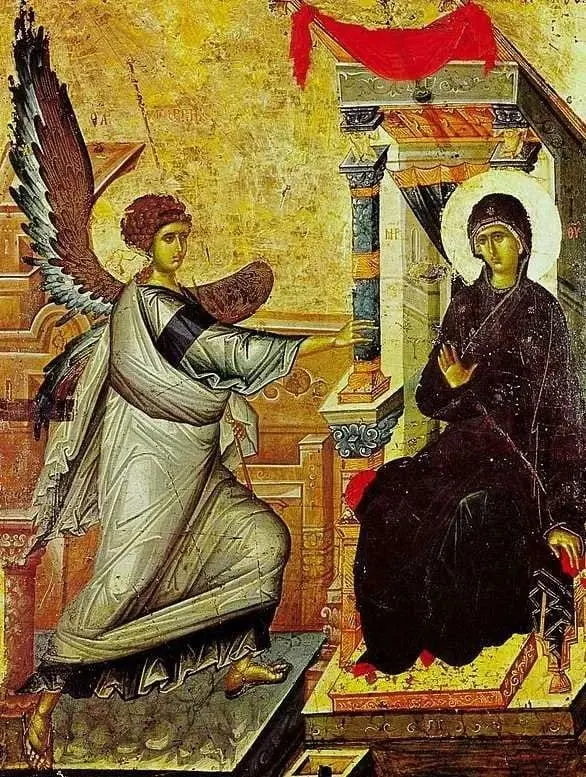
The birth of Jesus Christ through the Virgin Mary stands as the prototype and reference point for all divine materialisation. It is the definitive demonstration of how the LogosLogosThe eternal Word of God, through whom all things were made, who became flesh and dwelt among us (John 1:1–14). enters the Matrix and takes on physical form. What I call Mariology here is the understanding of the mystery of the Incarnation through the lens of synergesis — the co-operation between the divine purposes of God and the human will. The dialogue between the angel Gabriel and the Virgin Mary in the Gospel of Luke provides the technical mechanics of this process: "And the angel answered and said unto her, The Holy Ghost shall come upon thee, and the power of the Highest shall overshadow thee: therefore also that holy thing which shall be born of thee shall be called the Son of God" (Luke 1:35).
The word overshadow (episkiazo) describes a divine envelopment — a cloud of presence in which the Holy Spirit bypasses the natural process to impregnate the Matrix of Mary's womb with the eternal Word. Mary, a young virgin of approximately fifteen years, became the custodian and conduit for the Incarnation because she had found favour with God. Her response — "How shall this be, seeing I know not a man?" — is the fundamental question of the human condition when confronted by a divine promise. And the answer, then as now, is consistently the same: the Holy Spirit is the mechanism of fulfilment.
Mary's experience establishes that the Holy Spirit is responsible for making the Word flesh. This is the model for the believer today. If the Spirit could incarnate the Logos in the womb of a virgin, He is equally capable of materialising the prophetic promise in the life of the believer. This requires an environment conducive to the seed of the Word — just as a farmer must protect his crop from scavenging birds, the believer must guard the sensitive seed of the Word from the enemy. When a life is fully committed and overshadowed by the Spirit, the holy promises of God move from the realm of the unseen into the realm of the tangible.
Manna and the Will of God: Sustenance Beyond the Natural Means
To live within a pneumatological framework is to exist outside the world's system of provision. The history of Israel in the wilderness is a pattern for this supernatural existence. For forty years, an entire nation was sustained by Manna — a substance that did not originate from the earth's agricultural cycles but descended from the firmament of heaven. The purpose of this provision was explicitly educational, as stated in Deuteronomy: "And he humbled thee, and suffered thee to hunger, and fed thee with manna, which thou knewest not, neither did thy fathers know; that he might make thee know that man doth not live by bread only, but by every word that proceedeth out of the mouth of the Lord doth man live" (Deuteronomy 8:3).
Manna was a divine doctrine in edible form, designed to shift the believer's dependence from natural provision to the proceeding word. It was angels' food — spiritual substance that underwent a process of transmutation and materialisation to become nourishment for human beings, coming from the treasuries of snow and the windows of heaven.
At this juncture, a scholarly engagement with modern evaporation science is warranted. The prevailing model posits a closed hydrological cycle, but scripture offers a different account of the firmament's mechanics: "For as the rain cometh down, and the snow from heaven, and returneth not thither, but watereth the earth, and maketh it bring forth and bud, that it may give seed to the sower, and bread to the eater" (Isaiah 55:10). The Word explicitly states that rain and snow do not return to their source. God provides directly from the chambers of the heavens. In Amos, this architectural system is described further: "It is he that buildeth his stories in the heaven, and hath founded his troop in the earth; he that calleth for the waters of the sea, and poureth them out upon the face of the earth: The Lord is his name" (Amos 9:6). The stories or stairs (ma'alah) in the sky refer to the upper chambers where God stores the treasures of the snow (Job 38:22). The blue we perceive in the sky is not merely a reflection of light — it is the waters above the firmament (Genesis 1:7; Psalm 148:4), a solid dome or strata dividing the waters above from the waters below. When God desires to provide, He opens the windows of heaven and commands the clouds to materialise sustenance directly.
This supernatural governance extends even over the celestial bodies. When Joshua commanded the sun and moon to stand still — "Sun, stand thou still upon Gibeon; and thou, Moon, in the valley of Ajalon. And the sun stood still, and the moon stayed, until the people had avenged themselves upon their enemies" (Joshua 10:12–13) — it was obeyed. And when the dial of Ahaz was turned back ten degrees (Isaiah 38:8), the physical laws of the earth were shown to be fully subservient to the Word.
Ultimately, food is redefined as doing the will of God. Jesus exemplified this during His encounter at the well in Samaria: "My meat is to do the will of him that sent me, and to finish his work" (John 4:34). When Jesus fulfilled the Father's will, He was physically nourished by it. Provision is geographically and spiritually tied to the will of God. In the garden, Adam was sustained as long as he kept the garden and protected that will. The word keep is militant — it means to guard, to protect. When Adam failed in that task, he was removed from the parameters of that provision. To experience the materialisation of Manna, the believer must exalt the Word above all worldly systems of labour and toiling, which are themselves functions of the fall.
The Mandate for the Latter Rain and the Prophetic Arrival
The journey of the believer — from the initial reception of the Word to its full materialisation — is a process of divine gestation. Just as the eternal Word took nine months to become flesh in the womb of Mary, the prophetic words spoken over our lives require a season of development. But we have entered a season of birth. The nine months are due. The Holy Spirit, the architect of our perfection and the surveyor of our lives, is bringing His work to its teleological apex.
This arrival is marked by the prophetic motifs of the Latter Rain. As the Lord commanded the clouds for Israel, He is now opening the windows of heaven to pour out the abundance of His Spirit. We stand with the Psalmist in anticipation of the moment when unseen causes produce the tangible laughter of Zion: "When the Lord turned again the captivity of Zion, we were like them that dream. Then was our mouth filled with laughter, and our tongue with singing: then said they among the heathen, The Lord hath done great things for them" (Psalm 126:1–2).
Like Elijah, who persisted in prayer upon the mountain until the cloud the size of a man's hand appeared, the believer must maintain a posture of rigorous expectation — knowing that not one word of all the Lord's good promises shall fail; they shall all come to pass.
The Holy Spirit is the final and only answer to the "How shall this be?" of our lives. He is the one who frames our aions, repairs our skewed timelines, and ensures that the Word becomes flesh in our physical existence. The mandate for every believer is to prioritise and exalt the Word above the substandard levels of worldly living — to seek the overshadowing of the Spirit, allowing Him to materialise divine reality in our experience. As we enter this season of fulfilment, with our jaws wide open in awe of what the Lord is doing, we witness the glorious reality of the Word made flesh once more. This is the Lord's doing, and it is marvellous in our eyes. Amen.