Love of the Trinity: The Pathway to Sinlessness, Perfection & Holiness
Seeking Inner Transformation
A harmful shadow has fallen over the contemporary Western understanding of the Christian life. We find ourselves besieged by a theological emptiness that prioritizes external mechanics, legalistic transactions, the pursuit of material prosperity, and superficial adherence to moral codes over the deeply spiritual, ontological transformation of the human person. This paradigm, manifested most visibly in charismatic circles as a cult of wealth, represents a fundamental betrayal of the salvific gift. The Gospel of Jesus Christ is not a blueprint for social utility or financial accumulation. It is a summons to theosisTheōsisNot that we become God by nature, but that by grace we are drawn into His life: “partakers of the divine nature” (2 Peter 1:4). — the divinization of man through the uncreated energies (grace) of God. This process of becoming godlike by grace is not an external modification but an internal resurrection of the human substance.
The strategic imperative for the modern believer is therefore a decisive shift: from the outer world of sensory distraction to the inner world where the Creator engages the soul. This transition is not merely academic; it is anchored in direct revelation. Between the years of 2010 and 2016, a series of profound theophanies served as the ontological foundation for this ministry. From the initial divine revelation in 2010 to the intensive intercessory vigils of 2013, where, in a small church in Mamelodi alongside an elder named Milton, prayer ascended from seven in the morning until six in the evening, the Spirit began to unveil the mysteries of healing and noetic restoration. The culmination of these revelations occurred in 2016 in the United States, where the Lord Jesus Christ appeared in a vision in the air, a divine manifestation that sent a prophetic mandate back to the nation. These experiences provide the foundational authority for our essay, demonstrating that when truth is discovered in its fullness, it demands a rebellion against the superficialities of a Sola Fide that ignores the rigorous necessity of synergeia — the vital cooperation between divine grace and human effort.
The thesis of this essay is clear: the Christian life is a structured pilgrimage of interior transformation, a process of theosis facilitated by a precise spiritual architecture. Spiritual and physical flourishing alike are predicated upon the prerequisite of forgiveness, grounded in the fountainhead of Trinitarian love, and sustained by the sacramental economy of the Church. This essay will systematically examine that architecture, moving from the foundational requirement of reconciliation to the Trinitarian origins of love, then to a Patristic understanding of the human person (the kardia, psyche, and nousNousThe faculty by which the human person perceives God. Healed, it sees; darkened, it wanders.), before analyzing the antagonistic conflict between the Kingdom and the Cosmos. We shall conclude with the sacramental Divine Assistances that lead the believer toward the eternal weight of communion with the Creator.
Forgiveness: The Prerequisite for Divine Healing
In the theology of the interior life, forgiveness is not a moral suggestion or a psychological therapeutic tool. It is an ontological prerequisite for the restoration of the human person. Scripture reveals a stark, inescapable reality: nothing is healed without first being forgiven. Whether one seeks the physical healing of the body, the mending of fractured relationships with spouses or in-laws, or deliverance from an inoperative life characterized by stagnation, the diagnostic root is frequently found in the refusal to seek or grant reconciliation. The inability to say I am sorry is a devastating revelation of the presence of pride — a posture of the soul that acts as a spiritual insulator against the grace of God.
Pride is the root of all spiritual infestations, whether they manifest as demonic oppression or biological malady. When the soul hardens in pride, it becomes a legal foothold for the adversary. To harbor unforgiveness is to ingest a noetic poison. In the Patristic tradition — the teachings of the early Church Fathers — unforgiveness is akin to a form of spiritual sorcery, for to refuse forgiveness is to wish ill upon another, thereby inviting the gates of hell to exercise sway over one's own thought processes and behavior. This internal state of malice effectively un-Christianizes the individual, a reality underscored by the Lord's own teaching on the Church's authority to bind and loose: "Verily I say unto you, Whatsoever ye shall bind on earth shall be bound in heaven: and whatsoever ye shall loose on earth shall be loosed in heaven" (Matthew 18:18, KJV).
This authority is inextricably linked to the community of the faithful. If a brother refuses to reconcile after the intervention of witnesses and the Church, he is to be treated as a heathen and a publican — not merely as an administrative excommunication, but as a recognition of an internal reality: the refusal to forgive from the heart results in the Heavenly Father withholding His own forgiveness.
To navigate this requirement, the believer must understand reconciliation along two dimensions simultaneously. The vertical dimension concerns God's forgiveness toward man — the confession of sins committed in thought, heart, and flesh, including the lust of the eyes and the pride of life, for justification and cleansing by the Blood of the Lamb and the restoration of the imago Dei before the Creator. The horizontal dimension concerns man's forgiveness of his brother — the active laying to rest of all contentions within the sphere of human relations, removing the spiritual debt and the burden of hurt, and acknowledging that just as Christ forgave His executioners, we are not immunized from offenses.
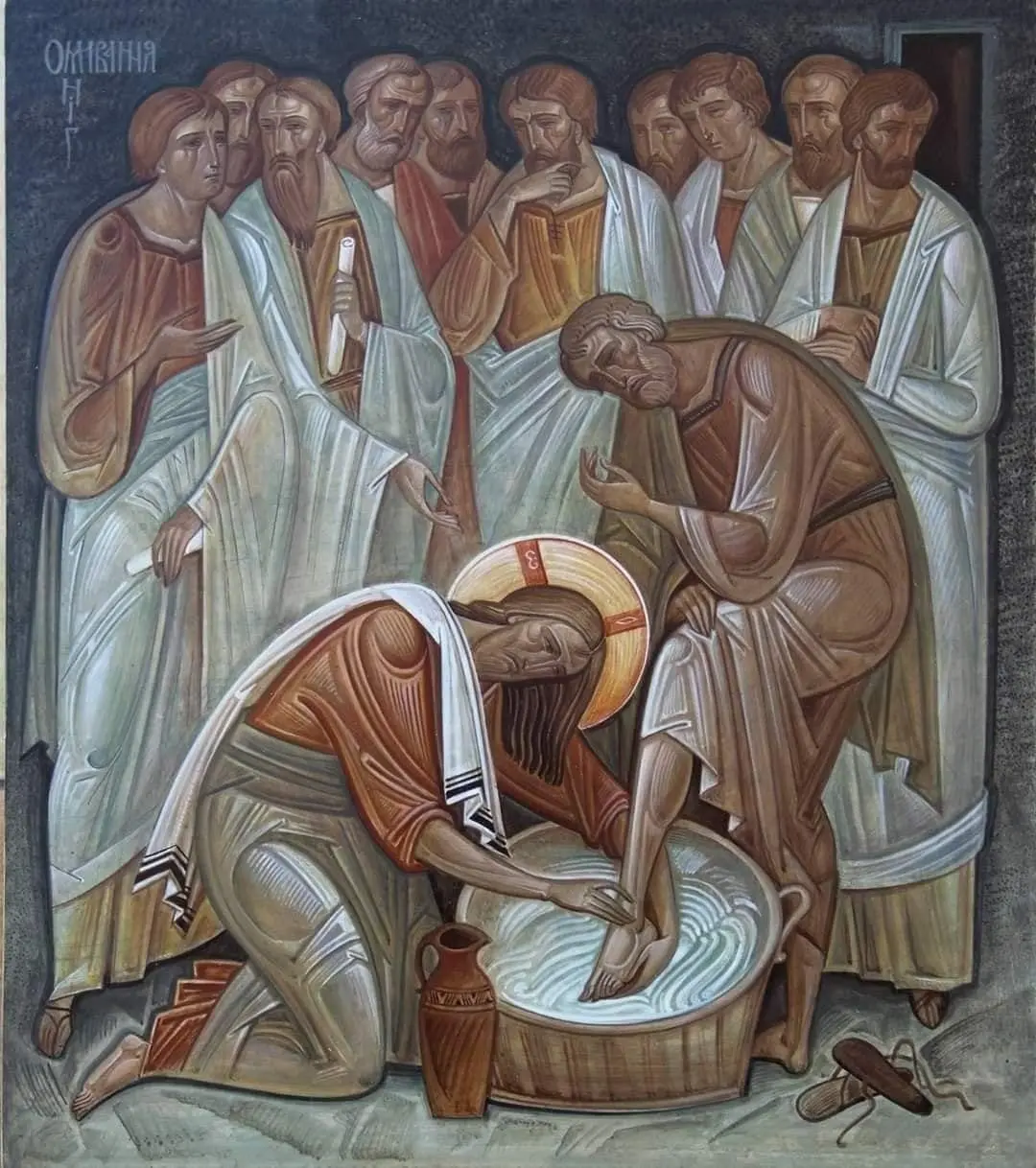
Forgiveness is therefore an act of profound humility — a divine dislocation of the ego, much like the angel touching the hip of Jacob. By forgiving, we acknowledge that we are not above reproach. It is the mechanism by which we lay matters to rest, ensuring that when we stand before the Father, no lingering debt hinders our ascent. Without this circumcision of the heart, the soul remains encumbered, unable to participate in the fountainhead of love that flows from the Holy Trinity.
Trinitarian Foundations: Unity, Diversity, and the Fountainhead of Love
The boundary of the Christian life is defined by the Nicene-Constantinopolitan Creed — a Creed of our Faith that outlines the mystery of the Godhead not as a dry formula, but as the archetype of all relationship. Central to this mystery is the Monarchia of the Father, the Fountainhead of the Godhead. In our Trinitarian confession, we affirm one God, the Father Almighty, as the source from whom all mysteries proceed — the Son begotten of the Father before all worlds, and the Holy Spirit proceeding from the Father.
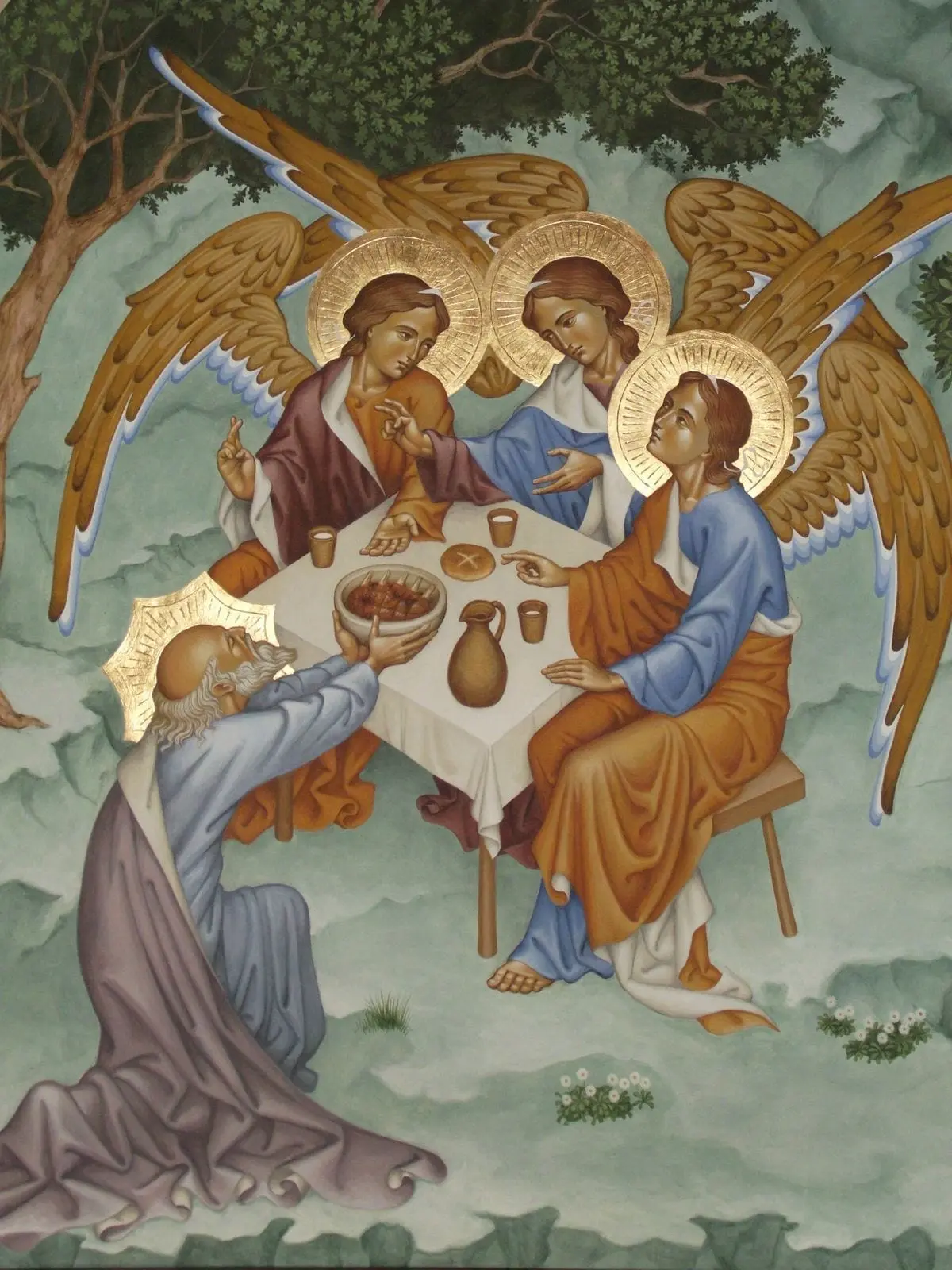
This structure presents a Unity in Diversity that avoids the twin errors of pantheism and tritheism. We do not worship three gods, nor do we collapse the Persons into a singular, undifferentiated essence. The members of the Trinity are unified in their essence — one substance, homoousios — yet distinct in their Persons, their hypostases. The Father is uniquely the Father, the Son the uniquely Begotten, and the Spirit the uniquely Proceeding. This koinonia, this communion of the Godhead, is characterized by perichoresis — a mutual indwelling — wherein the love of the Father is the all-consuming energy that defines the Godhead itself.
Scripture describes our God as a consuming fire (Hebrews 12:29, KJV). This fire is not an agent of malice but the all-consuming intensity of His love, the energy that seeks to engulf, purify, and transform the believer. Within this Trinitarian flow, we see the perfect synergeia of love: the Father as initiator, who gave His only Son for the world; the Son as the obedient one, who proves His love for the Father through His sacrificial death; and between them a reciprocity in which the Fatherhood of God is the function of His love, and His righteousness is the function of His judgment.
To participate in the life of God, man must possess the very thing that flows within the Trinity: Love. Without this interior affection, the human person has no capacity to retain the divine commandments. The laws of God are not arbitrary restrictions but repositories of His righteousness. To love God is to align one's internal state with the Trinitarian energy — an alignment that alone provides the capacity to keep the commandments. If a man does not love God, he cannot retain the Word. The Great Commandment is therefore the foundational blueprint for the anatomy of the inner life, requiring the total investment of the human substance in the love of the Father.
The Anatomy of the Inner Life: Kardia, Psyche, and Nous
To achieve communion with the Divine, one must possess a sophisticated understanding of the interior substances of man. The Great Commandment — proclaimed in Deuteronomy 6:4–5 and reaffirmed by our Lord in Mark 12:30 — serves as the definitive map of the inner man, demanding that we love the Lord our God with the entirety of our being. This command necessitates the redirection of four distinct substances.
The Kardia (Heart). The kardia is the seat of the intellect, the emotions, and the will — the center of the human person from which all words and actions issue. As the Lord taught, "out of the abundance of the heart the mouth speaketh" (Matthew 12:34, KJV). The heart is the primary habitation God desires, and when it is corrupted or misconfigured by sin, the indwelling of the Divine is obstructed.
The Psyche (Soul). The psyche is the animating principle and the indestructible life force of the man — the living soul that returns to its Maker upon the death of the body. To love God with the soul is to dedicate the very essence of one's life, the thing that makes a man a man, to the service of the Creator.
The Nous and Dianoia (Mind). In Patristic anthropology, a distinction must be drawn between the nous and the dianoia. The dianoia refers to the faculty of discursive reasoning, imagination, and the processing intellect. The nous, however, is the spiritual eye — the intellect in its highest sense — the faculty that perceives God directly. Loving God with the mind requires the sanctification of the dianoia and the purification of the nous, so that the spiritual eye may behold the uncreated light.
Strength (Might). The inclusion of strength indicates that the pursuit of God is a rigorous discipline, demanding the application of one's total energy. Loving God is not a passive sentiment but an active investment of one's entire being.
These substances were capacitated at creation specifically for the function of loving God. The heart was made to contain Him; the soul was made to reflect Him. Consequently, loving God is the pathway to sinlessness. When these internal substances are fully invested in the love of the Father, the intrusion of sin becomes ontologically impossible.
But this reflection requires absolute purity. Using the metaphor of a river: if the waters are murky and muddy, the reflection of the face is distorted. "Blessed are the pure in heart: for they shall see God" (Matthew 5:8, KJV). Impurity — whether manifested as pride, noetic obfuscation, or worldly affection — harms the spiritual vision. The warfare of distraction waged by the adversary is specifically designed to manipulate these inner substances, drawing the nous away from its primary purpose and into the entanglement of the Cosmos.
The Great Conflict: Love of the Father vs. Friendship with the World
There exists an inherent, antagonistic relationship between the Cosmos — the world system — and the Kingdom of God. The world is not merely a physical location but a decorated system arranged by the adversary to be anti-God. Its spirit is the spirit of Antichrist, designed to appeal to the flesh and drive the inner life into depravity.
A rigorous critique must be leveled against Western forms of Christianity that have succumbed to the theological vacuity of the Reformation interpreted through a lens of modern greed. Many in charismatic circles have transformed the faith into a cult of wealth, equating material success with divine favor. This is a betrayal of the salvific gift. We must recall the Lord's warning to the church in Laodicea: though they were materially wealthy and had need of nothing, the Lord declared them "wretched, and miserable, and poor, and blind, and naked" (Revelation 3:17, KJV). The goal of the Gospel is to shift the human focus from the outer world of possessions to the inner world of spiritual wealth. The scriptural mandates are absolute: "Love not the world, neither the things that are in the world. If any man love the world, the love of the Father is not in him" (1 John 2:15, KJV), and "Know ye not that the friendship of the world is enmity with God? whosoever therefore will be a friend of the world is the enemy of God" (James 4:4, KJV).
The figure of Lot's wife serves as a harrowing semiotic analysis of this conflict. As Lot and his family were delivered from the judgment of Sodom, his wife looked back — not merely a physical turn, but an ontological alignment. Her heart remained allied with the status, the possessions, and the philokosmia, the love of the world, she had left behind. In that moment of turning, she became a pillar of salt — a state of ontological freezing, unfit for the Kingdom. Our Lord's command is succinct: "Remember Lot's wife" (Luke 17:32, KJV).
The Ascetic Principle is the only legitimate entrance into the Kingdom. It requires a sacrificial disposition — a willingness to sell all to follow Christ. This does not necessarily demand a literal divestment for every believer, but it does require an ontological detachment in which possessions do not possess the man. Whether through the circumcision of the heart proven by tithing and offerings, or through the denial of self-status, the believer must demonstrate that his loyalty does not lie with the world. Christianity is a rigorous discipline, an ascetic religion that demands we lose our life for His sake in order to truly gain it.
The Sacramental Economy: Theosis through the Church
Because human nature is depraved and incapable of self-transformation through sheer willpower, the Creator has provided Divine Assistances in the form of the Sacraments. The sacramental life — continuing in the Apostles' doctrine and the breaking of bread — is the practical implementation of our theology. It is through Sacramental Realism that the human substance is infused with immortality.
Baptism: The Ontological Death. Through the mystery of Baptism, the believer undergoes a mystical death and resurrection. It is the one baptism for the remission of sins, wherein the old man is "buried with him" (Romans 6:4, KJV) so that he may rise in the newness of life. It is the foundational initiation into the life of the Trinity.
The Eucharist: The Infusion of Immortality. The Eucharist is the sacrament of communal residence. By partaking of the Body and Blood of Christ, we share in His immortal life — not as a mere symbol, but as the infusion of the Divine life into our very substances. As Scripture states: "He that eateth my flesh, and drinketh my blood, dwelleth in me, and I in him" (John 6:56, KJV). The Eucharist is the remission of sin and the medicine of immortality that makes the many one bread.
Confession: The Proof of Repentance. Confession is the proof of metanoiaMetanoiaA change of the nous: the whole self turning toward God, not once, but daily, through repentance and confession.. It is the outward demonstration of an inner change of mind. Through the vocalization of our failures, the soul is healed and the heart is stilled, allowing the light of God to penetrate the darkness of the kardia.
We must return to the order of the Lord Jesus Christ and the wisdom of the Patristic Fathers, rejecting the sentimentalism of modern religiosity. Christianity requires a striving for mastery and a rigorous discipline. The sacraments are the means by which the habitation of God is cleansed and sanctified, preparing the believer for the ultimate goal of theosis — the achievement of a state in which the human person so reflects the divine attributes of love, humility, and forgiveness that he becomes godlike by grace.
The Eternal Weight of the Interior Pilgrimage
The interior life reveals a profound truth: the inner state of a man defines his outer reality. The Christian pilgrimage is not a journey through physical geography but a descent into the depths of the heart to discover the Kingdom of God. We have established that forgiveness is the indispensable threshold, that Trinitarian love is the sustaining atmosphere, and that the substances of the soul are the vessel capacitated for the Divine Presence.
We must remain ever vigilant against the Sweet Destroyer. The adversary is not only a roaring lion but a patient strategist who allows pride and bitterness to simmer in the soul. Satan cooks his meals well, waiting for the simmering of pride to reach maturity before he strikes. The only defense against this protracted spiritual deception is childlike humility. We must be converted and become as little children — tender, quick to repent, and free from the hardening of heart that characterizes those who are wise in their own eyes. When a child is corrected, even with a rod, he returns moments later crying, Daddy, Daddy. This is the posture required of the believer: a perpetual state of repentance and tenderness.
The true measure of our faith is not found in the volume of our religious activity or the extent of our material success. It is found in the degree to which our inner substances reflect the divine attributes. To forgive as God forgives, to love as the Father loves, to remain humble before the Divine Mystery — this is the path of theosis. Like Jacob, we must be willing to endure the divine dislocation of our pride so that we might receive the blessing. Let us therefore seek first the Kingdom, and in the stillness of a purified heart, we shall behold the Creator of all things. Amen.