Love: The Highest Expression of the Divine Nature
The Deposit of Faith and the Importance of Theological Continuity
At this late hour in the life of the Church, what many discern as the edge of the age,there is an urgent need to recover what our forebears entrusted to us. Christianity is not a localized or temporal phenomenon, nor is it a subjective experience to be reinvented with every passing cultural mood. It is a paratheke, a sacred Deposit of Faith, handed down with care from the moment the Incarnate LogosLogosThe eternal Word of God, through whom all things were made, who became flesh and dwelt among us (John 1:1–14). first breathed upon His Apostles. The preservation of this faith, unpolluted and undiluted, depends entirely upon our commitment to that continuity. We cannot preserve what we do not possess, and we cannot possess what we have not taken the effort to understand. True theological fidelity therefore demands an unbroken chain of dogma stretching from the first-century kerygma to the twenty firstcentury witness. This is not merely an academic exercise in historical preservation; it is the only framework within which the fragmented human soul can find its healing.
The Church must never be understood as an earthly institution of human invention, nor as a voluntary association of like-minded individuals. In its essence, it is a heavenly reality. As the Apostle Paul declares in Ephesians: "For this cause I bow my knees unto the Father of our Lord Jesus Christ, Of whom the whole family in heaven and earth is named" (Ephesians 3:14–15, KJV). This revelation establishes an eternal harmony, a bridge between the visible and the invisible, the created and the uncreated. The Church on earth must therefore be a precise reflection of the perfection of the Church in heaven. Any departure from established dogma, what the Fathers rightly called heresy, is not a mere difference of opinion or a denominational preference. It is an ontological threat to the soul's salvation. When the dogmatic anchor is moved, the vessel of salvation is compromised, and the human person risks being cast adrift in a sea of subjective narratives that possess no power to save.
Our argument will unfold in deliberate stages: from the historical view of preservation, to the Trinitarian prototype of uncreated love, and finally to the sacramental life as participation in immortality. We must face the sobering reality that when a believer's practice lacks continuity, consistency, and compatibility with the primitive Church, that believer inhabits a condition of genuine spiritual danger. We turn now to the crisis of modern theological amnesia, in which the rejection of history has produced a widespread misalignment with the Spirit of God.
The Crisis of Modern Innovation: Historical Continuity vs. Protestant Amnesia
History is not an optional supplement to the life of the Church; it is its furnace. To remain close to the furnace of the early centuries is the only reliable way to ensure that the heat of the Spirit's original revelation continues to permeate the soul. When a movement drifts from this historical center, its gravitational pull toward the truth weakens, and deviation becomes almost inevitable. The great tragedy of the modern era is a profound theological amnesia—a condition in which the Church forgets her own biography and attempts to rewrite the mysteries of God through the lens of private interpretation.
We must apply an honest critique to the foundational assumptions of the Reformation and the Protestant traditions that followed it. These movements frequently operate under the premise of a fifteen-hundred-year historical gap—a period in which, supposedly, the Church fell into deep darkness after the Apostles died and did not recover until the sixteenth century, when the Spirit allegedly reinvented true theology through figures like Martin Luther. But this assumption, examined carefully, collapses under its own weight. If the Spirit of God was absent or silent within the Church for over a millennium, then the mandate of Christ in Matthew 16:18 has utterly failed. If the gates of hell prevailed for fifteen hundred years, then Christ's promise that they "shall not prevail" against His Church was either false or ineffective. We cannot embrace a faith that suffers from amnesia, for such a faith disregards the very tradition that gave it existence.
The doctrine of justification as formulated by the Reformers illustrates this problem with particular clarity. A careful survey of Patristic literature across the first fifteen centuries reveals that the specific Reformation-era formulation of justification is conspicuously absent from the consensus patrum. There is no continuity. Not one of the Church Fathers—from Ignatius to Polycarp to Chrysostom—articulated the faith's relationship between the soul and God in the way Luther proposed. By the time this theology emerged, it had been severed from the entire history of how the Church had always understood salvation. If an innovation requires the Spirit to reinvent the Bible in order to sustain a new ideology, that innovation must be rejected. And if subjective reinvention is permitted at all, then anyone may claim a new work of the Spirit to alter the ancient faith—which is precisely the proliferation of conflicting denominations we witness today.
The contrast between these two postures is worth articulating plainly. Ancient tradition understands the Deposit of Faith as something delivered from Christ to the Apostles and preserved through an unbroken succession of those who received it. History, in this view, is not a problem to be explained away but an organic and continuous flow of practice and dogma, validated by the enduring presence of the Holy Spirit. Dogma is not a set of opinions to be debated but a living reality—a phronema—to be inhabited. Figures like Polycarp of Smyrna and Justin Martyr are primary interpreters of the apostolic mind precisely because they stood closest to the furnace of revelation. By contrast, the modern posture of subjective innovation treats Scripture as raw material for new discoveries, presupposes that the Church was lost for fifteen centuries, and elevates the insights of sixteenth-century reformers above the entire first millennium of Christian thought. The fruit of this posture is thousands of contradictory denominations, each generating its own dogma from its own postulations.
Like Apollos in the Book of Acts, many today are "mighty in the scriptures" (Acts 18:24, KJV), yet remain ignorant of the things specific to salvation because they lack the historical phronema of the Church. The remedy is a return to the Apostles' doctrine—not as an antiquarian project, but as the only living context within which the soul can be truly formed.
The Ecclesiological Body: Institutional Government and Heavenly Reality
The Church of Jesus Christ has a dual nature: she is simultaneously an invisible kingdom and a physical society. The modern preference for a purely invisible, decentralized fellowship is attractive in some respects, but it fails to account for the biblical and ontological reality of the Church as the Soma Christou—the Body of Christ. A body is, by definition, material and concrete. The Church must therefore possess a tangible, visible existence in every generation.
The institutional structure of the Episcopate, the Presbytery, and the Diaconate is not a human invention but a divine requirement. A body cannot function without a head and a nervous system; an institution cannot maintain its identity without a concrete government. Scripture anticipates this: "For unto us a child is born, unto us a son is given: and the government shall be upon his shoulder" (Isaiah 9:6, KJV). If Christ's government is eternal and has no end, then the earthly manifestation of that government through apostolic structures must likewise be enduring and visible. The institutionalization of the Church is the physical safeguard that keeps the Deposit of Faith uncontaminated.
This material dimension of the Body of Christ means that theology must be lived within physical institutions—not as a subjective fellowship existing only in the abstract realm of the mind. There must be bishops to provide oversight, deacons to serve, and a presbytery to lead, supplying the gravitational pull that keeps the faithful aligned with the truth. Without this structure, the Church ceases to be the city set on a hill (Matthew 5:14, KJV) and becomes an unreachable abstraction. Yet institutional structure alone does not guarantee the purity of the individual. As the case of Nicholas the Deacon demonstrates with terrible clarity, the office and the person who holds it are not the same thing.
The Anatomy of Apostasy: A Case Study of Nicholas and the Nicolaitans
The fall of Nicholas the Deacon stands as one of the most sobering warnings in the New Testament record, demonstrating that even a man filled with the Holy Spirit can become a progenitor of heresy when he departs from established dogma. The anatomy of his apostasy repays close examination.
In Acts chapter 6, the Twelve called the congregation of disciples to appoint seven men of "honest report, full of the Holy Ghost and wisdom" (Acts 6:3, KJV). Among those chosen was "Nicolas a proselyte of Antioch" (Acts 6:5, KJV). This detail is not incidental. Nicholas was a Gentile who had undergone the demanding rigors of conversion first to Judaism and then to Christianity. He was a man of significant spiritual formation, trusted by the Apostles to handle the business of the EkklesiaEkklēsiaThe assembly called out by God: the Body of Christ gathered in every place and every age.. Yet somewhere between Acts 6 and Revelation 2, something catastrophic occurred. Nicholas detached himself from the Apostles' doctrine and began to propagate a theology of his own devising.
The Risen Christ, in His messages to the seven churches, declares His hatred for what grew from this defection: "But this thou hast, that thou hatest the deeds of the Nicolaitans, which I also hate" (Revelation 2:6, KJV). He warns the church at Pergamos against those who "hold the doctrine of the Nicolaitans, which thing I hate" (Revelation 2:15, KJV). The Nicolaitan heresy involved the erosion of proper ecclesial order—the belief that the laity could assume the functions of the Bishop without apostolic authorization—as well as the acceptance of the doctrine of Balaam, which encompassed sexual immorality and the commercialization of ministry.
Nicholas moved from being a fit vessel for the Spirit to being an enemy of Christ because he changed the dogma. This is the pattern of apostasy: it begins not with outright rebellion but with doctrinal departure. And it underlines a truth that bears personal weight for every believer. As Moses once said, "I would that all God's people were prophets" (Numbers 11:29, KJV), and in our era, every Christian must be a theologian—not in the sense of holding an academic degree, but in the sense of cultivating an intimate, rich understanding of the history and dogma of the faith, so as to "give an answer to every man that asketh you a reason of the hope that is in you" (1 Peter 3:15, KJV). Without this, one risks practicing a faith that Jesus describes with the word hatred—existing outside the kingdom while believing oneself securely within it.
The Ontological Status of the Soul: Substance, Value, and Fragmentation
To understand why doctrinal deviation causes such profound damage, we must first grasp what is at stake: the ontological status of the human soul. The soul is not a biological byproduct or a convenient metaphor. It is a substance bearing the image of the uncreated God—immaterial, eternal, and of infinite worth. Our Lord himself presses the point with stark rhetorical force: "For what shall it profit a man, if he shall gain the whole world, and lose his own soul? Or what shall a man give in exchange for his soul?" (Mark 8:36–37, KJV). The adversary himself recognizes this value. He is willing to trade the entire material world for a single soul, because only the soul is capable of reciprocating love toward God by a free act of its own will.
Yet we must also face what sin has done to the soul. Sin is not merely bad behavior; it is a metaphysical rupture that has impaired the soul's reasoning capacity—its dianoia—and darkened its spiritual eye, the nousNousThe faculty by which the human person perceives God. Healed, it sees; darkened, it wanders.. This is what we may call ontological fragmentation: the human person is broken at the level of being itself, its inner faculties no longer in harmony with the uncreated Light. This fragmentation produces what the Fathers described as a leprosy of the soul—a condition that blinds us progressively to the reality of God.
The only remedy for this fragmentation is the preservation mechanism of repentance. Repentance is not a one-time emotional event but an ongoing ontological realignment, a continual turning of the soul back toward God. Without it, the soul continues to drift until it becomes, in the Apostle's sobering phrase, a castaway. Christianity—and specifically a rigorous Christology—is the only answer to this human predicament. The soul cannot be defined or corrected apart from its origins in the uncreated God. To heal its schisms, a force greater than the fragmentation itself must be brought to bear: the uncreated love of the Holy Trinity.
The Trinitarian Prototype: Divine Love as the Uncreated Substance
The Holy Trinity is the cornerstone of the faith, yet to the fragmented human mind it often appears as an antinomy—a contradiction that reason cannot resolve. How can Three be One and One be Three? From the vantage point of our impaired dianoia, this is confusion. But from the vantage point of God, the Trinity is a revelational reality. To bridge this gap, God grants faith as an uncreated substance—a gift that functions as binoculars for the soul, enabling us to perceive the perfection of the Godhead even while we still carry our fragmentation. To know God, one must lay aside the insistence on human reasoning as the final court of appeal and embrace this faith.
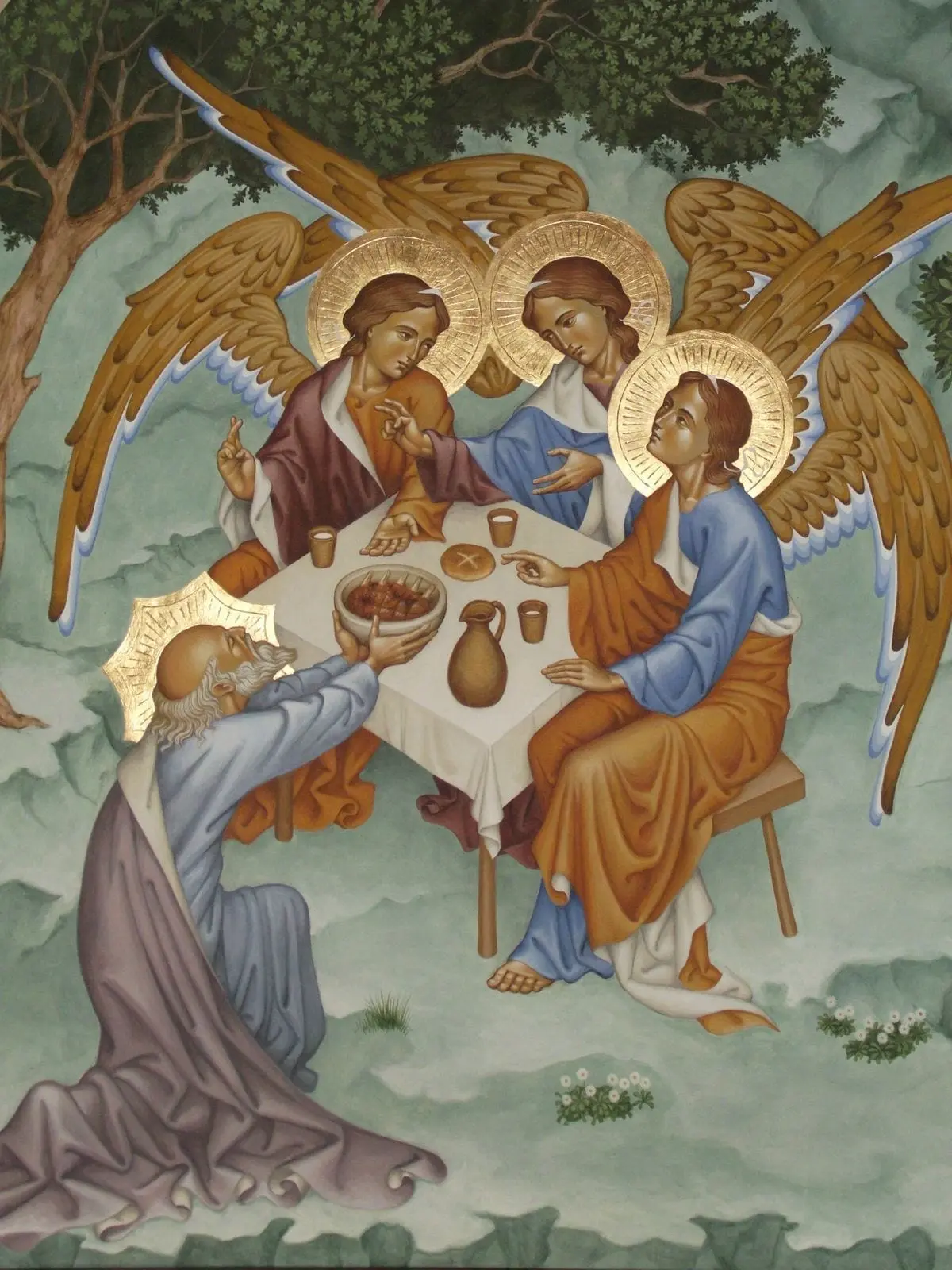
In Patristic theology, we understand God through His Homoousios—one essence—and through His three Hypostases, or persons. The Father is the Monarchia, the fountainhead of the Godhead, from whom the Son and the Spirit proceed. His unique property is that He generates. The Son is eternally generated: as there was never a time when God was not Father, there was never a time when the Son was not. The Holy Spirit proceeds from the Father as the third person of the unified essence.
The practical significance of this theology is located in the concept of Perichoresis—the mutual indwelling and perfect unity of the three persons. The oneness of the Godhead is characterized by a love that knows no schism, no disagreement, no fragmentation. There has never been a rupture within the Trinity. This eternal, uncreated love is, as it were, the constitution of the divine essence. And because the Trinity is the supreme expression of love, it serves as the prototype for the healing of the human soul. Love is the "bond of perfection" (Colossians 3:14, KJV). By participating in Trinitarian love, the soul's own fragmentations begin to be reconciled. Faith becomes the form of reasoning that can hold these eternal mysteries, allowing the believer to move beyond human limitation into the very life of God.
The Economy of Salvation: Suffering and Love as Restorative Instruments
The economy of salvation is the divine management of human restoration, and its primary instrument is the commandment of love. When Christ commands us to "love thy neighbour as thyself" (Matthew 22:39, KJV), He is not merely prescribing social courtesy. He is offering a manual for ontological repair. A striking truth emerges here: loving your neighbor is not, at its deepest level, for them. It is for you. By a deliberate act of the will—choosing to love a neighbor, and especially an enemy—the soul invokes a force of healing within itself. Loving an enemy requires an expansion of love that forcibly reconciles the internal schisms of the one doing the loving. The absence of love, conversely, is the prohibition of healing. It is the darkness in which the leprosy of the soul is free to deepen.
This restoration is also forged in the furnace of suffering. The theology of suffering as articulated in Romans 5 makes the mechanism explicit: "tribulation worketh patience; and patience, experience; and experience, hope: and hope maketh not ashamed; because the love of God is shed abroad in our hearts by the Holy Ghost" (Romans 5:3–5, KJV). Suffering is a preservation mechanism that wakes the soul from its lethargy. Pain turns the soul toward the immaterial for sustenance. We see this in the lives of the martyrs—Polycarp and Ignatius above all—who embraced the flame and the beast because they were moved by a love that transcended death itself.
The Incarnation of the Logos is the gateway at which this entire economy reaches its climax. Through the God-man, the Trinity extends an invitation for humanity to share in Their eternal love. As Isaiah prophesied, "he was wounded for our transgressions, he was bruised for our iniquities: and with his stripes we are healed" (Isaiah 53:5, KJV). By receiving the reality of the Incarnation, the soul begins its theosisTheōsisNot that we become God by nature, but that by grace we are drawn into His life: “partakers of the divine nature” (2 Peter 1:4).—its conformity to the image of the Son. Through Christ we learn to love the Father, and in that learning we are made ready for the ultimate participation in the divine nature.
The Sacramental Life: The Eucharist as Participation in Immortality
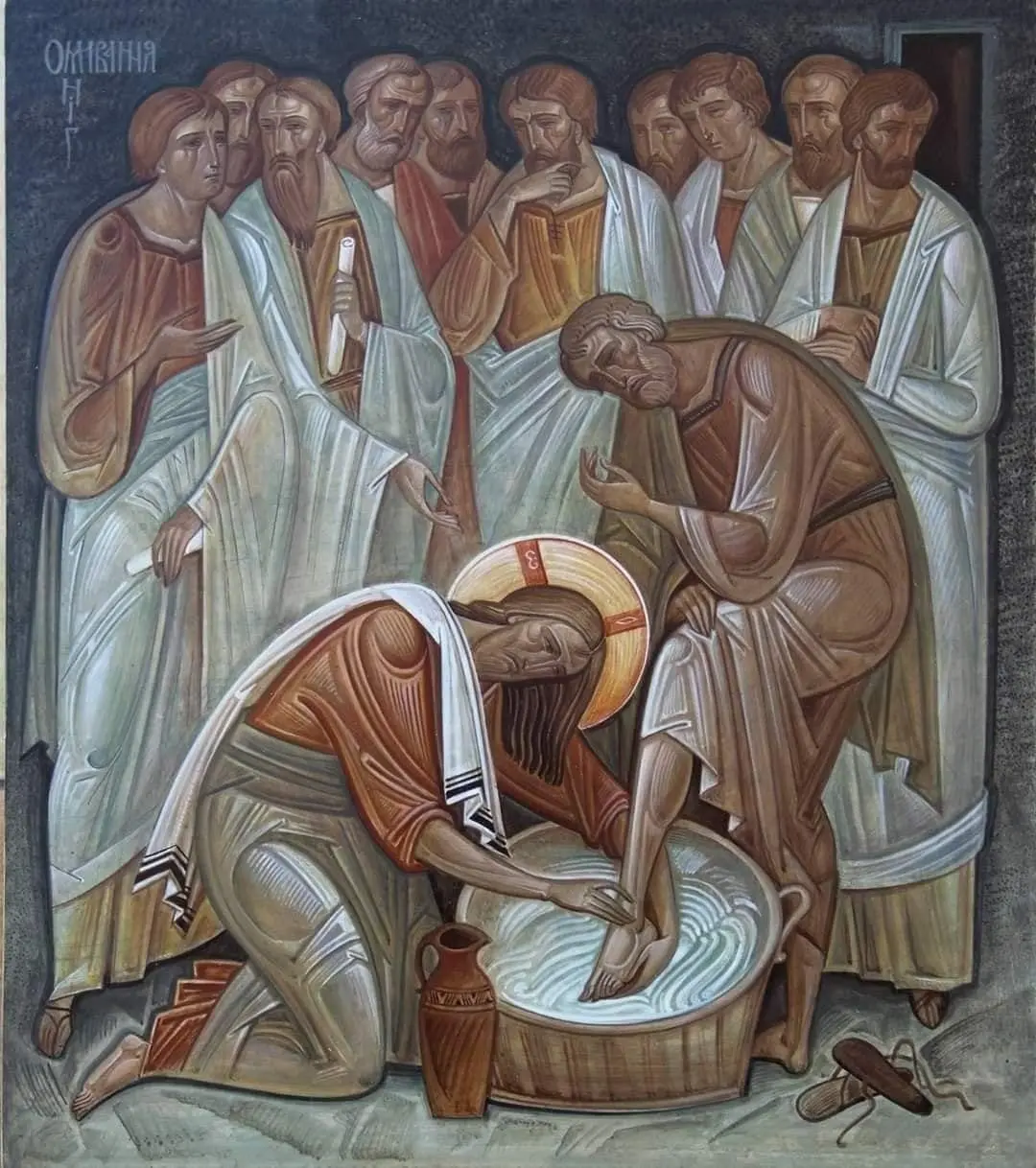
The restoration of the fragmented soul finds its most profound material expression in the chief sacrament of the Eucharist. This is the memory of His death that sustains the life of the Church across the generations—not a bare symbol or a commemorative gesture, but a participation in the Holy Mysteries communicated to the saints from the very night our Lord was betrayed.
The theological weight of bread and wine as the Body and Blood is grounded in the words of Christ himself: "For my flesh is meat indeed, and my blood is drink indeed. He that eateth my flesh, and drinketh my blood, dwelleth in me, and I in him" (John 6:55–56, KJV). To receive the Eucharist is to enter into a consecutive participation in Christ's perfection, immortality, and sinlessness. Though we remain by nature subject to death, the Eucharist works as an immunization of the soul against dying. It is the bread "which cometh down from heaven, that a man may eat thereof, and not die" (John 6:50, KJV).
In this communion we declare our total dependence on the perfection of Another. We confess our sins while laying hold of His righteousness. The sacrament perpetuates the sacrifice offered to the Father and ensures that the very life of the Godhead continues to flow through the members of the Body on earth. Without the Eucharist, the soul lacks the nourishment required to sustain its restoration. It is the meeting point where our fragmented reality encounters His perfect reality—and where we receive the reward of deathlessness, the eternal enjoyment of the divine nature.
The Call to be Christians in the Truest Form
The architecture of eternal continuity rests upon the "foundation of the apostles and prophets, Jesus Christ himself being the chief corner stone" (Ephesians 2:20, KJV). What we have traced throughout this argument is that the healing of the soul is not a subjective innovation but a process of ontological reconstruction within the Deposit of Faith. This restoration is possible only when the believer remains anchored in the ancient, unpolluted dogma of the Church and the practice of divine love.
The central conviction bears repeating: our theology must possess continuity, consistency, and compatibility with the heritage of the first century. The amnesia of modern innovation and the deliberate rejection of history represent a grave threat to the soul, because they sever us from the furnace of truth. Every Christian must take personal responsibility for his doctrine. If a man like Nicholas of Antioch—full of the Holy Ghost, trusted by the Apostles themselves—could fall into the very teaching that Christ declares He hates, how much more must we keep careful watch over what we believe and how we live it? Theology is not the exclusive possession of academics. Every Christian must be a theologian, a defender of the truth, ensuring that their faith carries genuine generational consistency.
To be Christians in the truest form is to live as those for whom love is the highest law and the Holy Mysteries are the center of existence. We are called to "contend for the faith which was once delivered unto the saints" (Jude 1:3, KJV), and to "count it all joy when ye fall into divers temptations" (James 1:2, KJV), knowing that these trials produce the refined and precious quality of faith. By embracing the bond of perfection and receiving faith as uncreated substance, we move from the shadows of fragmentation into the light of divine conformity. Let us remain close to the furnace of history, preserving the generational heritage until the second coming of our Lord. Amen.