Discipline in the Contemplation of God
On Mnēmē Theou, the Weight of Tradition, and the Trinitarian Mystery That Sustains the Contemplative Life
Introduction
There is a peculiar difficulty that attends the Christian life, one that rarely announces itself but is nonetheless the deciding factor between a soul that endures and a soul that collapses under pressure: the difficulty of keeping the mind fixed on God. It is not difficult to remember an injury. It is not difficult to rehearse a fear, to circle a worry, to remain fixed for hours upon a failure or a grievance. The human mind, left to itself, retains such things with ease. But ask that same mind to remain still before God, to hold him in view, to retain him in the consciousness, to let him govern the interior life, and immediately resistance rises from every quarter: from the body, from the passions, from the world, and from the unseen intelligences arrayed against the soul. This is not incidental. It is, in fact, the central battlefield of the Christian life, and it is the subject of this essay.
The thesis argued here is threefold, and the three parts are inseparable. First, every believer stands under a divine calling, not a vocational option reserved for the especially devout, but a constitutive obligation of the Christian life, to the contemplation of God, what the Greek fathers called mnēmē TheouMnēmē TheouThe deliberate retention of God within the consciousness of the soul, so that He governs the interior life., the remembrance of God, the deliberate retention of God within the consciousness of the soul. Second, this contemplative calling cannot be sustained on a truncated or amnesiac foundation; it requires access to the full inheritance of the Church's historical and theological memory, because a Christianity that draws only upon a shallow slice of its own past leaves the soul exposed to manipulation and doctrinal corruption. Third, and most fundamentally, the entire discipline of contemplation finds its object and its grounding not in a vague religious feeling but in the concrete, revealed mystery of who God is, the unknowable God who has nonetheless made himself known in the eternally generated Son, the incarnate Word, in whom alone fellowship between the created and the uncreated becomes possible.
The stakes of this argument are not academic. A Christian untethered from the Church's full historical memory is, as will be shown, vulnerable to the very corruptions the essay identifies, doctrinal drift dressed in emotional appeal, cultural accommodation presented as prophetic development, and a general disintegration of the will to hold fast. Conversely, a Christian who has learned to contemplate God, who has built the interior discipline of remembrance upon the bedrock of historic Christian doctrine concerning the Trinity and the person of Christ, becomes, through the examples of Enoch, Job, and David, nearly unshakeable. What follows traces this argument through its constituent movements: the nature and necessity of contemplation; the indispensability of historical memory; a case study in what happens when that memory is severed; the doctrinal heart of what is being remembered, namely the Trinity and the person of Christ; and finally, the sustaining power of remembrance in the furnace of testing.
The Calling to Contemplate: Mnēmē Theou and the Suppression of Truth
Every human being, and with particular weight every Christian, stands under what can only be described as a divine mandate: to attend, consciously and continually, to the contemplation of God. This calling is not earned by human merit or achievement. It flows instead from the eternal purposes of God, who chose his people in Christ before the foundation of the world, a truth resting on the same theological soil as Paul's declaration that believers were chosen "before the foundation of the world" (Ephesians 1:4). The calling to contemplate God, then, is not a task assigned on the basis of spiritual performance; it is woven into the very fabric of what it means to be elected in Christ.
The Greek fathers gave this discipline a name: mnēmē, the remembrance of God, the active, sustained retention of God within the soul's consciousness. This is a crucial theological category, because it reframes contemplation not as an occasional mystical experience but as an ongoing act of the will, a discipline of retaining rather than a fleeting sensation of encountering. Mnēmē Theou stands in direct and deliberate opposition to the operative principle of the fallen world, which is not merely ignorance of God but the active suppression of the knowledge of God. Scripture makes this explicit: humanity, "knowing God," nevertheless "glorified him not as God, neither were thankful," and instead held the truth in unrighteousness, in Paul's phrase, "who hold the truth in unrighteousness" (Romans 1:18). This is not innocent forgetfulness. It is a deliberate, cosmic suppression, "a cosmic unspoken rule" governing the fallen order of creation, in which the knowledge of God must be actively pushed down before the world's alternative systems of meaning can be erected in its place.
This suppression is, in fact, the defining feature of wickedness itself. A wicked man, on this account, is not simply one who commits isolated sins; he is one who has made suppression of the truth a governing principle of his existence, glorifying instead whatever stands contra Theos, against God. Wickedness, understood this way, is parasitic: it can only propagate itself by first displacing the knowledge of God from its rightful place in the soul. And this is why God, through the prophet Hosea, delivers one of the most sobering indictments in all of Scripture: "My people are destroyed for lack of knowledge: because thou hast rejected knowledge, I will also reject thee, that thou shalt be no priest to me" (Hosea 4:6). The destruction in view here is not merely a consequence of ignorance in general; it is the direct fruit of a rejection, a willed turning away from the knowledge of God that results, with a kind of terrible symmetry, in God's own rejection of the one who rejected him. Even priestly function, is contingent on possessing substantial knowledge of God, for the priesthood cannot operate rightly where the knowledge that undergirds it has been abandoned.
That contemplation is not incidental to the life of faith but essential to it is confirmed by a striking image from the prophet Malachi. Scripture tells us that a book was opened for those who gathered to meditate on the name of the Lord: "Then they that feared the LORD spake often one to another: and the LORD hearkened, and heard it, and a book of remembrance was written before him for them that feared the LORD, and that thought upon his name" (Malachi 3:16). What might appear, from the outside, to be an inconsequential and invisible exercise, a private discipline of the mind fixed on God, is in fact recorded and remembered by God himself. Heaven keeps an account of the soul's contemplative fidelity. This should recalibrate how the believer regards the seemingly unspectacular labor of remembering God; it is not wasted effort. It is written into a book.
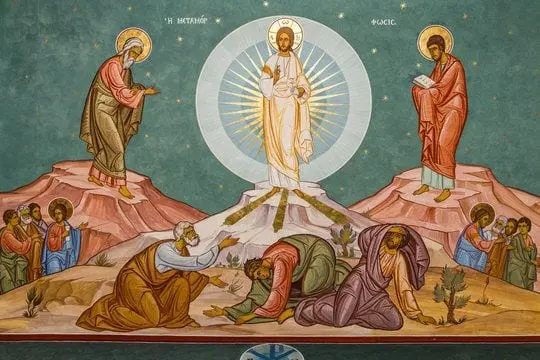
The supreme biblical illustration of what sustained contemplation produces is the patriarch Enoch, of whom it is written that he walked with God for three hundred years (Genesis 5:22–24). Consider the question that this account demands: how does a man walk with God for three hundred years without regression, without deviation, without weakening or fainting or backsliding? The answer cannot be found in mere human willpower, because, as the contrast with Peter demonstrates so starkly, physical and emotional resolve are no match for spiritual forces. Peter, who beheld the Transfiguration, who heard the voice from heaven, who saw Moses and Elijah, who himself walked on water at Christ's word, who witnessed the blind made to see and the lame made to walk, nevertheless denied his Lord three times in a single night, precisely as Christ had foretold: "Verily I say unto thee, That this night, before the cock crow, thou shalt deny me thrice" (Matthew 26:34, cf. Luke 22:34). No amount of experience of the miraculous is sufficient to sustain faithfulness where spiritual strength is absent. Overcoming a spiritual adversary requires a spiritual force equal to the contest; physical or emotional resolve alone cannot answer a spiritual assault. Enoch's three-hundred-year walk, then, is not an anomaly to be marveled at from a safe distance, it is the demonstrable fruit of sustained contemplative discipline, empowered by God, that so distinguished this man that Scripture testifies his own generation knew God was pleased with him: "By faith Enoch was translated that he should not see death... for before his translation he had this testimony, that he pleased God" (Hebrews 11:5). This is the same pattern of divine commendation later spoken over the Son at the Jordan: "This is my beloved Son, in whom I am well pleased" (Matthew 3:17). What sustained Enoch, must sustain every believer, is not natural constancy but the empowering knowledge of God cultivated through unbroken contemplation.
The Weight of History: Why the Church's Full Memory Protects the Soul
If contemplation is the discipline of retaining God in the consciousness, then the content of that retention matters immensely, and here i want to make this argument of striking analytical force. Solomon's observation in Ecclesiastes, "The thing that hath been, it is that which shall be; and that which is done is that which shall be done: and there is no new thing under the sun" (Ecclesiastes 1:9), is not a statement of resigned fatalism but an epistemological principle: the past forecasts the future. To understand the present rightly, and to anticipate what is likely to come, the soul must have deep and extensive engagement with what has already occurred. History is not merely instructive; it is the primary reference point by which both present and future become intelligible.
This principle yields a memorable analogy. Consider two analysts, one working with five hundred years of data and another working with two thousand years of data. Whose models of the world will be more accurate? Whose perception, whose capacity to discern pattern and anticipate deception, will be more reliable? The answer is self-evident: the analyst with the larger, richer dataset possesses a wider plane of perception and is correspondingly harder to deceive. The mind, and specifically the theological mind, operates on precisely this premise. The more comprehensive one's grasp of the Church's historical unfolding, the more qualitatively sound one's theological judgments become, because judgment is only ever as good as the range of information brought to bear upon it. A believer functioning with an impoverished historical dataset is, quite literally, functioning at a disadvantage; he is more susceptible to distortion, more vulnerable to having his perception recalibrated by whoever offers him a compelling but historically rootless narrative.
This is precisely what Hosea's indictment means in practice: a people destroyed for lack of knowledge are a people operating with insufficient data, and insufficiency of this kind is not neutral, it actively invites manipulation. A Christian whose theological formation spans only five hundred years, when the Church's continuous witness spans two thousand, carries a fifteen-hundred-year gap in perception. That gap is not a small deficiency at the margins; it is the very aperture through which false teaching enters, because it is infinitely easier to manipulate, distort, and corrupt a mind that has no access to the fuller historical witness against which a novel claim might be tested. This is the theological weight behind the ancient wisdom instruction, "Remove not the ancient landmark, which thy fathers have set" (Proverbs 22:28). To sever oneself from the landmarks laid down by the historic Church is to remove the very boundary markers that would otherwise expose a counterfeit teaching for what it is.
There is, moreover, a Christological warrant for taking history with this seriousness. Christ himself operated with a comprehensive historical knowledge of his adversary. Of Satan he says plainly, "He was a murderer from the beginning, and abode not in the truth, because there is no truth in him. When he speaketh a lie, he speaketh of his own: for he is a liar, and the father of it" (John 8:44). Jesus knew Satan's history, his character across time, and it was precisely this historical knowledge that equipped him to warn Peter accurately: "Simon, Simon, behold, Satan hath desired to have you, that he may sift you as wheat" (Luke 22:31). When Peter protested his loyalty even unto death, Christ's implicit reply was that Peter did not yet know, historically and experientially, the nature of the adversary he was facing. This is the pattern the teaching presses upon the contemporary believer: where the full historical picture is absent, it becomes correspondingly easier to undermine the truth, because deception thrives precisely in the space created by historical ignorance.
A Case Study in Severed Memory: The Question of Women in Ecclesial Office
This historical amnesia manifests itself with a recent encounter i had in an online conference. In a conference addressing whether women may serve in offices of ecclesial authority, several ministers argued from Scripture that they may not, though with only minimal scriptural substantiation offered. A well-known ‘female apostle’ was then invited to respond, and her argument, as recounted, was almost entirely affective rather than historical or exegetical: an appeal to indignation, to the assertion that "God has shifted" and "God has changed the standards," without grounding that claim of divine change in any demonstrable historical precedent.
The response offered in this essay proceeds by precisely the historical method argued for above. Two questions I put to her. First: what historical evidence exists, anywhere in the Church's history since its inception, of a woman occupying the episcopate? Second, addressing the claim that God is free to alter his own established patterns: if Jesus himself was unafraid to disrupt the social protocols and taboos of his own era, and he plainly was, given how many women numbered among his followers, arguably more women than men in his wider company, why, when the moment came to appoint the Twelve, did he not appoint a single woman? Even his own mother, "honored among all saints," held no episcopal office. The argument here is not that women were marginal to Christ's ministry; they plainly were not. The argument is that Christ, unbound by cultural convention and demonstrably willing to break with the expectations of his age, nevertheless maintained a consistent pattern in the specific matter of apostolic and episcopal appointment, a consistency traceable further back still, since even under Moses, amid pagan nations that freely appointed priestesses, God did not elect women to the Israelite priesthood. The twenty-four elders of the heavenly throne room, likewise, are uniformly rendered as male in the apocalyptic vision (Revelation 4:4). If the divine pattern were genuinely mutable in the way she claimed, the most natural point for God to have signaled that change would have been in the ministry of Christ himself, so that all subsequent generations would possess a clear reference point. That signal is absent.
The exchange exposed something further: internal inconsistency in the position being defended. When pressed on whether women in apostolic office ought to lay hands on men in ordination or commissioning, the lady conceded to exercising unusual caution and reticence in that specific act, an admission that, on my reading, betrays an intuitive recognition that the office being claimed does not, in fact, rest on solid theological ground. If the office genuinely carried the authority claimed for it, no such hesitancy would be warranted; the very carefulness displayed reveals an operative awareness that cultural pressure, rather than divine commission, is driving the innovation.
This case is emblematic of a broader malady: a Christianity that claims sola Scriptura in name while, in practice, twisting the biblical text to accommodate contemporary sensibility, precisely because it recognizes no accountability to any historic, institutional body of teaching. Such a movement can dress novel positions in respectable vocabulary and present them as truth, generating emotional affirmation, you'll go to church and jump and scream, without that affirmation constituting any genuine encounter with the living God. The apostolic instruction that "it is not permitted unto them to speak; but they are commanded to be under obedience, as also saith the law" and that "if they will learn any thing, let them ask their husbands at home" (1 Corinthians 14:34–35), together with Paul's charge that "I suffer not a woman to teach, nor to usurp authority over the man, but to be in silence" (1 Timothy 2:12), form part of the very historical landmark that a rootless egalitarianism seeks to relocate. The deeper diagnosis offered is theological rather than merely disciplinary: worship or doctrine shaped "according to me personally", according to one's own terms, one's own preferred system, does not constitute the worship of God at all, however sincerely felt, however emotionally charged. It is, in the end, self-referential religion wearing the vocabulary of Christian devotion. And it is only possible, because the Christianity practiced knows only a fraction of its own two-thousand-year memory, the something defective in the formulation is this: a faith with no living synergy to what has already been established cannot reliably discern what ought to be established now, because "the mirror of truth is in the origin."
The Unknowable God Made Known: Essence, Trinity, and the Eternal Generation of the Son
Having established both the discipline of contemplation and the necessity of a comprehensive historical grounding for that discipline, we will turn, rightly, to the object of contemplation itself: who God actually is. This is not a digression from the practical concerns already raised; it is their theological foundation, because a Christianity that has forgotten its history is, at root, a Christianity that has grown careless about the doctrine of God himself, and it is precisely there that first principles must be recovered.
"In the beginning God created the heaven and the earth" (Genesis 1:1). This opening declaration of Scripture carries within it a crucial ontological distinction that must govern all subsequent theological reflection: God, in his essence, is entirely and categorically shielded from creation. No created being, human or angelic, can conceive or comprehend God in his uncreated essence, because that essence belongs to a different order of being altogether. To suppose that a created intellect could grasp the uncreated essence of God would imply that the creature shares that same uncreated nature, which is incoherent; creatures are, by definition, dependent and originated, while God's essence is without origin. God, then, is not merely quantitatively greater than creation; he is ontologically other, existing entirely outside the bounds of what he has made. This is the necessary apophatic starting point, the theological recognition that God, in himself, exceeds every category available to finite minds.
And yet, within this same unapproachable essence, there exists a mystery of internal relation: the Trinity. Three persons share one essence, distinguishable from one another as persons, yet indistinguishable in what they are by nature. What differentiates the Father, Son, and Holy Spirit is what each retains as person; what unites them is what they share in essence. There are not three divine essences but one; hence God is simultaneously one and triune, one in essence, three in person. This is not a numerical curiosity to be puzzled over but the very grammar by which the Church has always confessed that the Father, Son, and Holy Spirit are three persons and one God, because there is only a single uncreated essence, never three.
At the heart of this mystery lies the doctrine of the Son's eternal generation, and I will attempt to articulate something of real theological precision. The Son is eternally begotten of the Father, yet shares the Father's own uncreated essence, meaning the Son himself is uncreated. There has never been a moment when the Son was not, because to posit such a moment would be to give the Son a beginning, and anything with a beginning belongs, by definition, to the created order rather than to God. This point demands careful unpacking, because it resolves an apparent contradiction: how can the Son be generated, which sounds like an act with a starting point, and yet be without beginning? The resolution lies in recognizing that the Father's very identity as Father is constituted by his eternal relation to the Son. The Father cannot be called Father without a Son; if there were ever a time when he was not yet Father, then fatherhood itself would be a contingent, later-acquired attribute of God rather than an eternal characteristic of who he is. But Scripture and the Church's confession alike affirm that God has always been Father, which means the Son has always been Son. The generation of the Son is therefore not an event within time but an eternal relation of origin within the single, timeless essence of God. The Son is thus fully and eternally God, coequal with the Father, sharing the very uncreated nature that defines deity itself.
This Son is identified, in the language of John's Gospel, as the LogosLogosThe eternal Word of God, through whom all things were made, who became flesh and dwelt among us (John 1:1–14)., the Word, through whom God created the worlds: "In the beginning was the Word, and the Word was with God, and the Word was God" (John 1:1). John's statement is theologically exact, not careless: the Word was with God, indicating a distinct person, and the Word was God, indicating a shared, undivided essence. The Word is not the Father, he is a distinct person within the Godhead, yet the Word is fully God, because "Godhead" designates the single essence that each divine person possesses in full. This is why orthodox theology can affirm, without contradiction, that there is only one God even while confessing three distinct persons: the term God refers to essence, and there is only one essence, even though three persons subsist within it eternally.
It is this doctrine, more than any other, that the fourth-century fathers fought with such ferocity to protect, and for reasons that are not merely academic but soteriological. If Christ is not fully God, if he belongs, in whole or in part, to the created order, then the entire logic of salvation collapses. A created Christ would himself require a creator, which is a contradiction in terms when applied to the one who is supposed to be the source and ground of salvation for all creation. The Nicene confession that anyone who asserts "there was a time when the Logos was not" stands under anathema is not theological pedantry; it is the Church defending, at the cost of considerable conflict, the very possibility of human salvation. If Jesus is not God, no one is saved, not because salvation is a merely mechanical transaction requiring divine currency, but because only God himself can bridge the ontological chasm between the uncreated and the created, between the Holy One and a fallen humanity estranged from him. To compromise the divinity of the Son is, however unintentionally, to dissolve the very possibility of the gospel.
The Uncreated Word Made Flesh: Christ as the Mystery Fulfilled and the Church's Cosmic Vocation
The doctrine of the Trinity, rightly understood, opens directly onto Christology, because it is precisely this uncreated Word, eternally generated, coequal with the Father, who becomes the ground of all created meaning and, ultimately, the one through whom fellowship between Creator and creature becomes possible. "In the beginning God created", the uncreated one brought forth the created order, giving to everything that exists its purpose, its coherence, its very intelligibility. There is nothing above, before, beyond, or independent of God; he alone is eternal in the full and proper sense, since everything that has a beginning must also have an end, and only God stands entirely outside that pattern, encompassing both the beginning and the end of all things.
Because meaning itself derives from God, there can be nothing more consequential for human existence than knowing him. Scripture's own language for the origin of life is instructive here: "And Adam knew Eve his wife; and she conceived" (Genesis 4:1). The verb translated "knew", carrying, as it does throughout Scripture, the connotation of intimate union, establishes an analogy the teaching draws deliberately: just as human conception arises from intimate knowledge, so spiritual life, in the fullest sense, arises only from intimate knowledge of and union with God. Nothing of genuine spiritual significance germinates apart from him; he is, in this profound sense, the source of all life.
It is crucial to insist, that God is not the founder of a religion in the ordinary sense. What God established was not merely a system of belief but a people, first the Hebraic race, called to be a representative icon of God to the whole earth. When Israel, corporately, failed in that mandate, God brought forth another people, but this new people would not spring from human effort or ethnicity; it would proceed from the incorruptible, incarnate Logos who was with the Father before the world began. From this eternal Word, God raises up a new race, the Church, to serve as icons of his invincible reality within history. The Church, in this sense, does not merely succeed Israel institutionally; it fulfills and completes the pattern first enacted in the garden, becoming, a "superimposition" of that first, Edenic communion with God, now reconstituted around the risen and glorified Christ.
The scope of this ecclesial vocation is cosmic, not merely terrestrial. Paul writes that God has given Christ "to be the head over all things to the church, which is his body, the fulness of him that filleth all in all" (Ephesians 1:22–23), the Church as the pleroma, the fullness, of the one who fills the universe. And further, the purpose of the Church extends into realms beyond the visible earth: "To the intent that now unto the principalities and powers in heavenly places might be known by the church the manifold wisdom of God" (Ephesians 3:10). Through the Church, the manifold wisdom of God is made known even to the angelic principalities; the Church is, quite literally, an instrument by which the heavens themselves are instructed. This is because the Church functions as the appointed incubator of a mystery that was hidden across the ages but has now, in these last days, been disclosed to God's apostles and prophets, the mystery, Paul writes, that had been "hid from ages and from generations, but now is made manifest to his saints" (Colossians 1:26).
That mystery is Christ himself, the Logos of God, God incarnate, God tabernacled in humanity. He is the theanthropos, the God-man, in whom two complete and distinct natures, full deity and full humanity, are united in a single person, without confusion and without division. This is the ancient patristic confession of the hypostatic union: one person, two natures, fully God and fully man, consummated inseparably in a single incarnate reality. It is precisely in this union that the possibility of fellowship between the created and the uncreated is opened, because in Christ alone the gulf between finite creature and infinite Creator is bridged from both sides at once, God reaching down in the fullness of deity, and humanity taken up in the fullness of its own nature, without either being diminished. In Christ, mediation becomes possible; in Christ, restitution, the restoration of the created order to its intended communion with God, becomes possible; in Christ, the purposes of God for the entire universe find their fulfillment. Christ is, in this sense, the successor not merely of Adam but of Israel as well, and the one in whom the destiny of creation, and the ultimate undoing of Satan's rebellion, are secured.
This is why the fourth-century defense of Christ's full divinity, addressed already above, was undertaken with such theological seriousness: the entire coherence of the gospel, the reality of salvation, the restoration of communion with God, the defeat of the adversary, depends on Christ being, without qualification, God incarnate rather than merely God's most exalted creature.
Contemplation as Warfare: Job, David, and the Sustaining Power of Remembrance
Returning now to the practical discipline with which this essay began, the suppression of God within the soul constitutes the central spiritual battlefield of the Christian life, precisely because the mind so readily retains fear, grievance, and worry while resisting the deliberate retention of God. The lives of Job and David are offered as demonstrations of what sustained contemplative fidelity actually produces.
Job's protection was not incidental; it was the direct consequence of a disciplined interior life fixed on God. Even Satan is compelled to acknowledge this before the divine council: "Hast not thou made an hedge about him, and about his house, and about all that he hath on every side?" (Job 1:10). That hedge was the fruit of Job's habitual contemplation, his consciousness of God expressed concretely in the practice recorded at the opening of the book: "And it was so, when the days of their feasting were gone about, that Job sent and sanctified them, and rose up early in the morning, and offered burnt offerings... for Job said, It may be that my sons have sinned, and cursed God in their hearts" (Job 1:5). This was not anxious superstition but reverent watchfulness, a man whose habitual orientation toward God shaped every dimension of his conduct, precisely because he remained continually conscious of what would please or displease the Lord. Job belongs to the patriarchal age, making him, like Enoch, a witness from the Church's most ancient memory, whose example is available to every subsequent generation precisely because the Church has preserved his story across millennia. Here again the argument from Part II reasserts itself: it is the availability of the fuller historical dataset that allows the contemporary believer access to Job's pattern of contemplative fidelity at all.
"Thou wilt keep him in perfect peace, whose mind is stayed on thee" (Isaiah 26:3). We can identify precisely the diagnosis of the contemporary believer's condition: the mind, rather than being stayed on God, remains fixed on need, on lack, on anxiety, and this is by design, the deliberate strategy of what we may term the "Antichrist system." Pharaoh's own words to the Israelites illustrate the ancient pattern of this same strategy: rather than permit the people leisure to contemplate and worship, he increased their labor, precisely to keep their minds from God. The same Babylonian logic operates wherever a soul's attention can be sufficiently occupied with material anxiety that contemplation becomes practically impossible, for a mind whose attention has been captured in this way becomes correspondingly easy to destabilize.
David's example demonstrates the practical fruit of the alternative. Scripture testifies to David as a war strategist of unmatched success, and the source of that success is not located in native military genius but in David's habitual practice of inquiring of the Lord before every engagement. Even in one of the darkest moments of his life, when Ziklag was raided and his own men, grief-stricken over their captured families, spoke of stoning him, the record states that "David encouraged himself in the LORD his God" (1 Samuel 30:6) before inquiring whether to pursue the raiders. This capacity to encourage himself in God, rather than in circumstance, is the direct fruit of a life saturated in contemplative remembrance. It stands in sharp contrast to a spiritual culture, that demands immediate resolution and grows disgruntled at any delay, a culture unwilling to wait upon God until, in the words of the Psalmist, "Be still, and know that I am God: I will be exalted among the heathen, I will be exalted in the earth" (Psalm 46:10). Knowledge of God, on this reading, is something that emerges specifically out of stillness, a stillness modeled with startling clarity by Christ himself, who slept undisturbed in the stern of a boat during a storm his disciples interpreted as an imminent threat to their lives (Mark 4:38). Whatever tempest presently besets the believer's circumstances, the same invitation to stillness, and the same confidence in the God who governs the storm, remains available.
This confidence extends even to the experience of false accusation and injustice, areas where the natural impulse is toward self-defense. The Scripture counsels instead a posture of surrender: let God defend, for "vengeance is mine; I will repay, saith the Lord" (Romans 12:19, echoing Deuteronomy 32:35). The believer is called not to deny the reality of hostile circumstance but to refuse to let that circumstance dictate a verdict on God's faithfulness, holding instead to promises such as "when the enemy shall come in like a flood, the Spirit of the LORD shall lift up a standard against him" (Isaiah 59:19) and "when thou passest through the waters, I will be with thee; and through the rivers, they shall not overflow thee: when thou walkest through the fire, thou shalt not be burned" (Isaiah 43:2). The confidence that sustains such a posture is expressed in the Psalmist's own confession: "My help cometh from the LORD, which made heaven and earth" (Psalm 121:2). Every hostile power the believer faces is, by contrast with God, merely temporal, capable of inflicting only temporary harm, while God alone is able to convert the temporal into the eternal, to keep promises that outlast the created order itself. This is the theological ground for Christ's own instruction: "fear not them which kill the body, but are not able to kill the soul: but rather fear him which is able to destroy both soul and body in hell" (Matthew 10:28). The proper object of reverent fear is not the merely temporal adversary but the eternal God, and it is precisely the failure to remember this hierarchy of fear, the forgetting of who God truly is the root of the believer's frequent doubt and failure. It is not, finally, that God has forgotten the believer; more often it is the believer who has forgotten God's faithfulness, forgotten his strength, forgotten who He is.
Even amid the darkest possible circumstance, the valley of the shadow of death itself, the discipline of remembrance sustains the soul: "Yea, though I walk through the valley of the shadow of death, I will fear no evil: for thou art with me" (Psalm 23:4). It is the remembrance of God's presence, cultivated through the discipline argued for throughout this essay, that renders the believer genuinely fearless before death itself, capable of the settled indifference to outcome that Paul himself modeled: whether by life or by death, Christ is to be magnified (Philippians 1:20). Such indifference to circumstance, born not of resignation but of contemplative confidence in God, is precisely what unsettles the very principalities arrayed against the soul, for, as the teaching observes, had the rulers of this age understood the outcome, they would not have proceeded as they did (cf. 1 Corinthians 2:8).
Conclusion
The argument traced across this essay resolves into a single, integrated claim. The Christian life is, at its foundation, a summons to mnēmē Theou, the deliberate, disciplined remembrance of God against a world system organized around the active suppression of that same knowledge. This discipline cannot be sustained in isolation from history; a believer whose theological memory spans only a fraction of the Church's two-thousand-year witness stands exposed precisely where the fuller historical record would have provided protection, as the contemporary controversy over ecclesial office illustrates with painful clarity. And beneath both the discipline of contemplation and the necessity of historical grounding lies the deeper doctrinal bedrock without which neither would have any content at all: the mystery of the Trinity, the eternal generation of the uncreated Son, and the incarnation of that same Word as the God-man in whom alone communion between Creator and creature is restored.
The practical and pastoral implications are considerable. A Church that neglects contemplation will produce believers who are theologically informed, perhaps, but spiritually unmoored, capable of reciting doctrine without the interior discipline that alone sustains fidelity under pressure. A Church that neglects its own history will produce believers perpetually vulnerable to whatever novel teaching arrives with sufficient emotional force, lacking the "ancient landmarks" by which counterfeit claims might otherwise be tested and exposed. And a Church that neglects the doctrinal substance of who God actually is, the unknowable essence, the triune persons, the eternally begotten and fully divine Son, will find that its contemplation, however sincerely practiced, has no true object, no sufficient ground on which to rest.
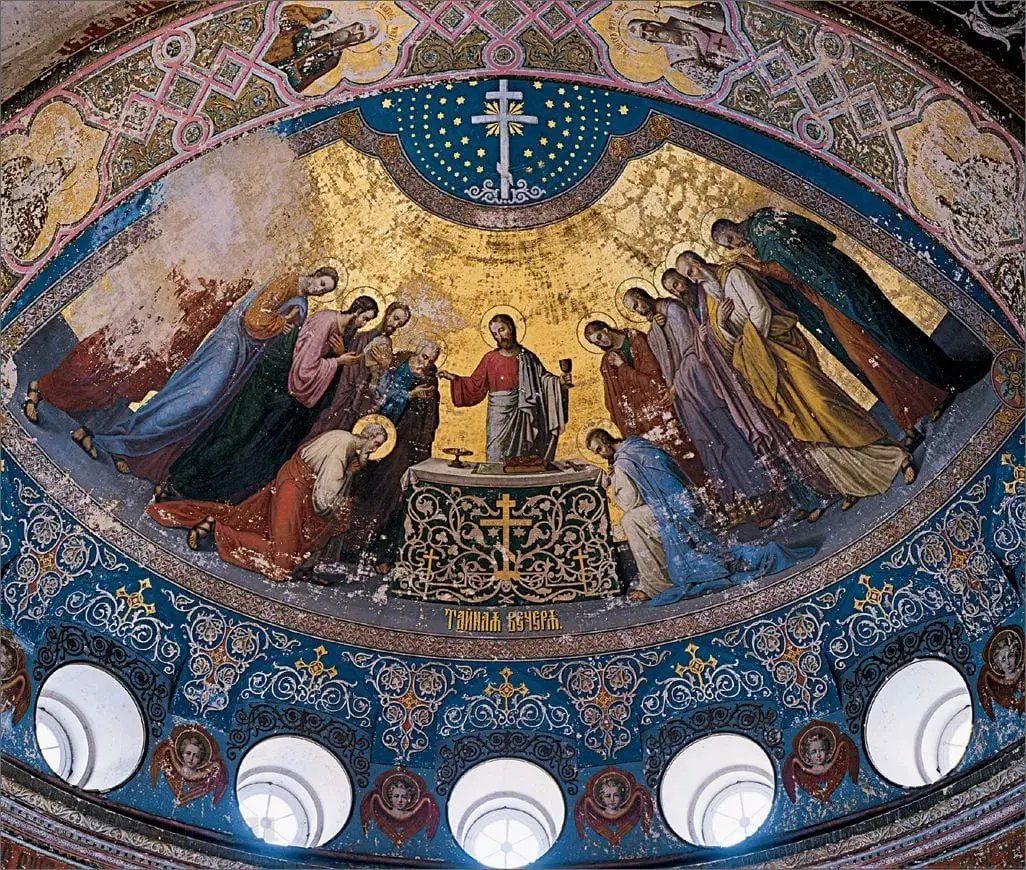
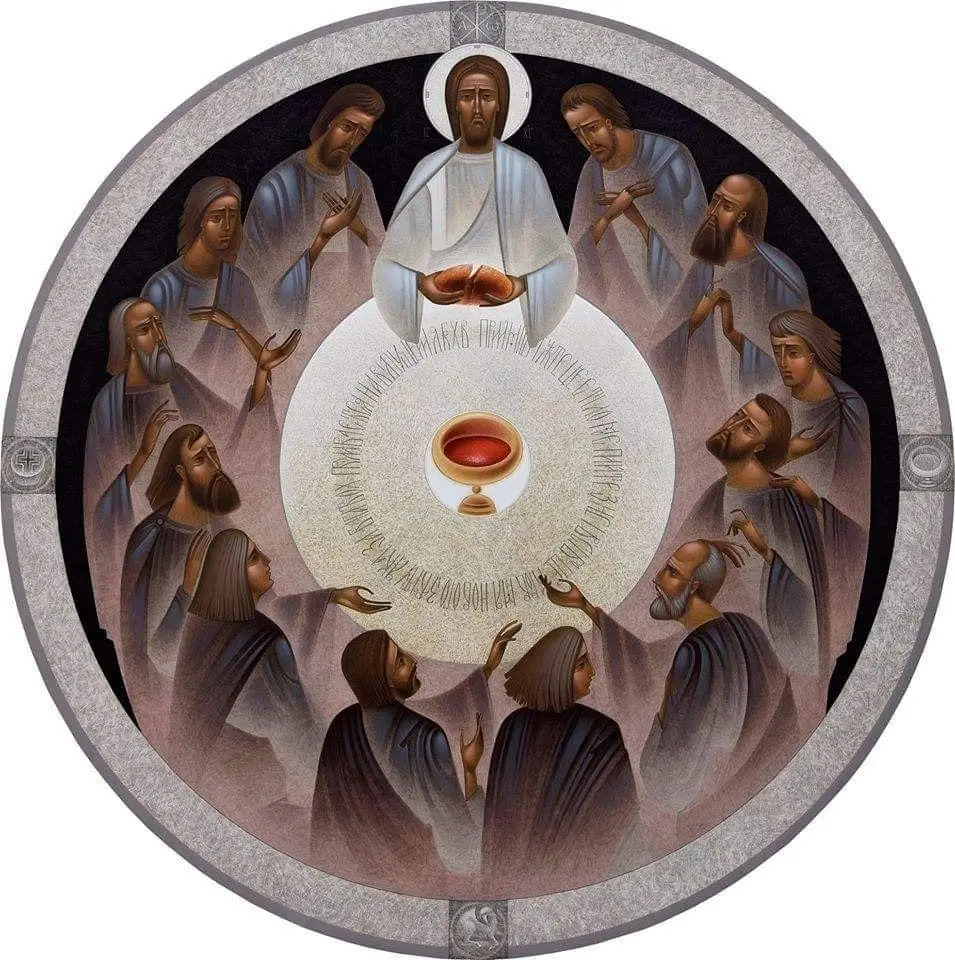
The eschatological weight of this argument should not be missed. What is at stake in the recovery of contemplative discipline, grounded in the Church's full memory and anchored in orthodox confession of who Christ is, is nothing less than the capacity of the Church to fulfill its cosmic vocation, to make known, even to the principalities and powers in the heavenly places, the manifold wisdom of God. This vocation is enacted, finally, not merely in doctrine but in communion: the Church gathers around the table, taking bread and cup in remembrance of the Lord's body and blood, obeying the same pattern of mnēmē that has structured this entire essay, "for as often as ye eat this bread, and drink this cup, ye do shew the Lord's death till he come" (1 Corinthians 11:26). The Eucharist stands, in the end, as the Church's most concentrated act of remembrance: the created participating, by grace, in the uncreated life of the very God the whole discipline of contemplation exists to retain.
The soul that remembers God, sustained by the full inheritance of the Church's historical witness and anchored in the mystery of the incarnate, uncreated Word, becomes, as Enoch, as Job, as David each in their own generation demonstrated, nearly unassailable. Let the mind that is stayed on him be kept, then, in the perfect peace that only such remembrance can provide.