Participation in the Dominion of Christ and the Acquisition of the Spirit
Participatory Divinity
The epicentre of the Christian life is neither the observance of a moral code nor the intellectual assent to a body of doctrine. Its deepest essence is found in the acquisition of the Holy Spirit — the vital agent of human transfiguration, the one who draws the believer out of the periphery of religious observance and into the very life of the Triune God.
The argument of this essay is that the Christian experience is by design a process of theosisTheōsisNot that we become God by nature, but that by grace we are drawn into His life: “partakers of the divine nature” (2 Peter 1:4). — of divinization — in which the human person, through the acquisition and governance of the Spirit, enters into a participatory dominion over both the material and spiritual realms. This is not a dominion that originates in human effort or force of will. It is delegated authority, a participation in the uncreated energies of God, flowing from a life in communion with the divine Son.
The essay moves from the outside in. It begins with the communal foundations of the Church — the Koinonia — and proceeds toward the interior transformation of the soul. The Spirit, we shall see, is not a passive guest but an active Governor whose presence reorders the whole constitution of the human person.
This discourse is framed as an invitation into fellowship with the Son of God — a call beyond the superficiality of modern religious practice into what may rightly be described as the immeasurable deposit of the Spirit. As we move from the external gathering of the saints to the internal sanctuary of the heart, our first guide is the liturgical wisdom of the Psalms, where the unity of the brethren appears as the essential prerequisite for the descent of the divine. The Holy Spirit is the Deifier: His acquisition moves the believer from the condition of a servant into the standing of a son, from external instruction to internal governance, from religion as performance to religion as participation.
Psalm 133 and the Commanded Blessing
Communal unity is the primary vessel through which the Spirit manifests His corporate power. In the economy of God, divine visitation is rarely a solitary event divorced from the Body of Christ. There is, instead, a Liturgy of Unity that must be observed. When the brethren dwell together in spiritual harmony, they create a corporate environment that activates a specific, commanded blessing — a blessing not negotiated but decreed. This unity is not social agreement; it is a mystical alignment that echoes the inner life of the Trinity itself.
The Hierarchy of Anointing and the Descending Oil
The metaphor offered by the Psalter is one of descent and ordered hierarchy, illustrating the movement of the Spirit within the ecclesiastical body:
Behold, how good and how pleasant it is for brethren to dwell together in unity! It is like the precious ointment upon the head, that ran down upon the beard, even Aaron's beard: that went down to the skirts of his garments; As the dew of Hermon, and as the dew that descended upon the mountains of Zion: for there the Lord commanded the blessing, even life for evermore. (Psalm 133:1–3)
The precious ointment begins at the head — the seat of authority, the symbol of Christ our High Priest — and flows downward through the entire Body. The Spirit does not move randomly; He moves through established order. The dew of Hermon represents a celestial refreshing that descends from the heights of spiritual experience onto the communal life of the Church, the mountains of Zion. And crucially, the anointing reaches even to the skirts of the garment — the furthest extremities of the Body. In the unity of the Spirit, no member is left un-anointed, so long as they remain attached.
The Servants by Night and the Mystical Gathering
This vision of corporate devotion extends into Psalm 134, which addresses the servants of the Lord who by night stand in the house of the Lord (Psalm 134:1). These are not ordinary worshippers, but a particular class of consecration: those who maintain the liturgy when the surrounding environment is defined by darkness. To stand by night is to remain oriented by the sanctuary rather than by the absence of natural light. This nocturnal fidelity prefigures what the New Testament will call the Fourth Watch, where the extremity of the night becomes the occasion for the most profound divine visitation.
The Old Testament type finds its New Testament fulfilment in the words of Jesus: For where two or three are gathered together in my name, there am I in the midst of them (Matthew 18:20). This is not a casual meeting but a mystical act. Believers aligned in the unity of the Spirit invoke the Lord's presence in a way that is unique to the communal context.
Yet for this external gathering to bear lasting spiritual fruit, it must give way to an internal movement. The liturgy of unity requires a subsequent liturgy of the heart — confession, repentance, and the washing of the water of the Word. The vessel must be prepared before the Spirit can govern it fully.
The Prerogative of Love: Understanding the Impossible Death of God
At the heart of the Greatest Commandment is an education in divine love. The human experience of the Trinity is defined by the imperative: Thou shalt love the Lord thy God with all thy heart, and with all thy soul, and with all thy mind (Matthew 22:37). Yet this love is not generated by human initiative. It is the consequence of understanding — an epistemology of the heart. We love Him because we have begun to comprehend the dimensions of His love for us. The depth of a believer's life is determined not by the static fact of God's love — which is already proven and objective — but by the believer's active participation in that love through a tripartite relationship: God, self, and neighbour.
The Ontological Paradox of the Divine Sacrifice
What most sharply distinguishes divine love from human affection is the sheer ontological impossibility of the Cross. God is Life itself — the progenitor and fountainhead of all existence, the Autozōē, Life-in-Himself. Death, by definition, is the absence of life, a privation of being; and God is the fullness of Being. Divine impassibility holds that the Godhead cannot suffer or undergo change. And yet the mystery of the Incarnation reveals that the LogosLogosThe eternal Word of God, through whom all things were made, who became flesh and dwelt among us (John 1:1–14). took upon Himself the form of a man precisely in order to make the impossible possible.
When we read the words of John 3:16 — For God so loved the world, that he gave his only begotten Son — we tend to dwell on the human act of dying. But we must press further into the divine act of giving. The Father gave His only begotten Son; and since the Son is of the same substance as the Father, God gave Himself. This is the climax of love's demonstration. He who is the source of all life entered into the dominion of death — not as a defeat of Life, but as an invasion of Death by Life. As the Patristic tradition declares, Christ's death was a death to death. To understand the intensity of this love is to understand that God did not send a representative. He subjected His own Life to the conditions of mortality for the sake of the creature.
The Theophany of Abraham and Isaac
This divine self-giving was prefigured on Mount Moriah. When God commanded Abraham, Take now thy son, thine only son Isaac, whom thou lovest (Genesis 22:2), He was not merely testing a man's obedience. He was disclosing the inner heart of the Godhead. Just as the Father and the Son shared a glory and a love in eternity before the world began, so too did that love manifest in the offering of the only begotten. Abraham's willingness to give Isaac reveals the mystery behind what it means for the Father to give His only begotten — the offering of the object of His eternal affection.
To love God is to be educated in this mystery. When it is genuinely comprehended, it becomes the catalyst for all devotion. We do not love God to earn His favour; we love Him because we have been undone by the revelation of His self-giving nature. And this love is precisely the fuel for the acquisition of the Spirit — for the Spirit is the very love of God shed abroad in our hearts (Romans 5:5). The education in love, therefore, is also the preparation for the Spirit's indwelling.
The Biographies of the Logos in the Fourfold Gospel
The four Gospels are far more than historical chronicles or spiritual biographies. They are the biographies of the incarnate Logos as rendered by the Holy Spirit. Each Gospel provides its own distinctive witness to the earthly life of Jesus of Galilee, yet all four share a singular pneumatological focus: that the Logos, in taking the form of a man, subjected Himself wholly to the Holy Spirit as the blueprint for all subsequent human existence.
The Primacy of the Spirit and the Restorative Energy of Catis
A critical observation must be made regarding the chronology of Christ's ministry. His public works — the healings, the teachings, the miracles — do not begin until after His baptism in the Jordan and the subsequent descent of the Spirit upon Him. Though He was the child of the Holy Ghost by nature and conception, He chose in His state of kenosis — His self-emptying — to operate through the anointing of the Spirit. This places the Spirit in a position of primacy. If the Logos Himself functioned on earth through the Spirit's power, then the acquisition of the Spirit must become the singular goal of the believer. Without it, the Christian life remains a diminished shadow of what it was designed to be.
The Spirit's role is further identified in the Gospels as restorative and corrective — what we might call the energy of catis, a term for the restoring of the human spirit to its original, uncorrupted design. When Christ healed the leper or gave sight to the blind, what passed from Him to the sufferer was not merely sympathy or command, but the impartation of the life of the Holy Ghost — a tangible, ontological force directed toward restoration. This is precisely the "virtue" or power that Christ felt depart from Him when the woman with the issue of blood touched His garment. It is a reality that moves from the Divine to the human, correcting the infirmity of the fallen state.
Receiving vs. Acquisition: The Three Manifestations
There is a distinct theological difference between receiving the Spirit and acquiring the Spirit. Every believer receives the Spirit upon coming to faith — it is the gift of regeneration and new birth. But not every believer acquires the Spirit as a governing reality, as a garment of authority that shapes the whole of one's life. A life governed by the Spirit is marked by three primary dimensions that unfold from one another.
The first is fullness — an internal saturation in which the life of God energizes the human spirit and restores the soul's capacity to perceive and participate in God. The second is being led by the Spirit: as Paul writes, For as many as are led by the Spirit of God, they are the sons of God (Romans 8:14). Sonship, in this reckoning, is defined not merely by new birth but by governance — a life in which one's movements, decisions, and words are determined by the Spirit's direction. It is the transition from the condition of a child to the standing of a son, the Greek huios. The third dimension is power and dominion — the external manifestation of internal governance, the ability to exercise authority over the adversarial conditions of life without requiring a change of environment. It is what might be called the Spirit of Ownership: the capacity to own the situation rather than being owned by it.
The Josephic Icon: Typology of Testing and Global Administration
The narrative of Joseph in Genesis 41 provides a blueprint for the believer's movement from the prison of circumstances to the palace of dominion. Joseph's life is an icon of Christ and, by extension, an icon of what becomes available to any man who acquires the Spirit of God.
The Distinguishing Mark and the Metallurgy of the Soul
When Joseph stood before Pharaoh to interpret the dreams that the wisest men of Egypt could not decipher, his distinguishing mark was neither his intellect, nor his Egyptian formation, nor his ancestry. It was the Spirit of God within him. Pharaoh recognized this himself: Can we find such a one as this is, a man in whom the Spirit of God is? (Genesis 41:38). This internal deposit produced an external wisdom and administrative capacity that surpassed the natural capabilities of the world's best counsellors.
Yet this dominion was not achieved without cost or delay. The significance of Joseph's narrative lies precisely in the relationship between the gift and the condition. For seventeen years, the very gift that God had placed within him — the revelatory grace of the Spirit — placed him in conditions that were painful, unjust, and undesired: slavery, false accusation, and imprisonment. This was the metallurgical process of the soul. As the Psalmist records with precision: Until the time that his word came: the word of the Lord tried him (Psalm 105:19). The word of the Spirit did not immediately liberate him; it refined him. The suffering was not evidence of God's absence; it was the preparation for dominion. The gift creates the very pressure necessary to season the believer for the appointed time. One cannot rule Egypt until one has mastered the prison.
The Parallel of the Prince and the Age of Ascension
The correspondences between Joseph and the Logos are deliberate and instructive. Both Joseph and Jesus entered into the fullness of their administrative dominion at the age of thirty — the fullness of time, the maturity required to carry the weight of the Spirit's governance. Just as Pharaoh gave Joseph the signet ring and authority over all of Egypt, so the Father has given the Son dominion over the world; Egypt, in this typology, represents the world and its systems. And just as Pharaoh decreed that according unto thy word shall all my people be ruled, so the Spirit-led believer is drawn into a life where their words, aligned with the Spirit, carry the weight of divine law.
Dominion, then, is the byproduct of the Spirit's internal workings. It is an invitation into what one might call divine partnership — a life in which the believer functions as a representative of the Godhead in the midst of a groaning creation. And this dominion is most sharply tested not in the comfort of the palace, but in the storms of life.
The Fourth Watch and the Mastery of Chaos
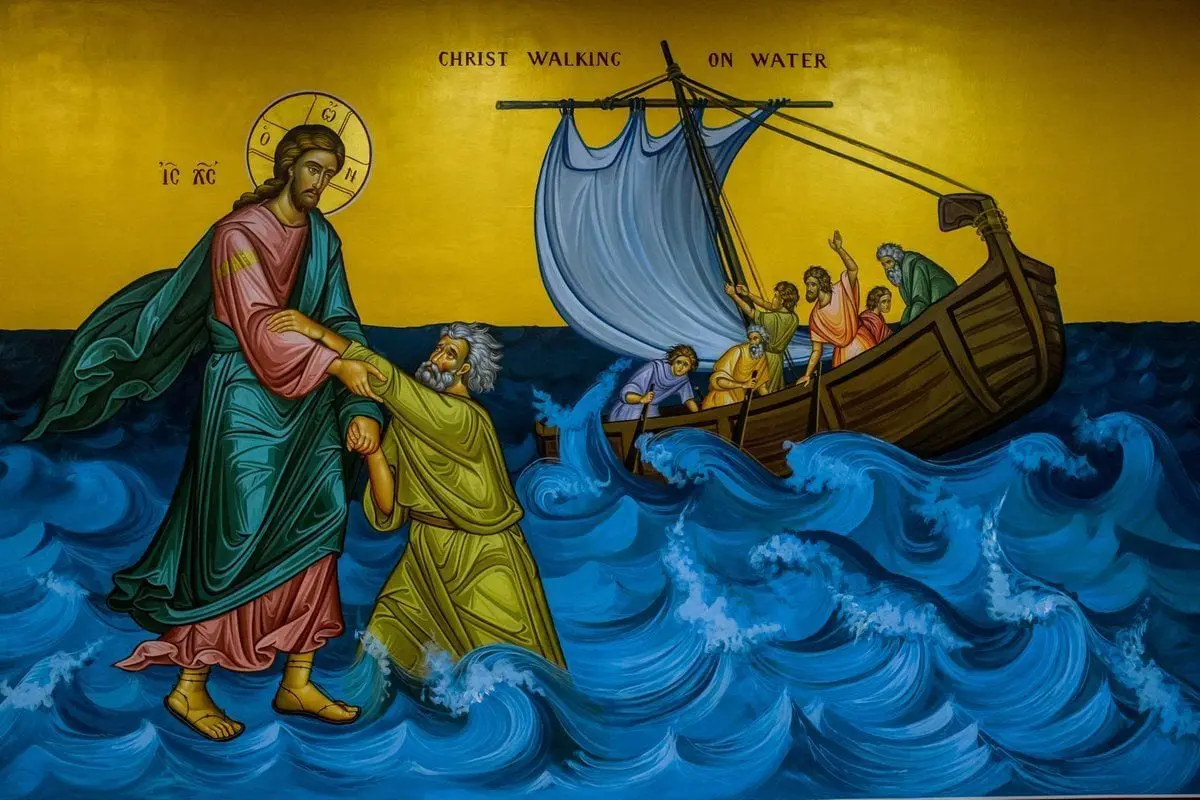
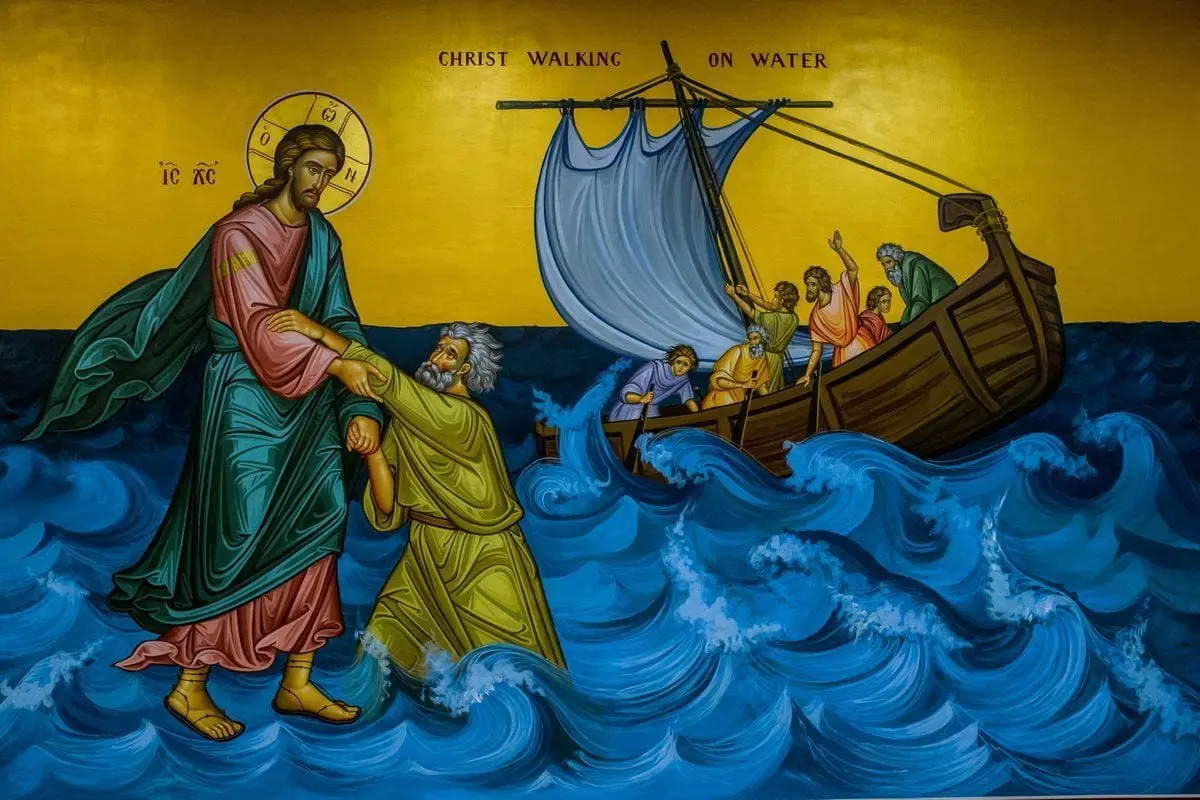
A careful reading of Matthew 14:22–33 discloses what must be called the Theology of the Storm. A common charismatic error must be firmly corrected here: the goal of faith is not the instant removal of all negative circumstances. The presence of the Spirit does not guarantee the absence of chaos. The Spirit of God hovered over the darkness and the formless void — the Tohu wa-Bohu — at the beginning of creation. His presence there did not eradicate the chaos; it dominated it. This is the pattern of the Spirit throughout Scripture: not the immediate eradication of disorder, but the capacity to rule within it.
The Fourth Watch: The Extremity of Endurance and the Word of Knowledge
When Jesus constrained His disciples to enter the ship and cross the sea, He was not sending them into danger through oversight. He was deliberately designing a training environment. He knew the winds would be contrary. Beyond this, He possessed the Word of Knowledge: He knew the storm was coming, He knew the disciples were laboring under it, and He remained on the mountain in prayer. His prayer did not stop the storm. Even the intercession of the perfect Son of God did not prevent the contrary winds from rising. This implies that certain storms are designated by God for the development of faith rather than for its demonstration.
Jesus delayed His intervention until the Fourth Watch — the period between three and six in the morning — the extremity of the night, when human endurance has been entirely spent and the darkness seems to have no end. He waited, as He would wait with Lazarus, until the situation moved from difficult to impossible, so that no natural explanation could account for what followed.
The Partitioning of Light and the Lesser Light
To understand dominion in the storm, we must return to the Genesis account of creation. God did not eradicate darkness at the beginning; He divided it. He partitioned the light from the darkness and assigned each its own name — Day and Night. Then: And God made two great lights; the greater light to rule the day, and the lesser light to rule the night: he made the stars also (Genesis 1:16). Even the Night has a ruler — a lesser light appointed for it. For the believer, being a child of the day means possessing the greater light, Christ and His Spirit, even when one is physically in the midnight of their circumstances. Because darkness and light are both alike to God (Psalm 139:12), the goal of the Spirit is to make the believer unaffected by the environment. Dominion is the capacity to be at ease in the earthquake and poised in the storm.
When the natural soul encounters chaos, the response is fear, agitation, and a fixation on the external disturbance. The pneumatological response is altogether different. Where the natural man sinks because he relies on physical sight, the Spirit-led man walks upon the very thing that seeks to destroy him. Where the natural man prays for a change of environment so that comfort may return, the Spirit-led man is anchored in the consciousness of divine presence — It is I — and finds in that word the elimination of every requirement for fear. The extremity of the night, which exasperates natural endurance, becomes for the believer the appointed hour for the Fourth Man to appear.
Jesus' invitation to Peter — Come — was an invitation to participate in the divinity of the Son of God. Peter walked on water not by his own power, but by sharing in Christ's dominion over creation. The storm ceased only once they had entered the ship together, confirming that the contrary wind had been permitted by the Lord Himself as an exercise in forming the disciples' consciousness — a classroom, not a catastrophe.
The Divinization of the Human
This essay concludes with a radical call to internal transformation over external manipulation. We have moved from the communal unity of the Psalms to the impossible love of the Cross, through the biographies of the Logos and the typology of Joseph, and finally to the mastery of the storm. The recurring theme is consistent and uncompromising: nothing in the external environment needs to change first. The contrary winds, the Pharaonic prisons, and the boisterous waves are the necessary backdrop for the manifestation of the Spirit's power.
The acquisition of the Spirit is the divinization of the human. It is the process by which the Holy Spirit — the Deifier — reorders the nature of man so that he may function as a representative of God in the earth. If you find yourself in a condition that will not change, it is because you must change. The thing that is not changing is you. When the interior man is fully yielded to the Spirit and has acquired His governance, the external environment loses its power to perturb or destroy. The believer is called to be unperturbed, unmoved, and poised — because he has been granted access to a life that is superior to the adversarial conditions of this fallen world.
The Christian life is a fight of faith, a journey into the liberty of the sons of God. We are called to attend to our training, to be formed in the power of His name, and to remain conscious of His presence as the only reality that ultimately matters. For when the believer attains this pneumatological governance, fear is eradicated, the lesser light of the night is surpassed by the greater light of the Spirit, and the commanded blessing of life forevermore becomes not a future hope but a present and abiding reality.
Because the creature itself also shall be delivered from the bondage of corruption into the glorious liberty of the children of God. (Romans 8:21)
In the name of the Father, and of the Son, and of the Holy Ghost — let us seek not the alteration of our circumstances, but the fullness and the acquisition of the Spirit, that we may walk upon the waters of this life with the poise, the wisdom, and the participatory dominion of the Son of God. Amen.