Soteriology: The Human Condition (Sin) & The Divine Solution (The Cross)
A Crisis of Soteriological Understanding
A prevalent theological liberalism within modern Western Christendom has perilously obscured the biblical understanding of sin and salvation, giving rise to a faith that is spiritually anemic and soteriologically incoherent. This erosion of orthodox teaching has left many believers adrift, disconnected from the profound spiritual heritage available in Jesus Christ. This essay deconstructs these modern errors and articulates a more biblically and patristically grounded soteriology, one rooted in the archetypal drama of Adam and the all-sufficient remedy of the Cross of Christ.
The argument proceeds in a structured manner. It begins with a critical examination of the doctrinal deficiencies that plague the contemporary Western church, then establishes the correct archetypal framework for diagnosing the human condition as revealed in the Genesis account. From there, it presents the Cross of Christ not as one solution among many, but as the exclusive and all-encompassing divine remedy for that condition. Finally, it outlines the practical, ascetical application of this truth in the life of the believer, showing how the victory of the Cross is appropriated in the present life. This analysis seeks to move beyond superficial remedies and return to the foundational truths upon which an authentic and enduring Christian life is built.
Deconstructing the Deficiencies of Modern Western Theology
The Dangers of Doctrinal Liberalism and the Cult of Personality
A believer's theology is not an abstract academic exercise; it is the very architecture of their spiritual life. The theology you accept defines the life you experience, and it is therefore of paramount importance that this theological foundation be sound. Yet in much of the West, a pervasive doctrinal liberalism has taken hold, fostering the dangerous notion that truth is a matter of personal or ecclesiastical preference rather than divine absolute. This approach, which champions a kind of freedom in the interpretation of Scripture, fails to recognize that a chosen belief is not necessarily a true one. False doctrines are not benign; they inflict tangible spiritual harm, creating a chasm that separates well-meaning believers from the fullness of their inheritance in Christ.
This doctrinal laxity is compounded by what can only be described as a Christianity of stardom, in which a believer's affiliation is determined not by doctrinal fidelity but by the social media presence and popularity of a given minister. The result is a perilous spiritual dependency. A congregant's entire theological foundation becomes bounded by the scope of a single minister's knowledge — knowledge that is often corrupted. As the Apostle Paul makes clear, understanding is gained through a proper reading of the mystery of Christ (Ephesians 3). When the source is contaminated, the foundation will inevitably be corrupted as well.
This liberalism is not a modern innovation to be celebrated but a spiritual malady that Christ Himself explicitly rejects, one carrying catastrophic soteriological consequences. To the church at Ephesus, He declared that for leaving its first love, it stood at risk of having its very position removed from His presence. His words constitute a chilling admonition: "thou hast left thy first love. Remember therefore from whence thou art fallen, and repent... or else I will come unto thee quickly, and will remove thy candlestick out of his place." And to the lukewarm church of the Laodiceans, He delivered an even more visceral warning: "Because thou art lukewarm, and neither cold nor hot, I will spue thee out of my mouth." To be vomited from the mouth of Christ is to have no place in His ranks. These are not merely historical accounts; they are direct scriptural evidence that the Lord of the Church does not tolerate doctrinal or spiritual ambiguity. This existential threat becomes most acute in the specific and pervasive error concerning the very nature of salvation itself.
The Fallacy of Unconditional Eternal Security
The doctrine of salvation lies at the heart of the Christian faith, and its proper understanding determines the entire posture of the believer's walk with God. The popular paradigm of once saved, always saved, while offering a certain psychological comfort, fundamentally misunderstands the biblical dynamic between divine grace and human free will. It posits a closed system of salvation that, once entered, can never be exited. This position, however, crumbles under examination. The critical questions must be asked: What happens if a person decides they no longer believe in Jesus? What becomes of that status of permanent salvation — does it travel with them, or is it revoked?
Because God never violates the will of man, salvation must be understood as an open-ended system. An individual who once believed retains the capacity to later disbelieve, to depart from the faith. The biblical testimony, in fact, portrays salvation not as a static, one-time event but as a present continuous effect. This is evidenced by the varied tenses Scripture employs to describe it. One passage states that "we are being saved," while another promises that "he that shall endure unto the end, the same shall be saved," and yet another exhorts believers to "work out your own salvation with fear and trembling" (Philippians 2:12, KJV). Are we saved? Are we going to be saved? Are we being saved? The answer is that salvation encompasses all three realities simultaneously.
This reveals a crucial distinction in responsibilities. Christ was responsible for obtaining salvation eternally through His one-time sacrifice. The believer, however, holds the responsibility for keeping that salvation through an ongoing and dynamic cooperation with the Holy Spirit — not an anxious striving, but a vigilant watchfulness. To grasp this ongoing process, we must first understand the divine energeia, the operation, of the agent who facilitates it: the Holy Spirit.
The Divine Mechanics of Salvation: Archetypes of Spirit and Scripture
Receiving vs. Being Filled: The Spirit's Work as a Soteriological Model
A correct understanding of the Holy Spirit's divine operation provides an essential model for comprehending the process of salvation itself. Scripture makes a clear and vital distinction between the act of receiving the Holy Spirit and the experience of being filled with the Holy Spirit, and confusing these two realities leads to significant theological error and spiritual lethargy.
The act of receiving the Holy Spirit is a singular, foundational event that marks the believer's entry into the life of God. The precedent is set by Christ Himself. After His resurrection, He appeared to the disciples and imparted the Spirit to them directly, as recorded in John 20:22: "And when he had said this, he breathed on them, and saith unto them, Receive ye the Holy Ghost." This was the foundational moment of reception. Being filled with the Holy Spirit, by contrast, is a continuous and subsequent experience. The same disciples who had already received the Spirit were later filled with the Spirit on the day of Pentecost (Acts 2:4). Nor was that the end of it. Scripture records multiple subsequent infillings for the same individuals: Peter was "filled with the Holy Ghost" again when addressing the Sanhedrin (Acts 4:8), and the assembled believers were all "filled with the Holy Ghost" after they had prayed together (Acts 4:31). This ongoing reality is precisely what Paul commands in Ephesians 5:18, more accurately rendered as "be being filled with the Spirit."
This spiritual dynamic serves as a perfect archetype for the doctrine of salvation. Just as one receives the Spirit once but is filled continually, so too a believer receives Christ once as the basis for salvation but is continuously being saved through active and ongoing cooperation with the Spirit. Salvation is not a destination reached at the new birth but a lifelong process of transfiguration. This principle of seeking divine reality within scriptural types is the key to unlocking the Bible's deepest truths.
The Preservation of the Christ-Archetype in Scripture
The Old Testament is not merely a collection of historical accounts; it is a divinely curated repository of types and shadows that both conceal and reveal the ultimate reality of Jesus Christ. Every narrative is pregnant with a christological meaning that God has meticulously preserved. The account of Moses and the rock in the wilderness, as interpreted in 1 Corinthians 10, provides a profound example of this hermeneutic.
The typology unfolds with breathtaking precision. When Israel first thirsted, God commanded Moses to strike the rock — an act that prefigured Christ, the spiritual Rock, being struck once on the Cross to provide the living water of the Spirit for all humanity. When Israel thirsted again, however, God commanded Moses not to strike but to speak to the rock. This signified the new divine economy: after Christ's one-time sacrifice, the life-giving Spirit is accessed not through repeated striking but through the confession of faith, by speaking to the Rock. Moses disobeyed in his frustration and struck the rock a second time, a profound disruption of the divine revelation of Christ that wrongly suggested He must be sacrificed repeatedly, distorting the finality of the Cross. The severity of God's judgment — barring Moses from the Promised Land, allowing him to see it but not enter — demonstrates the absolute priority God places on preserving the purity of the Christ-archetype.
This punishment echoes the very warnings given to the churches in Revelation, revealing a consistent biblical principle: even the greatest figures and communities are subject to severe consequences for distorting the revelation of the Son. This unwavering commitment to divine archetypes provides the lens through which we must now examine the Bible's foundational account of the human condition: the story of Adam and Eve.
The Anatomy of the Fall: An Archetypal Diagnosis of the Human Condition
Adam the Soul, Eve the Flesh: Establishing the Divine Order
The Genesis account of creation and the fall is not simply a historical narrative; it is the primary archetype for understanding both the divinely intended constitution of the human person and the elemental root of sin. To properly diagnose the human condition, one must first understand the divine order established at the beginning.
The creation of Adam is described with theological precision in Genesis 2:7: "And the LORD God formed man of the dust of the ground, and breathed into his nostrils the breath of life; and man became a living soul." The Hebrew term nephesh signifies the entire animation of a person's life. Adam is thus established as the icon of the Soul and, by extension, the Head. It is to Adam that God imparts His divine instructions and invests with authority. The subsequent creation of Eve reveals her own archetypal role. She is not formed from the dust but taken from Adam's side, and upon seeing her, Adam's declaration is both specific and revelatory: "This is now bone of my bones, and flesh of my flesh." Critically, he does not say "soul of my soul" — an omission of profound archetypal significance. He does not identify her as soul but as flesh, establishing Eve as the icon of the Body and the Flesh.
The divine order is therefore clear and hierarchical: the Head, figured in the Soul and in Adam, is created first and is meant to lead and direct the Body. The Body, figured in the Flesh and in Eve, is to live in submission to the Head, receiving its guidance from the one who in turn receives instruction directly from God. This was the blueprint for human flourishing, an order of perfect harmony poised for tragic subversion.
The Inversion of Order and the Definition of Sin
The serpent's temptation in the Garden was not merely a lure to disobedience; it was a calculated, strategic assault on the divine hierarchy. This is revealed in its very first move: the serpent bypasses the Head and approaches the Body. By speaking to the woman rather than to the man, it discloses Satan's timeless strategy and delineates two opposing spiritual operations. God speaks to the Head; Satan speaks to the Body. God works through the strengthening and instruction of the Soul; Satan works through the manipulation of the Flesh.
The moment of the Fall represents the catastrophic inversion of this order. Eve, the Flesh, listens to the serpent and acts independently of her Head, then presents the fruit to Adam, the Soul, who follows her lead. The essence of sin is defined precisely in God's judgment upon Adam in Genesis 3:17: "Because thou hast hearkened unto the voice of thy wife, and hast eaten of the tree... cursed is the ground for thy sake." Herein lies the elemental definition of sin: it is the Soul, the Head, abdicating its divine authority and submitting to the dictates of the Flesh. This inversion is the root cause of all subsequent human problems, from hardship and toil to spiritual death. Humanity now operates in a state of inherent disorder, with the flesh leading the soul. This fallen Adamic condition is one of utter helplessness, a fundamental disorder that could only be rectified by a divine intervention of the highest order.
Christ, the Cross, and the Reinstatement of Divine Order
Christ the Second Adam: The Rectification of the Fall
Into the wreckage of the Adamic failure enters Jesus Christ, the Second Adam — God's strategic method of entering the fallen human condition in order to remedy it perfectly from within. The Incarnation was not a mere visitation but a divine enlistment in the human race to reverse its tragic course.
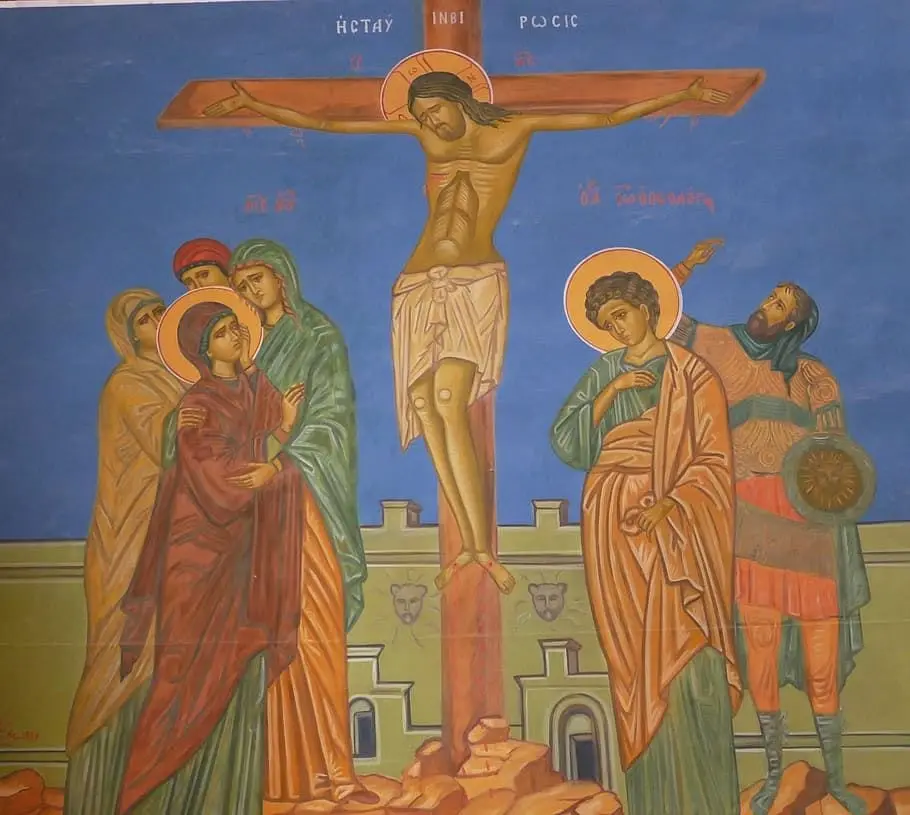
Where the first Adam disobeyed, the Second Adam offered perfect obedience. Throughout His life, Christ flawlessly modeled the original divine order: His flesh was in absolute submission to His soul, and His soul was in absolute submission to God the Father. This lifelong obedience culminated in His work on the Cross, the ultimate act of reinstating the divine order. By willingly subjecting His body to the slaughterhouse of Calvary, He accomplished what the law could not do: He condemned sin in the flesh, precisely at the point where the original disruption occurred. He reversed the Fall by making His Body perfectly obedient to His Head, even unto death.
Christ's journey to the Cross also redefines the measure of true spirituality, for the entire cornerstone of the Christian faith rests on a theology of the cross. In stark contrast to the modern Western metric of material blessing, the Bible establishes poverty in spirit as the authentic sign of nearness to God — a severance from worldly attachments in order to gain the richness of God. Christ's life was the ultimate embodiment of this principle. He willingly lost everything this world values in order to perfectly fulfill the will of the Father, establishing not only Himself as the agent of our salvation, but the Cross as its exclusive location.
The Cross as the Final Altar and Universal Remedy
The Cross of Christ is not merely a historical event; it is the central, timeless, and all-sufficient reality in God's plan of redemption. It is the final altar, the singular divine remedy for the universal human condition. All previous altars were mere shadows pointing to this ultimate reality, where God would provide the final and perfect solution for sin.
This is powerfully prefigured in the archetype of the brazen serpent from Numbers 21. When the Israelites were dying from venomous snakebites, a profound paradox unfolded. They had been bitten by serpents, and God said: make a serpent. He instructed Moses to lift up a bronze serpent on a pole, promising that anyone who looked upon it would live. The typology is unmistakable: all of humanity, bitten by the serpent of old, finds its one and only remedy by looking in faith to Christ — who became sin for us — lifted up on the Cross.
The efficacy of this remedy is total. The Cross fixes every error, every mistake, and every transgression. It is the site of a divine exchange: we bring our crookedness and receive His beauty; we bring our darkness and receive His light; we bring our death and receive His life. The profound accessibility of this solution is illustrated by the thief on the cross. In his final moments, a simple gaze of faith toward the crucified Christ was sufficient to secure his eternal salvation. No one is too broken to be excluded from the mercy offered at this final altar. The crucial question, then, becomes how the believer appropriates the power of this definitive act.
The Power of the Name and the Imprinting of the Soul
How does a believer, living in the post-resurrection age, apply the power of a historical event like the crucifixion? The answer lies in the potent reality of the Name of Jesus. The Name is the vehicle through which the timeless power of the Cross is made present and effective in the life of the believer.
The theological significance of the Name of Jesus cannot be overstated. It is not a magical incantation but the emblem of His accomplishment — more than that, it is the spoil of His victory, the reward God gave Him for overcoming. It is the consolidation of all that Christ is and all that He has done. To invoke His Name is to invoke the entirety of His redemptive work.
This understanding gives rise to a vital spiritual discipline: the believer must learn to imprint the cross of Christ upon their soul. This is the active work of salvation. Like an athlete who trains relentlessly for a prize or a boxer who prepares daily for a fight, the Christian must engage in strenuous and disciplined effort, achieved through the constant invocation, meditation on, and confession of the Name of Jesus. This practice is the fulfillment of the command to speak to the rock. It is what Paul may well have intended in 1 Corinthians 14:19: "Yet in the church I had rather speak five words with my understanding... than ten thousand words in an unknown tongue." Those five words — the Name of Jesus Christ, the Cross of Jesus Christ — possess more transformative power than volumes of undirected spirituality. It is this disciplined imprinting of the Name and the Cross upon the soul that keeps the flesh under control, stabilizes the wandering mind, and allows the believer to continuously draw upon the victory won at Calvary, thereby maintaining the proper divine order within their being.
Returning to the Foundation
The theological malaise of the modern West, with its diluted doctrines and its elevation of personalities over truth, has obscured the fundamental realities of the human condition and its divine solution. This essay has sought to cut through that confusion by returning to the unyielding archetypes of Scripture. The human problem is singular: sin, understood not as a collection of isolated transgressions but as the catastrophic inversion of God's created order, wherein the flesh has usurped the authority of the soul.
God's solution is equally singular, perfect, and all-sufficient: the Cross of Jesus Christ. At Calvary, the Second Adam reversed the failure of the first, condemning sin in the flesh and reinstating the divine order through His perfect obedience. The Cross is the final altar, the universal remedy where every human failure is met with divine perfection. The path to true spiritual depth and enduring salvation therefore lies not in theological novelty or cultural relevance, but in the relentless application of the soul to the reality of the Cross — a reality made ever-present and accessible through the power of the Name of Jesus.