The Significance & Impact of the Spirit of the Lord In the Gospel
The Interconnectivity of Sovereignty and Stewardship
The structural integrity of the nation-state and the spiritual maturation of the Church are not separate realities operating in isolation from one another. They are bound together within a single architecture governed by the divine economy of the Holy Spirit. The stability of a land, the efficacy of the Gospel, and the elevation of the individual believer are inextricably linked through the posture of humility and the active, authoritative agency of the Third Person of the Trinity. The contemporary landscape — marked by systemic corruption, the trivialization of the ministerial calling, and a widespread ignorance of spiritual causality — demands a return to the foundational disciplines of intercession and the ascesis of waiting.
Derivative Peace
Central to the believer's role within secular society is the prophetic mandate of Jeremiah 29:7: "And seek the peace of the city whither I have caused you to be carried away captives, and pray unto the Lord for it: for in the peace thereof shall ye have peace." This text establishes a foundational theological principle — the peace of the believer is essentially derivative. We do not exist in a vacuum of private spirituality, sequestered in some spiritual ghetto apart from the world. Our quiet and peaceable lives are contingent upon the stability of the city or nation where the Lord has strategically stationed us.
This strategic placement holds even in seasons of displacement, captivity, or national crisis. Whether in the context of the Babylonian exile or the contemporary struggles of nations such as South Africa, the mandate is unchanged: the resident believer must intercede for the land. The peace of the land is the ontological prerequisite for the unhindered advance of the Gospel. When a nation is marred by corruption, pollution, and wickedness, it enters a state of spiritual entropy and becomes ripe for judgment and eventual overthrow. The strategic importance of intercession, therefore, lies in its power to arrest the cancer of systemic decay through the invocation of a higher sovereignty.
The Gatekeeper's Mandate and the Preservation of State
The righteous are positioned not merely as spectators of history but as salts, preservers, and sons of Zion — functional roles within a spiritual economy designed to stay the spreading disease of corruption and greed. As gatekeepers, the righteous stand at the breach, acknowledging a sobering reality: without divine intervention, the state is a lost cause. No political mechanism or sociological reform is capable of curing the leaven of human iniquity. Only the sovereign hand of God can maneuver the destinies of nations.
Through humbling themselves before God, intercessors beckon the Lord to weed out corrupt leadership and remove the civil servants who plunge the nation into darkness. The historical precedents of Esther, David, and Daniel are instructive here — individuals who possessed no conventional political power yet exerted profound spiritual influence. That influence was born in the place of prayer, where the authority of Christ is employed to preserve the future and posterity of the land. The goal is a transformation of the state into an environment where righteousness rules and joy returns — much as we see in the modern evidence of El Salvador, where the purging of crime and violence has prepared the way for the spreading of truth.
Kenotic Ascent: Abasement and Promotion
Within the Kingdom of Heaven, there exists a Law of Descent that stands in direct opposition to the world's mechanisms of self-advancement. The paradoxical truth must be stated plainly: the way up with God is down. This is not a homiletic platitude but a rigorous theological framework for theosisTheōsisNot that we become God by nature, but that by grace we are drawn into His life: “partakers of the divine nature” (2 Peter 1:4). and spiritual promotion.
The Way Down is the Way Up: The Law of Humility
The spiritual life is governed by the principle that God does not increase you until you decrease yourself. This echoes the Christological pattern of kenosis described in the Pauline epistles: "He that descended is he that ascended that he might fill all in all." In the world, honor is a commodity pursued through self-assertion and the cultivation of a public persona. In the Kingdom, honor is the fruit of loneliness, humbleness, and abasement. Promotion is withheld by the Divine Hand from those who have not yet mastered the posture of the low.
There are times when the divine economy necessitates a forced descent. When a believer faces the loss of employment, social standing, or ministerial influence, the resulting state — often manifesting as a profound depression or loneliness — serves a refining purpose. These are not merely unfortunate circumstances. They are blows and hits that constitute the way of loneliness. To gain much in God, one must first be willing to lose everything. This downward movement is the essential prerequisite for receiving any honor from God, for He resists the proud but gives grace to the lowly.
The Authority of Death and the Proximity of Presence
The theological necessity of this descent is rooted in the Passion of Christ. To achieve the Resurrection, the Creator of the universe had to subject Himself to the composition of disobedience — which is death. For Christ to die as the Author of Life, He had to come under the authority of death for a season, and that subjection was the very precursor to His glorification. In the same way, the believer must learn to take the hits of life's trials without bitterness, recognizing them as the mechanism of spiritual refining.
The proximity of His presence is most acutely realized at the nadir of human strength. The Lord declares that He is near to the brokenhearted and those of a contrite spirit. As the Apostle Paul discovered, divine strength is not an additive to human capability but is perfected precisely at the point of absolute human weakness. Grace is not the enhancement of human capacity — it is the replacement of it with divine action. The loneliness of the trial is therefore the sanctuary where the Spirit of God begins the work of genuine elevation.
Foresight vs. Insight
As the believer navigates the complexities of natural and spiritual life, maturity manifests as a heightened cognitive and spiritual faculty: Wisdom. This faculty allows the believer to move beyond insight — the retrospective realization of the fool — into foresight, the proactive analysis of spiritual and natural causality.
The Collision Course of Choice and the Moral Law of Consequence
Every individual, ministry, and nation is on a perpetual collision course with the consequences of its choices. This is the Moral Law of Consequence — outcomes are fated by the decisions that precede them. Consider the biological parallel: if an individual consumes artificial stimulants and processed chemicals indefinitely, it is fated by the laws of physiology that a blockade or a mutation in the DNA will eventually manifest. The human body was not designed to process artificiality without cost.
The same principle governs the spiritual realm. A decision made in pride carries within it a component of destruction that is fated to manifest. The fall of a ministry is often visible to the wise years before it occurs. A ministry may appear to blow up and prosper, but if its foundation rests on actions that are not right, its destruction, when it comes, will be sudden and great. Wisdom is precisely the ability to perceive the fate of a choice before the collision occurs.
Defining the Triad of Spiritual Perception
To navigate the ecclesial and natural landscape with accuracy, one must distinguish between three distinct modes of perceiving the future. Prophecy is the sovereign ability to see what lies ahead through the direct revelation of the Holy Spirit — it comes by immediate impartation, at the Spirit's own initiative. Wisdom is the ability to perceive the future through the rigorous analysis of choices, decisions, and their outcomes; it is cultivated through the Fear of the Lord and the counsel of the wise. Foresight is the cognitive and spiritual capacity to analyze the probability of outcomes and make proactive adjustments; it is born from humility and the objective processing of reality. Each of these faculties is distinct, and confusing them leads to spiritual misalignment.
The Fear of the Lord as the Epistemological Filter
Wisdom is not intellectual erudition or academic prowess. Divorced from the Fear of the Lord, it becomes corrupted wisdom. The Scripture asserts: "The fear of the Lord is the beginning of knowledge." This fear is defined as a total constraint — a refusal to think, perceive, analyze, or act in a manner contrary to God's counsel. Wisdom requires the objective processing of reality, yet most men process reality subjectively, viewing their circumstances through the lens of their own desires and pride. The wise man, by contrast, constrains his mind to the counsel of the Lord, recognizing that there is no wisdom or understanding against the Almighty.
Wheat, Tares, and the Mystery of Iniquity
The modern Church operates within a complex landscape characterized by ecclesial infiltration. Truth and falsehood currently coexist within the same field, and navigating that field requires a high degree of discernment to distinguish between the Spirit of Christ and the Spirit of Antichrist.
The Equity of God and the Mystery of Iniquity
A significant theological paradox is the equity of God, who "maketh his sun to rise on the evil and on the good, and sendeth rain on the just and on the unjust." Within the Kingdom, the Lord allows the bad fish to remain in the net alongside the good, and the tares to grow alongside the wheat. This is not divine indifference but a strategy of monitoring. God allows evil the opportunity to fill up its cup of indignation before the final separation at the end of the age.
This coexistence means that the presence of goats and wolves in sheep's clothing within church structures is a permitted, though dangerous, reality. There is a contamination of the Gospel and an infiltration of satanic agency that preys on the gullible. Many are tossed to and fro because they lack the belt of truth and the strong meat of sound doctrine.
The Self-Regulatory Body and the Signature of Christ
The Church is designed by God to be a self-regulatory body. There is no external regulatory mechanism to prevent individuals from declaring themselves called and launching ministries built on personal ambition. Because the Church has no secular oversight, the Holy Spirit alone serves as the regulatory mechanism — the headquarters of the power force of God.
To distinguish between a Christ-centered ministry and an antichrist-centered one, one must look for the distinguishing markers. These markers are not found in popularity, social media presence, networks with government officials, or the work of a public relations team. Indeed, "that which is highly esteemed among men is abomination in the sight of God." The true Signature of Christ is found in the exaltation of His person and in the Spirit's power to transform, deliver, and validate the reality of the Resurrection. That is the only credential that matters.
The Holy Spirit, the Sole Qualifier
In an era of academic professionalism and charismatic style, a radical pneumatological imperative must be asserted: the Holy Spirit is the only legal authorization to represent the invisible Christ.
The 30-Year Tarry: The Template of the Son
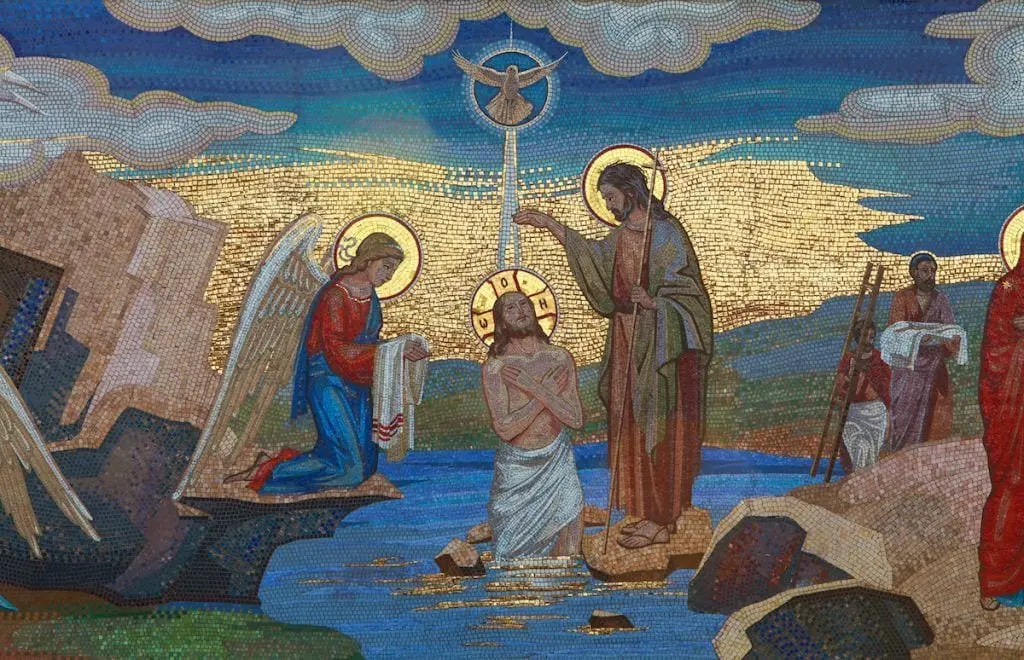
The beginning of the Gospel of Jesus Christ was not a sudden eruption. It was thirty years in the making. Jesus, the Creator of the universe, waited three decades before commencing His public ministry. This thirty-year tarry is the immutable template for all who are commissioned by God. The sign of His consecration was not a degree, a rod as with Moses, or a mantle as with Elijah. It was the Holy Spirit descending in bodily shape like a dove.
This waiting period is essential. The footprint, the mark, and the lasting impact of a life are the direct consequence of its tarrying. The modern tendency to rush into the field after only weeks of involvement must be challenged. Jesus, who was child of the Holy Ghost from His very conception, still required the Spirit upon Him before beginning His public witness. Without that enduement, there is no legal standing in the spirit realm to act on behalf of the Godhead.
The Absolute Qualifier: The Spirit Upon vs. The Spirit Within
There is a critical distinction in pneumatological operation that must be clearly understood. The Spirit within is received through the regeneration of the human spirit — it is the agency of recreation and salvation, the baptism of the new birth, the born-again experience. The Spirit upon is something distinct: the enduement from on high for service, witnessing, and the stewarding of the Gospel. It is the Signature of Christ. Bible school degrees and academic erudition do not qualify a preacher. While knowledge is valued, the only valid qualification for ministry is the Spirit upon. Just as salvation requires the confession of the Lord Jesus, the ministry of the Gospel requires the Signet of the Holy Spirit. Without this identifying signature, a ministry has no authority to break through the noise of the world and cannot legally represent the invisible Christ.
Intercession and Transformation
The Gospel is not a collection of ethical maxims or philosophical doctrines — it is a power force. A powerless Gospel is a theological contradiction, for Christ Himself is "the power of God, and the wisdom of God" (1 Corinthians 1:24).
The Aroma of Christ and the Validation of Reality
The aroma of the Spirit is defined as Christ-centeredness. The Holy Spirit's primary mandate is to verify, validate, and imprint the reality of Jesus upon creation. Where the Spirit is active, Christ is the focal point. Any display of power that does not reveal Christ — that instead reveals the minister or the network — is not of God. The Holy Spirit will always find an occasion to bring Christ to the forefront.
This power is necessary to break through the noise of a generation that is famished for life. People do not gather in the wilderness of modern existence for better sound systems or aesthetic lighting — they gather for answers to their deepest afflictions: the shattered mind, the barren womb, the bound spirit. The Spirit's power is the Dunamis required to "set at liberty them that are bruised" and to "preach the acceptable year of the Lord" (Isaiah 61:1–2).
The Helper: A Deep Analysis of Sunantilambanomai
The depth of the Spirit's intervention is captured in a profound Greek term found in Romans 8:26: Sunantilambanomai. It is a triple-compound verb that reveals the very mechanics of the Spirit's help. The prefix Sun means "together with" — the Spirit does not work in isolation from our participation. The element Anti means "against" or "in the face of" — it implies a confrontation with an opposing force, whether our infirmity, our weakness, or the ancient adversary himself. And Lambano means "to take hold of" or "to seize." Together, the word describes the Spirit taking hold of the situation, together with us, against our infirmity — coming to bear the load alongside us.
In prayer, He intercedes when we know not what we should pray for as we ought, translating our groans into the language of the Godhead. In crisis, He provides the enabling resource when the believer is weak, limited, and constricted. As the Apostle Paul noted, though the messenger may be in chains, the Word and the Spirit are unchained — an unchained force capable of accomplishing God's mandate regardless of the believer's personal bonds or situational limitations.
The Call to the Highway of the Lord
The crucible of the Spirit demands a return to a faith that is both intellectually rigorous and spiritually empowered. The Gospel remains the most important codex for civilization, and its stewardship requires the highest degree of theological fidelity. The gimmicks and marketing strategies of modern religion must be rejected. Success in the Kingdom is not measured by fame but by the aroma of Christ and the enduement of the Spirit.
The enduring significance of this teaching is its call to the Highway of the Lord — a path "which the lion's whelps have not trodden, nor the fierce lion passed by it" (Job 28:8). It is the narrow road, avoided by the majority, where the Fear of the Lord and the Wisdom of God govern every step. To know Christ is the pinnacle of wisdom, and to walk in the Spirit is the only way to inhabit the presence of God on earth.
As we seek to create a habitation for God and a haven for all nations, we must tarry until we are endued, abase ourselves until we are promoted, and intercede until the peace of the city reflects the peace of the Kingdom. Let us therefore silence our souls and listen for the Helper — for in His presence alone is the power to transform the lost cause of humanity into the glorious liberty of the children of God. We must act, live, and preach in a way that brings glory to His name forever, for Christ must be exalted at our own expense. Amen.