Salvation, Sanctification, and the Synergistic Path to Deification
Teleological Framework: Salvation is a Process of Ontological Transfiguration
The nature of salvation is not a peripheral theological question. It is the very axis upon which human destiny turns and the ultimate reason the LogosLogosThe eternal Word of God, through whom all things were made, who became flesh and dwelt among us (John 1:1–14). became flesh. In much of Western theological thought, salvation has been reduced to a static legal status—a forensic transaction completed in the historical past, guaranteeing future immunity from divine judgment. This reductionist view represents a profound impoverishment of the faith, one that obscures the vibrant, lifelong process of transfiguration taught by the Apostles and the Patristic tradition of the Church. Salvation is not a point of departure; it is an ontological migration from the likeness of the old man to the image of Christ. It is a movement from the darkness of the passions into the uncreated light of theoria—the Vision of God.
The central thesis of this essay is that holiness is not an optional feature of Christian life, nor merely a secondary fruit of faith. It is the absolute, non-negotiable prerequisite for theoria. As the Holy Apostle declares in the Epistle to the Hebrews, "Follow peace with all men, and holiness, without which no man shall see the Lord" (Hebrews 12:14). The vision of God, therefore, is not a right conferred by verbal confession alone; it is a capacity developed through the arduous, synergistic purification of the heart (cardia). This essay seeks to dismantle the modern architecture of easy salvation, which is too often built on theological novelty and a quiet rejection of the faith once delivered. By examining the biblical archetype of the Exodus, the mechanics of the nousNousThe faculty by which the human person perceives God. Healed, it sees; darkened, it wanders., and the sacramental economy of the Church, we shall trace the path by which the believer works out their salvation with fear and trembling—from the foundational necessity of dogmatic stability, through the mystery of human cooperation with divine grace, to the final account every soul must render before the judgment seat of Christ.
Preservation of the Depositum Fidei: Tradition against Innovation
Theological stability is the sine qua non of any authentic spiritual life. In the economy of faith, theological creativity is not a virtue—it is a source of corruption. When we speak of theologies of creativity, we are naming a specific danger: the attempt to revise the foundational principles of the faith in order to suit the cultural, emotional, or intellectual preferences of any given generation. If the terms of salvation are altered, the very mechanism of human rescue is compromised. The Church is not a laboratory for innovation; it is the repository of the Depositum Fidei—the Deposit of Faith.
The biblical mandate for this conviction is found in the General Epistle of Jude, where the Apostle exhorts the faithful to "earnestly contend for the faith which was once delivered unto the saints" (Jude 1:3). The use of the definite article—"the faith"—signals a specific, bounded, and immutable body of truth that transcends every generation. This faith was not arrived at through human ingenuity, and it is not subject to revision through modern theological trends. It was delivered as a sacred deposit, passed from the first century through an unbroken succession of saints and martyrs.
The competitive landscape of modern Christianity is often driven by a pursuit of novelty, as denominations and individual teachers seek to distinguish themselves through fresh interpretations of ancient truths. The Holy Fathers are unambiguous in their verdict on such attempts: innovation in matters of doctrine is forbidden. This is not mere conservatism for its own sake. The integrity of the faith is inseparable from the soteriaSōtēriaDeliverance, healing and wholeness: the restoration of the whole person to communion with God.—the salvation—of the human person. If the faith is altered, the terms of the relationship between Creator and creature are distorted, leading to a spiritual deception that places the soul at mortal risk. From the first century to the twenty-first, the path of salvation remains unchanged. To preserve the common salvation, one must reject theological creativity and embrace the faith once delivered, recognizing that the faith of our fathers is the only faith by which men can be saved. This dogmatic stability provides the necessary foundation for understanding how salvation actually operates within time.
Soteriological Continuum: Deconstructing the Saved Status
Among the most entrenched dangers in modern Christianity is the habitual and overconfident use of the past-tense saved status. When someone is asked "Are you saved?", the answer is nearly always an immediate "yes," grounded in a singular moment of confession or a past emotional experience. Within the depth of Patristic theology, however, such an answer reflects a fundamental limitation of understanding. To claim finality in salvation while still inhabiting a mortal body prone to sin—while the heart remains a theater of the passions—is to fundamentally misread the nature of the Christian struggle.
The deconstruction of this assumption begins with the Pauline imperative in Philippians: "Wherefore, my beloved, as ye have always obeyed, not as in my presence only, but now much more in my absence, work out your own salvation with fear and trembling" (Philippians 2:12). The imperative "work out" (katergazesthe) implies a process—an effort, a sustained labor, ongoing and continuous. If salvation were a completed forensic transaction, there would be no labor remaining. The potential for salvation is distinct from its perfection. The Apostle Peter confirms this when he describes believers as those "who are kept by the power of God through faith unto salvation ready to be revealed in the last time" (1 Peter 1:5), pointing them toward "receiving the end of your faith, even the salvation of your souls" (1 Peter 1:9). If the "end of faith" is a future revelation, then salvation cannot be claimed as a present finality.
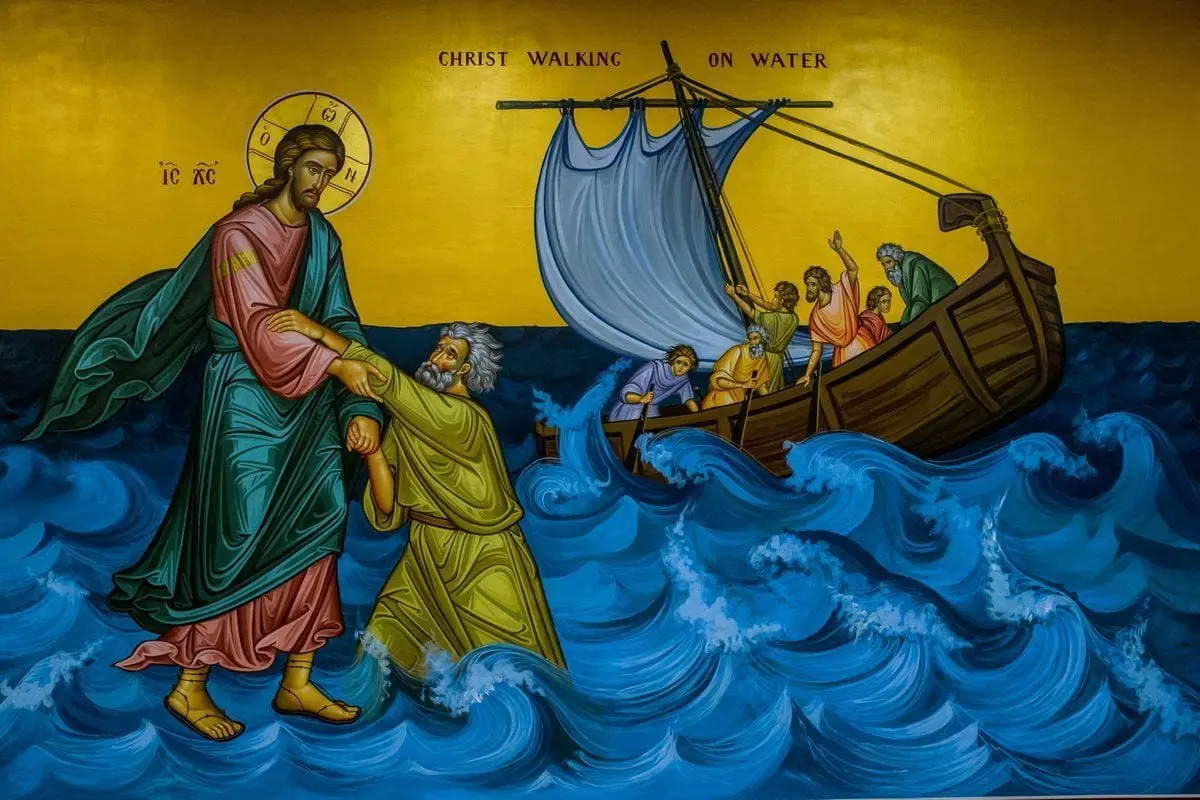
The archetype of the Exodus illustrates this danger with sobering force. The Israelites were truly delivered from Egypt—representing the world and the dominion of Satan—by the hand of God through the Red Sea, which the Apostolic tradition recognizes as an archetype of Baptism. They were saved from slavery. Yet the vast majority never entered the Promised Land, which represents the fullness of salvation and theoria, because of their unbelief and their continued attachment to the fleshpots of Egypt. They perished in the wilderness, having been delivered from the enemy but failing to reach the end of their journey. This is a chilling warning to the Christian: to be delivered from the world by Christ is the beginning of the race, not the finish line. If one neglects so great a salvation (Hebrews 2:3), the end may yet be destruction. Salvation is not a static possession; it is a destination. As the Lord Himself declared, "he that endureth unto the end shall be saved" (Matthew 10:22). It is a future-oriented hope requiring faithful endurance and constant return to the Savior. And if salvation is this kind of arduous, ongoing process, it necessarily requires a mechanism of cooperation between Creator and creature.
Synergistic Mystery: Against the Heresy of Passive Grace
To counter the passivity promoted under the banner of grace alone, we must recover the theological principle of synergy (synergeia). The elevation of "Justification by Faith" as the sole, exclusive pillar of the Church—a move initiated by Martin Luther—constitutes what we must name as a divisive heresy. By making an idol of the doctrine of justification, the modern believer often displaces the Salvation Giver—the Person of Christ Himself—replacing Him with a legal formula. This forensic obsession creates, in practice, a license to sin, leading the believer to assume that Christ's work renders human effort irrelevant.
The correct theological framework is rooted in the dogma of the Theanthropos—the God-man. Christ's dual nature, being fully God and fully man, necessitates a dual work in the economy of salvation. If salvation were the work of God alone, man would be a passive puppet and the Incarnation would be mere theater. If it were the work of man alone, it would be an impossible task for a fallen will. Instead, salvation is the arena where the divine and the human work together. While God provides the fountain of grace, man must bathe and wash. The medicine is dispensed by the Great Physician, but the patient must actively participate in the cure by submitting to the treatment.
The supreme illustration of this synergistic principle is the Virgin Mary at the Annunciation. Though the Incarnation was entirely a miraculous work of the Holy Ghost, it required the voluntary surrender of the human will. Mary was not a passive vessel. She had to say, "Be it unto me according to thy word" (Luke 1:38). In the same manner, Christ cannot be spiritually incarnated within the heart of the believer without the active, continuous cooperation of the human will. God does not work without our participation: He is "able to do exceeding abundantly above all that we ask or think, according to the power that worketh in us" (Ephesians 3:20). This is the synergistic path—the divine power of God enables human effort, and human effort provides the vessel into which divine power is poured. Salvation is therefore both a divine gift and a human cooperation, a transformation that unfolds as the believer cleanses their soul to receive the life-giving Spirit. And the primary battlefield of this work of cooperation is the human heart.
The Cardia and the Guarding of the Nous: Warfare against the Passions
In the Hesychastic tradition, the heart (cardia) is not merely the seat of emotion. It is the spiritual center of the human person, the dwelling place of the nous—the eye of the soul. The enemy's primary objective is the defilement of this center. Our Lord is explicit: "For out of the heart proceed evil thoughts, murders, adulteries, fornications, thefts, false witness, blasphemies: These are the things which defile a man: but to eat with unwashen hands defileth not a man" (Matthew 15:19-20). The defilement of the heart is accomplished through the "passions" (pathe)—habitual sinful inclinations that darken the nous and prevent theoria. The vision of God is inextricably bound to the condition of the heart: "Blessed are the pure in heart: for they shall see God" (Matthew 5:8). The Christian life is, therefore, primarily the warfare of eradicating the passions—the putting off of the old man and the putting on of the new. This is not a pursuit of prosperity or emotional experience, which are modern Western distortions of the faith, but a rigorous ascesis (disciplined effort) and nepsisNēpsisSobriety of soul: the guarding of the heart by which a life is brought under the governance of the Spirit. (watchfulness).
Authentic spiritual struggle begins with an honest recognition of the heart's condition—its darkness, its disorders, its hopelessness apart from Christ. This recognition is not an invitation to despair; it is the precondition for genuine repentance. The Apostolic Fathers teach that true prayer must be private and contrite. Just as one does not throw open the windows of the marriage chamber for public display, genuine intimacy with God does not seek an audience. Loud and theatrical piety too often conceals a heart still enslaved to the passions. True communion with God is found in the secret place of a broken spirit. Like Moses ascending Sinai, the believer must climb the mountain of purification through the sustained effort of prayer, stripping away the passions to stand before the holiness of God. This internal labor does not occur in isolation; it is sustained and nourished within the life of the Church.
Sacramental Realism: The Eucharist is the Medicine of Immortality
The synergistic life is not a solitary exercise of the will. It is lived within the communal and sacramental life of the Church, sustained by the Holy Mysteries. Chief among these is the Holy Eucharist—the Sacrament of Life and the Holy Sacrifice—in which the believer physically and mystically partakes of the Theanthropos Himself, receiving divine life into the very members of their body.
A grave warning must be issued regarding unworthy reception. To approach the Eucharist as though it were merely bread or symbolic liquid is to fail to discern the mystical Body and Blood of Christ—a failure that, Scripture is clear, leads not to life but to judgment (1 Corinthians 11:29). In the Eucharist, Christ is simultaneously the High Priest and the Sacrifice. By partaking of this Sacrament, the believer receives a divine power that works against sin from within. This is the Medicine of Immortality. Yet the medicine requires a prepared recipient. One must render oneself worthy through confession and a broken spirit.
Sacramental participation is, at its depth, a participation in the divine nature (2 Peter 1:4). It is the moment in which the eternal mediation of Christ becomes a tangible, inward reality. The Eucharist repairs the chasm between God and man opened by the fall. It is through frequent and worthy reception that the image of Christ is progressively formed within the soul, providing the spiritual sustenance for the ongoing warfare against the passions. Yet this sacramental life is not an end in itself. It is the preparation for the final eschatological reckoning.
The Final Account: The Judgment of Works and the Deathbed Profile
The fear of the Lord—reverent, sobering, and real—is a dimension of faith that modern Christianity has largely abandoned in favor of a comfort that the Scriptures do not sanction. The assumption that a past confession guarantees a secure standing before God is a form of spiritual arrogance. Scripture is terrifyingly clear on the consequences of willful sin after receiving the knowledge of the truth: "there remaineth no more sacrifice for sins, But a certain fearful looking for of judgment and fiery indignation, which shall devour the adversaries" (Hebrews 10:26-27). To believe that one can continue living according to the flesh while claiming the benefits of the Spirit is a profound self-deception.
The spiritual tradition of the Church has long taught that the enemy of our souls is a diligent record-keeper. The demons maintain, so to speak, a profile built from every unrepented passion and every willful sin. At the hour of death, these are presented as evidence of whose kingdom the soul truly belongs to. This is not a superstition; it is the sober pastoral wisdom of the saints, and it is why the fear of the Lord is rightly called the beginning of wisdom. Not a servile terror, but a reverent recognition of God's holiness and the genuine gravity of the spiritual race.
The parable of the Publican and the Pharisee reveals the disposition required for the final account. The Pharisee, confident in his own status and the record of his works, was not justified. The Publican, who could not even raise his eyes toward heaven, "smote upon his breast, saying, God be merciful to me a sinner" (Luke 18:13), and it was he who went home justified. The tears and brokenness of the Publican were what opened the door to grace. While salvation is entirely a gift, Scripture remains unambiguous: "God will render to every man according to his deeds" (Romans 2:6). The good works of the believer are the necessary evidence of a heart that has truly cooperated with grace. A life that bears no fruit of salvation cannot credibly claim to be saved. Hell remains a genuine possibility for the Christian who neglects so great a salvation and turns back from the holy commandment.
Conclusion: The Truth That Liberates
The path to theoria is an arduous, lifelong process of transfiguration, requiring the total engagement of the human person—mind, will, body, and heart. Salvation is not a forensic event concluded in the past; it is the ongoing operation of grace and human will working together toward a destination that is fully revealed only at the end of the race. The faith once delivered to the saints must be defended against every theology that offers a comfortable but powerless substitute. The heart must be purified, the nous must be guarded, and the passions must be overcome if we are ever to behold the uncreated light of God.
We must sit honestly with the profound hopelessness of human nature apart from Jesus Christ. Left to ourselves, we are slaves to our sins and companions of our own destruction. Yet through the great salvation wrought by the Theanthropos, the chasm has been bridged. This bridge, however, must be crossed—with fear and trembling, with patient endurance, with sacramental fidelity and ceaseless prayer. The status of our salvation is not self-declared; it is revealed at the end of the race, when we stand before the Judge of the living and the dead.
Let us therefore orient our entire lives toward the goal of eternal communion. Let us refuse to take the blood of the covenant lightly. Let us embrace the synergistic labor of prayer, ascesis, and sacramental life, knowing that "he that endureth unto the end shall be saved." May we cleave to the truth that liberates and the grace that mends, working out our salvation until the end of our faith is at last revealed in the glorious vision of the Almighty. Amen.