The Theology of the Name of Jesus Christ
The Salvific Name in an Age of Spiritual Apathy
In an era marked by pervasive spiritual lethargy and an insidious materialism that has taken root within the Christian soul, a profound theological recovery of the power and meaning of the name of Jesus Christ is not merely an academic exercise. It is an urgent and vital necessity for any believer who desires an authentic and transformative faith. The modern Christian, largely insulated from the potent realities of the spiritual life, stands in desperate need of the very instrument of deliverance that God has ordained for the healing of the nations. This exposition endeavors to re-present the apostolic and patristic understanding of the Name, moving beyond superficial sentiment to the theological bedrock upon which the Church is built.
The central thesis of this essay is that the name "Jesus" is not a mere historical identifier, but is the exclusive, divinely ordained vehicle for humanity's salvation — a reality deeply rooted in the ineffable mystery of the Incarnation and prefigured from the dawn of human history. The name itself, bestowed by angelic proclamation and intrinsically linked to the salvific mission of the God-man, functions as the sole access key to the redemptive work accomplished on the cross. Consequently, the continual and conscious invocation of this Name is the central discipline required to overcome the spiritual apathy of our age, to engage in ongoing sanctification, and to access the continuous power of salvation in the life of the believer.
To substantiate this claim, this essay moves through several key thematic movements. We begin by diagnosing the contemporary spiritual crisis that makes this discussion so imperative, then establish the historical and theological foundations necessary for an orthodox understanding of the Name, carefully demarcating it from modern corruptions. This leads us to the core theology of the Incarnate Word, the ineffable mystery that undergirds the Name's unique power. We then trace how this power was foreshadowed throughout salvation history — from the primordial cry of fallen humanity to the explicit promises of the prophets — before exploring the practical application of the Name's power as the believer's primary tool for spiritual warfare, sanctification, and communion with God. In all of this, the argument remains constant: the name of Jesus Christ is not a relic of the past but a living and active reality for the present.
Contemporary Crisis and the Call to Authentic Spirituality
The Laodicean Condition: Materialism's Threat to Divine Communion
Before entering into the profound theology of the Divine Name, we must first diagnose the spiritual malaise that renders this theology so vital today. There exists an appalling lack of spirituality within the soul of the average Christian, a condition that directly threatens the very possibility of communion with God. This spiritual deficiency is inextricably linked to the vice of materialism, which anchors the soul to the transient things of this world rather than the eternal things of God.
This modern condition of the western Church mirrors the state of the seventh church of Revelation — Laodicea — which was rebuked not for overt heresy but for its material wealth and the resultant spiritual lukewarmness that wealth produced. Materialism generates a falsehood damaging to our capacity to relate with God, insulating the believer from the currents of divine power by fastening the heart's affections upon what is seen and temporal. Since "God is a spirit" (John 4:24, KJV), a corresponding spirituality is the non-negotiable prerequisite for knowing Him. A life deficient in this quality makes genuine relationship impossible, for as the Apostle Paul warns, the things of the Spirit are "foolishness" to the natural man (1 Corinthians 2:14, KJV). The crisis of materialism is, at its deepest level, a crisis of divine communion — and this makes the call to a deeper spirituality a matter of eternal consequence.
Discipline as the Path to Transformation
The essential bridge between acknowledging a spiritual lack and actively attaining the depth required to know God is discipline. The pursuit of spirituality is not a passive condition but an active walk that demands deliberate effort, temperance, and a genuine asceticism. The Apostle Paul underscores this principle plainly: "He that striveth for the mastery is temperate in all things" (1 Corinthians 9:25, KJV). This temperance is the antidote to the spiritual lethargy that characterizes the carnal Christian — one who may be confessed in faith but remains utterly insulated from the currents of divine power.
The Holy Ghost is the energia, the divine energy, that brings about the transformation of the soul, conforming the believer to the image of Christ. Yet this divine energy cannot operate effectively in an undisciplined, carnal vessel that remains unconducive to the work of the Spirit. True spiritual progress requires a fundamental reordering of priorities, in which the pursuit of success in God takes precedence over success in the world. Central to this reordering is a correct understanding of stewardship: the believer must come to recognize that he or she is merely a custodian of material possessions, not their ultimate owner. This recognition progressively detaches the soul from the world's deceptive allure, freeing it to pursue the eternal inheritance laid up in Christ.
The Principle of Consistency: Ritual as the Mechanism of Lasting Change
The transformative power of spiritual discipline is unlocked not through infrequent, heroic efforts but through sustained and consistent practice. Ritual is the mechanism by which discipline is embedded into the life of the believer, producing lasting change from the inside out. Consider the illustration plainly: the cumulative impact of fasting once a week for two years far surpasses that of a single, isolated forty-day fast. The former cultivates a consistent state of self-denial and spiritual attentiveness woven into the very fabric of ordinary life, while the latter concentrates effort into a temporary event that subsides. With this in mind, the church is directed to adopt fasting and prayer on Tuesdays and Thursdays not as a program but as a year-long way of life, a sacrament of ongoing discipline designed to bring the soul under the subjection of the word of God and to deepen the believer's consciousness of the Lord.
Such disciplines are the necessary preparation for discerning true apostolic tradition from the satanic infiltrations of our time. It is the disciplined soul, sharpened by consistent ascetic practice, that is truly equipped to contend for the faith. With this foundation established, we must turn our attention from the method of pursuit to the ultimate object of that pursuit: the profound theological reality of the name of Jesus Christ.
Contending for the Faith: Historical and Theological Foundations
Demarcating the Faith: Christianity versus Rabbinic Mysticism
A proper understanding of the power inherent in the name "Jesus" requires that it first be insulated from modern corruptions that seek to distort its identity and authority. It is imperative to establish correct theological and historical boundaries, distinguishing authentic apostolic Christianity from ideologies that masquerade as ancient truth. A primary contention today involves the infiltration of rabbinic Judaism into Christian thought and practice. This modern form of Judaism is not founded upon the Mosaic law — which ceased with the destruction of the Temple in 70 AD — but upon later mystical traditions such as the Kabbalah, traditions rooted in satanic foundations.
This influence manifests concretely in the practice of replacing the name "Jesus" with terms like "Yeshua." This is a grave error — a Cabalistic and satanic infiltration designed to degrade the person of Christ. The Apostles and the early Church Fathers never used these names. The gravity of this infiltration cannot be overstated, for the rabbinic texts from which this influence flows are filled with the most extreme blasphemies: alleging that Jesus is burning in hell, that Mary is burning in hell, that demons are constantly feeding Jesus feces, and that the Holy Mother of God has been turned into a prostitute. This re-Judaizing of the faith is a dangerous deviation that serves a sinister agenda, preparing its adherents to receive the Antichrist. Contending for the faith therefore demands an absolute and uncompromising rejection of these false traditions.
The Authority of the Hellenic Scriptures
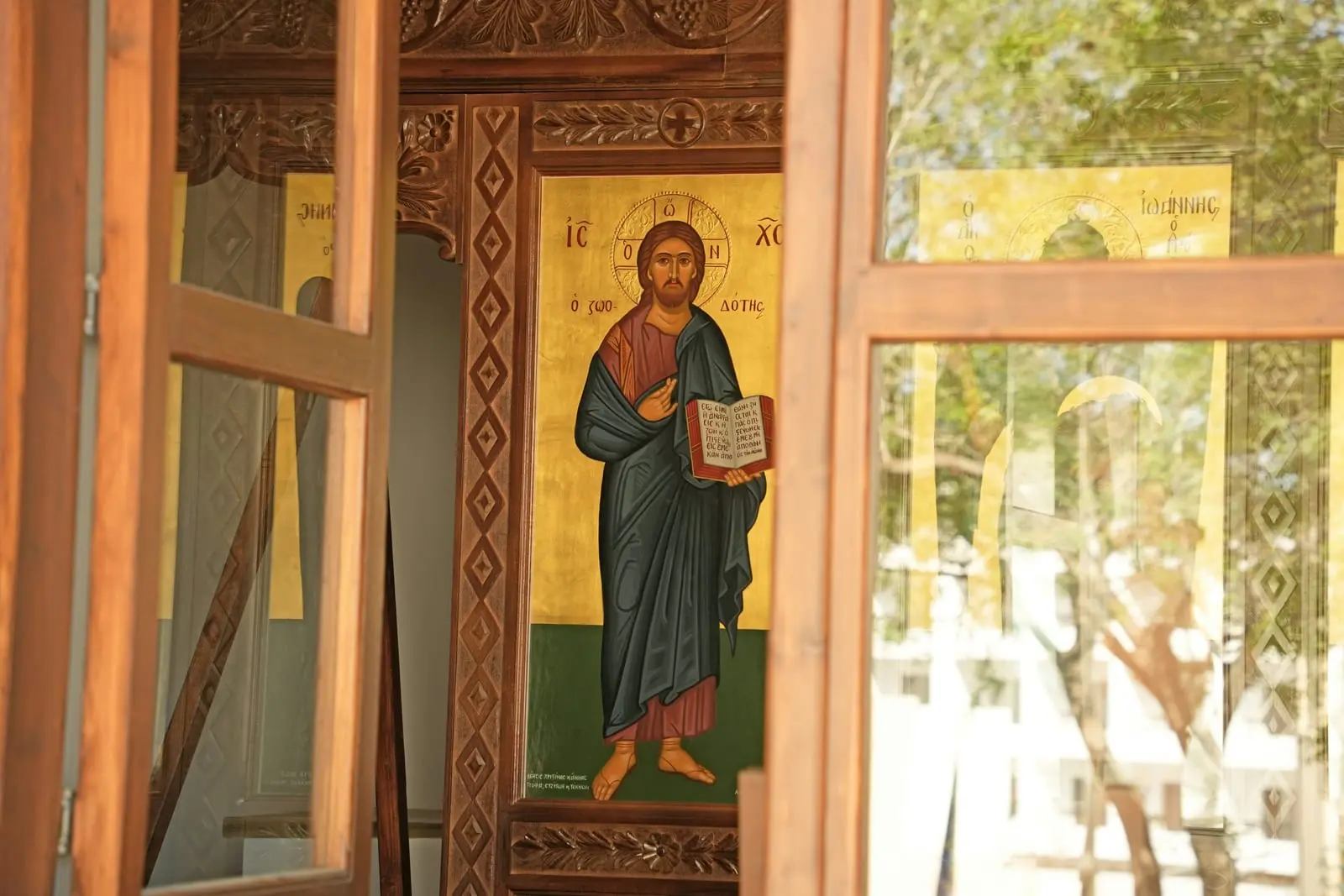
The definitive refutation of all attempts to re-Judaize the name of Christ is found in the historical and theological reality of the very language in which the New Testament was given to the world. In His divine wisdom and sovereign providence, God intentionally chose Greek — the common imperial language of the age — as the vehicle for New Covenant revelation. He employed Hellenic language and thought-forms to communicate the universal reality of Christ, deliberately moving the revelation beyond the ethnic and cultural confines of Judaism to reach the entire world. The Apostles and the early Church Fathers accordingly knew, preached, and wrote of the Son of God by His Greek name, Iesous, from which the English name "Jesus" is directly derived.
Furthermore, the version of the Old Testament scriptures quoted by both Jesus and the Apostles was not the Hebrew Masoretic text, which was standardized by rabbinic Jews at a considerably later date. They used rather the Septuagint, the Greek translation of the Old Testament completed centuries before Christ's birth. This historical fact is inseparable from the authority of the Church itself. For the first three hundred years of its history, the Church existed and was sustained by apostolic tradition before the biblical canon was formally codified. The scriptures are therefore a gift of the Church to the world, not the other way around. The authentic faith is preserved not in later corruptions, but in the tradition of the one, holy, catholic, and apostolic Church that produced, canonized, and passed these texts to every generation.
The Theology of the Incarnate Name
The Paradox of Genesis: The Uncreated Logos and the "Generation of Jesus Christ"
The name "Jesus Christ" encapsulates the central and most profound mystery of the Christian faith: the paradox of the eternal, uncreated God entering into human history. This mystery is powerfully illuminated by placing the opening of the New Testament in dialogue with a key passage near its close. Matthew begins with the declaration, "The book of the generation of Jesus Christ" (Matthew 1:1, KJV) — presenting a man with a human genealogy, a genesis within the bloodline of humanity. Yet in the vision of the exalted Christ, the Apostle John declares, "and his name is called The Word of God" (Revelation 19:13, KJV).
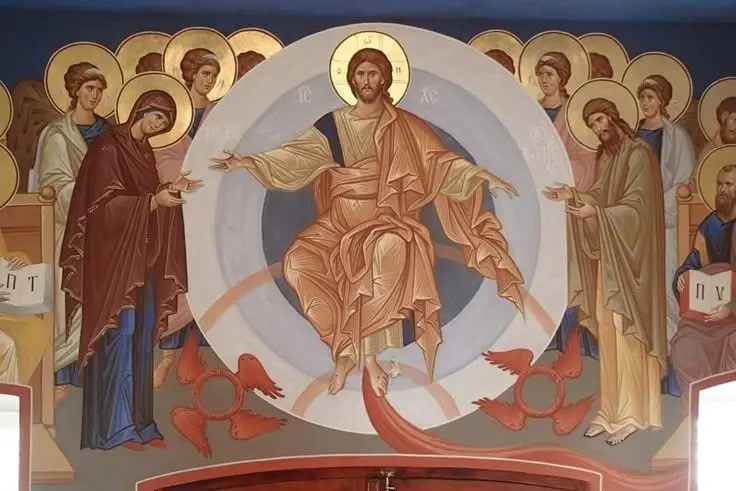
This Word of God, the eternal LogosLogosThe eternal Word of God, through whom all things were made, who became flesh and dwelt among us (John 1:1–14)., is without genesis. As the second person of the Holy Trinity, He is uncreated, without beginning or end, sharing the same divine nature (ousia) and co-eternal with the Father and the Holy Spirit. The person named Jesus Christ, by contrast, has a recorded human ancestry tracing through David to Abraham. This biblical tension — between the timeless Word and the historical Jesus — establishes the foundational mystery of His two natures and prepares us to understand the theological reality of the Incarnation in its full weight.
The Hypostatic Union: Uniting Divine and Human Natures in One Person
The doctrine of the Hypostatic Union provides the theological framework for understanding how the eternal God could have a human "generation." The Incarnation is the greatest of all miracles — the event in which the eternal Logos took upon Himself a complete human nature, body, soul, and spirit, in order to become the kinsman redeemer qualified to save mankind. To save humanity, the Redeemer had to be truly human; to have the power to save, He had to be truly God.
In this union, Jesus Christ is one person possessing two distinct natures — one fully divine and one fully human. It is essential to understand that these natures are united indivisibly within His one personhood without being co-mingled, confused, or in any way diminished. God can become man without ceasing to be God. This profound reality is reflected in His titles. As the "Son of God," He is eternally begotten of the Father, sharing His divine nature. As the "Son of Man," He is a true and complete human being, born into the lineage of Adam. He is not half-God and half-man; He is fully God and fully man, simultaneously and indivisibly.
The Angelic Proclamation: The Salvific Meaning of the Name "Jesus"
The specific name given to this unique person of the God-man was not of human origin but was delivered by divine decree. The angel of the Lord commanded Joseph in a dream: "and thou shalt call his name JESUS: for he shall save his people from their sins" (Matthew 1:21, KJV). This proclamation reveals an intrinsic and inseparable connection between the Name itself and the mission it embodies. "Jesus" is the Greek form of a Hebrew name meaning "The Lord saves," and thus the very essence of the Name is salvation.
This name was bestowed upon one who was simultaneously man — a son born of the Virgin Mary — and God, conceived of the Holy Ghost and uniquely capable of saving people from their sins. The Name, therefore, does not merely identify an individual; it embodies the reality of the God-man Savior. It is a declaration of both His identity and His purpose. The one who bears the name "Jesus" is, by nature and by mission, the Savior of the world — a reality that was foreshadowed throughout the long expanse of Old Testament history.
The Name of the Lord in Salvation History
A Primordial Cry: The Invocation of the Lord's Name in the Age of Enos
The practice of calling on the Lord's name for deliverance is not an invention of the New Covenant. It is a foundational human response to the condition of fallenness, pre-dating the covenants of Abraham and Moses alike. A deep typological reading of the early chapters of Genesis reveals that a christological framework is fabricated throughout the history of mankind from the very beginning. The death of Abel prefigures the death of Christ at the hands of His brethren. In response, God provides Seth, whose name means "compensation," foreshadowing the new creation made possible through Christ's sacrifice. This redemptive lineage stands in stark contrast to the generations of Adam (Genesis 5:1, KJV) — a line marked by sin and death.
Within this redemptive lineage, a pivotal moment occurs with the birth of Seth's son, Enos. The name "Enos" itself means frailty, weakness, or mortality, signifying an era in which humanity began to profoundly reckon with its helpless condition in the face of growing evil. It is precisely at this juncture that scripture records a new spiritual development: "Then began men to call upon the name of the LORD" (Genesis 4:26, KJV). The invocation of the divine Name was born from the dawning recognition of human weakness. This event establishes the primordial link between human helplessness and the necessity of calling on the Lord for salvation and deliverance — a link that runs unbroken through all of scripture.
The Prophetic Promise: Deliverance Through the Name
What began as a primordial cry of need in the age of frailty was later codified into a direct prophetic promise. The prophet Joel, looking forward to the great day of the Lord, provided the definitive oracle concerning the power of the Name: "And it shall come to pass, that whosoever shall call on the name of the LORD shall be delivered: for in mount Zion and in Jerusalem shall be deliverance" (Joel 2:32, KJV).
This prophecy contains three critical elements held in inseparable union. There is first the action — calling on the name of the LORD. There is then the result — the caller shall be delivered. And there is finally the location — the deliverance would be made available in mount Zion and in Jerusalem, the precise geographical setting of Christ's crucifixion. The death of Jesus Christ on a cross in Jerusalem fulfilled this prophecy in every particular. His sacrifice made salvation and deliverance universally available to all mankind, and the angelic proclamation to Joseph subsequently revealed the specific name of the Lord to be called upon: the name "Jesus." The ancient promise was thereby attached to a specific person, and to a specific name.
The Apostolic Affirmation: The Exclusivity of Salvation in the Name of Jesus
The apostolic witness in the book of Acts serves as the final and definitive identification of the salvific "name of the Lord" promised by the prophets. It is exclusively the name of Jesus Christ. Following the healing of the lame man, the Apostle Peter, filled with the Holy Spirit, made an unambiguous declaration to the rulers of Israel: "Be it known unto you all, and to all the people of Israel, that by the name of Jesus Christ of Nazareth, whom ye crucified, whom God raised from the dead, even by him doth this man stand here before you whole... Neither is there salvation in any other: for there is none other name under heaven given among men, whereby we must be saved" (Acts 4:10-12, KJV).
This passage states the core theological conclusion with absolute clarity. The person of Jesus Christ accomplished the work of salvation through His death and resurrection. The name of Jesus Christ is the sole access key by which that finished work is invoked, applied, and made effective in the life of an individual. The Name is the authorized representation and invocation of the person, power, status, and redemptive accomplishment of the Lord. There is no other channel for salvation, no other means of deliverance given to mankind.
The Praxis of the Name: Continual Invocation as Spiritual Warfare and Sanctification
Continuous Salvation: Embracing an Ongoing Process
The profound reality of the Name's power directly refutes any form of theological complacency that views salvation as a static, one-time event. Scripture reveals that salvation is an ongoing process requiring continuous engagement with its source. This is evidenced in Jesus's own words — "he that endureth to the end shall be saved" (Matthew 24:13, KJV) — and in the Apostle Paul's command to "work out your own salvation with fear and trembling" (Philippians 2:12, KJV). Salvation is not merely a past event but a continuous presence, an ongoing transformation that moves the believer "from glory to glory" (2 Corinthians 3:18, KJV). The believer has been saved from the penalty of sin, is being saved from the power of sin, and will one day be saved from the very presence of sin altogether.
Because the Christian is in a state of being saved, the act of calling on the Name cannot be reduced to a singular confession made at the outset of faith. It must be a continual, lifelong practice that sustains, protects, and sanctifies the soul on its journey toward final glorification. The Name is not a door that one passes through once and leaves behind; it is the very atmosphere in which the life of faith is breathed and sustained.
The Power of Proclamation: Invoking Divine Reality
The act of vocalizing the name of Jesus is not a magical incantation; it is a profound act of faith that engages with and represents an absolute spiritual reality. The Apostle Paul declares that God has highly exalted Jesus and given Him a name above every name, so that "at the name of Jesus every knee should bow, of things in heaven, and things in earth, and things under the earth" (Philippians 2:9-10, KJV). The proclamation of the Name commands a response from the entire created order, both seen and unseen.
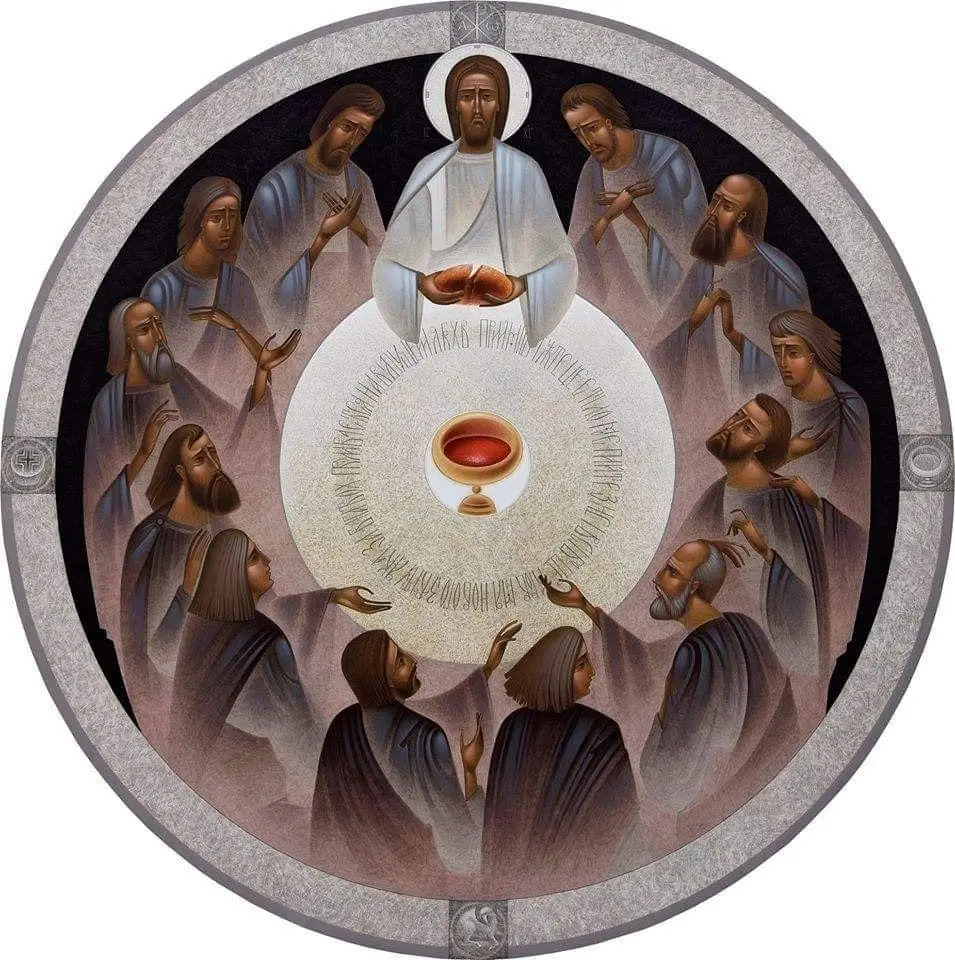
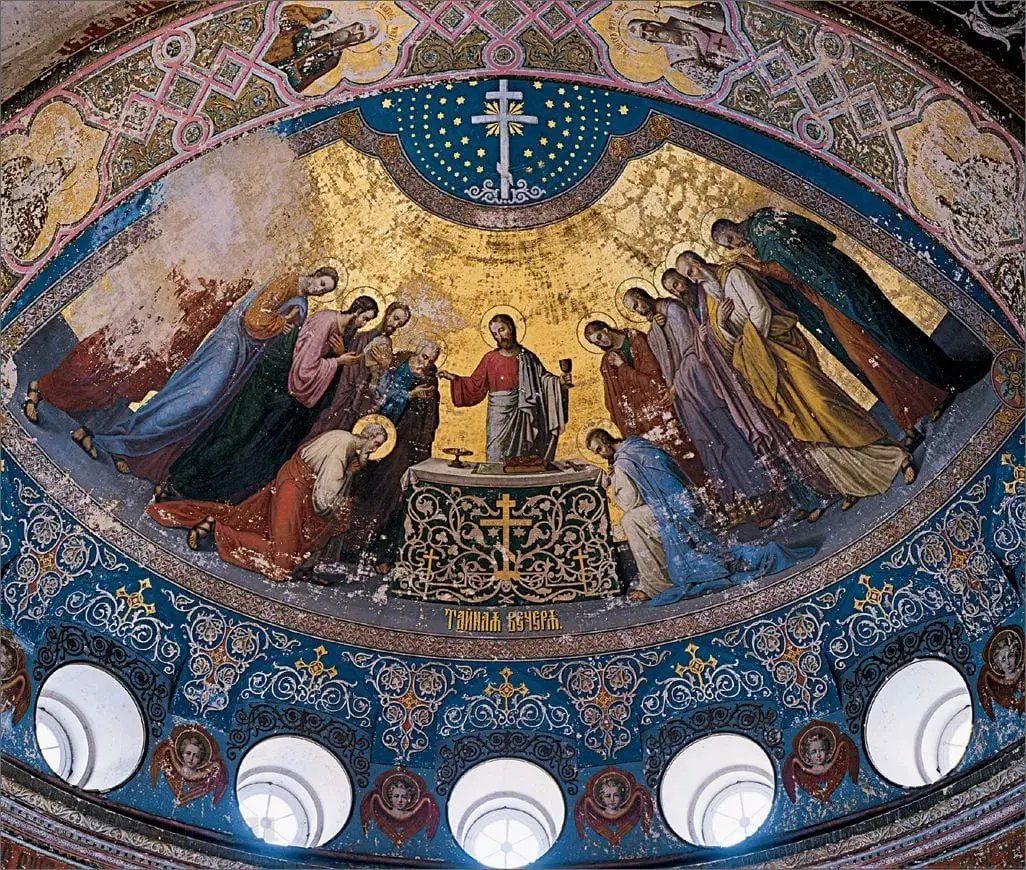
Just as partaking in the Eucharist is a re-presenting of the Lord's death — a spiritual replaying of that decisive event for the benefit of the entire cosmos — so too is the invocation of His name. To call upon the name of Jesus is to replay the reality of His victory, authority, and lordship, making its cosmic impact tangible in the present moment. This principle is affirmed in Romans 10:9 (KJV): "That if thou shalt confess with thy mouth the Lord Jesus... thou shalt be saved." The deliberate emphasis on the mouth underscores the critical role of physical, vocal confession in activating the salvific power of the Name. To speak it is to engage it.
The Name as the Believer's Ultimate Defense and Source of Life
The continual invocation of the Name is the primary tool and most potent weapon available to the Christian in daily life and spiritual warfare. When assailed by vicious or impure thoughts, the believer must call on Him, saying, "Lord Jesus Christ, have mercy on me," and find therein the way of deliverance. When overcome with worry about family or the future, one must call on Him, saying, "Lord Jesus Christ, protect my child," and in doing so invoke His providence. The Name is to be used as a discipline to quiet the anxious soul and bring the flesh under subjection, and proclaimed as a bold declaration of allegiance, reminding demonic forces of Christ's ownership and their eternal defeat.
The conclusive truth is that Jesus Christ is the answer to all human problems. This is not a simplistic slogan but a profound theological reality. Because all human problems are ultimately rooted in sin, and His Name is the exclusive, divine remedy for sin, His name is the comprehensive answer to every affliction that plagues mankind. The entirety of the blessedness of the gospel is contained in that name.
Imperative of the Invoked Name
This exposition has sought to demonstrate that the name of Jesus Christ is not a peripheral aspect of Christian devotion but stands at the very center of the faith as the exclusive and divinely ordained vehicle for salvation. We have traced the theological journey of the Name: from the primordial cry of frail humanity in the time of Enos, through the prophetic promises of deliverance in Joel, to its ultimate embodiment in the Incarnate Logos, Jesus Christ, whose identity and power were definitively proclaimed by the Apostles. This Name is the access key to the redemptive work of the God-man, a reality grounded in the ineffable mystery of the Hypostatic Union.
In an age of spiritual apathy and doctrinal confusion, it is therefore of critical importance to reject the corrupting influences that seek to dilute or replace the Name, and to hold fast to the apostolic and historical understanding of its unique identity and power. The name "Jesus" is the inheritance of the Church, preserved in the Hellenic scriptures and transmitted through sacred tradition from generation to generation.
The continual invocation of the name "Lord Jesus Christ" is thus the believer's greatest privilege, most potent defense, and the very lifeblood of a faith that actively overcomes the world, the flesh, and the devil. It is through this ceaseless calling that salvation ceases to be a mere historical concept and becomes a living, continuous reality — transforming the believer progressively into the image of Christ, unto the everlasting glory of God the Father.