The Trinity, Biblical Anthropology & The Purpose of Life
Foundational Truths of Early Christianity
Does modern Christianity ever feel, somehow, off? For many sincere believers, the faith practised today — fixated on worldly success, shaped by entertainment-style worship, and softened by feel-good messages — appears to be a superficial, even perverted, version of what was originally given to the Church. This dissatisfaction is not merely aesthetic. It points to a profound historical and theological disconnect. The earliest centuries of the Christian faith established a vision of God, humanity, and the Church that is radically different from what is commonly understood in the West today. This study explores five foundational truths from that formative era — truths that hold the key to understanding the faith's original purpose and power.
The ultimate conclusion reached here is this: a significant mutation has occurred in Western Christianity. It has lost its historical roots, misunderstood how core doctrine was formed, inverted the proper relationship between Church and Scripture, and — most gravely of all — forgotten the ultimate purpose of human existence: TheosisTheōsisNot that we become God by nature, but that by grace we are drawn into His life: “partakers of the divine nature” (2 Peter 1:4)., or deification.
The Historical Bedrock of the Christian Faith
The Primacy of Apostolic Tradition and Succession
For most Western Christians, church history effectively begins with the Protestant Reformation of the sixteenth century. This perspective creates a thousand-year gap in their knowledge of the faith, bypassing the most crucial period of Christianity's development and causing them to overlook entirely the men known as the Apostolic Fathers. Figures such as Ignatius of Antioch, Polycarp, Athanasius, Clement, and John Chrysostom were the direct and indirect successors to the Apostles themselves. They inherited the faith from those who had walked with Christ, and they served as the front-line shepherds charged with caring for the flock and organising the early Christian communities.
These men did not merely preserve a set of writings. They actively structured the Church and defended it against theological chaos, conserving the living traditions that would sustain Christianity for millennia. Their authority rests on an unbroken line of succession extending back to Jesus Christ. The truest form of Christianity, therefore, is that which is closest to Christ and the Apostles — and their doctrines, teachings, and traditions are to be held firmly, as the Apostle Paul commands: "Stand fast, and hold the traditions which ye have been taught" (2 Thessalonians 2:15).
The Church Birthed the Bible — Not the Other Way Around
One of the most consequential misunderstandings in Western Christianity concerns the relationship between the Church and the Scriptures. The historical reality is that the Church was born on the Day of Pentecost, decades before the books of the New Testament were written, collected, and officially recognised as Scripture. The first Christians did not possess a bound New Testament. What they had was the living apostolic tradition.
The New Testament is therefore a product of the early Church, not the source from which the Church sprang. It was the living tradition — carried, guarded, and transmitted by the apostolic community — that produced, preserved, and eventually canonised the very text that Western Christianity now treats as its sole authority. It was through the traditions of the apostles and the early saints that the writings were gathered, organised, and set apart as sacred. To understand this properly is to see that authority does not reside merely in the book, but in the apostolic Church that gave the world the book in the first place.
Doctrine Forged in Conflict: The Council of Nicaea (325 AD)
The word "Trinity" does not appear in the Bible. The doctrine, as it is formally known and confessed, was articulated around 325 AD during the First Ecumenical Council, held at Nicaea. Its development was not an attempt to invent a new concept but a necessary act of defence — a preservation of the integrity of the Christian faith against the widespread and dangerous heresy of Arianism.
Arius had taught that Jesus was not co-eternal with God the Father but was rather a created being. This claim struck at the very heart of the Gospel, for it demoted Christ from His divine status and unravelled the logic of salvation itself. In response, the bishops gathered at Nicaea, guided by the Holy Spirit, formulated the Trinitarian doctrine to affirm that the Son is "begotten, not made," and shares the same divine essence — the homoousios — as the Father. The resulting Nicene Creed became the foundation of the Christian faith in the post-apostolic era, clarifying for all generations the foundational doctrine of the Godhead.
The Doctrine of the Holy Trinity
One God, Three Persons
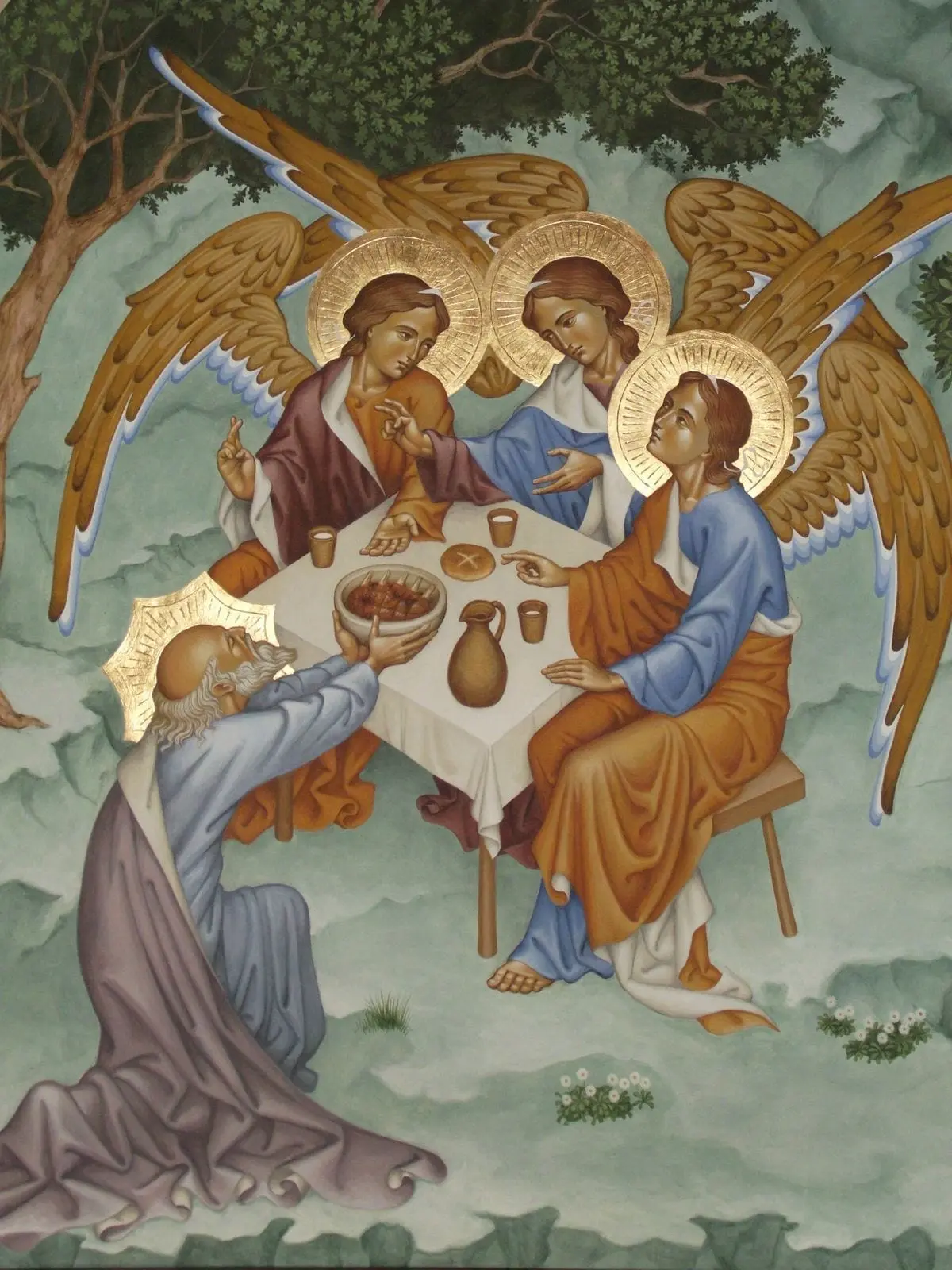
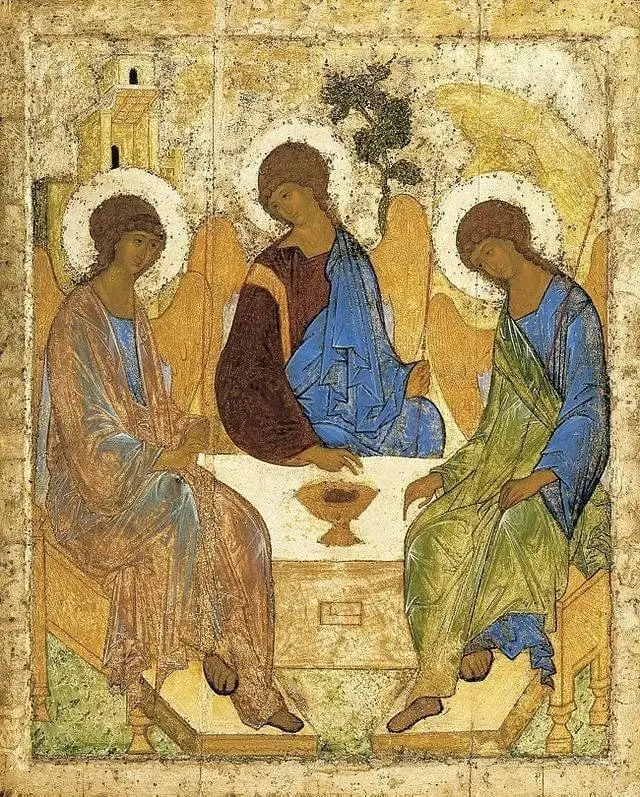
The central affirmation of the Holy Trinity, as developed and confirmed by the councils of the early Church, holds together two truths that must never be separated: God is singular in nature, and yet He exists as three distinct Persons — the Father, the Son, and the Holy Spirit. God is one in three, and three in one. This is strict monotheism, not polytheism: the Father, the Son, and the Holy Spirit are all God, and yet they are not three gods. They share co-equality and co-eternity, participating equally in the one divine nature, and they act always in total, perfect unison — eternally united, never in disagreement.
The Persons of the Godhead
The Nicene Creed established the identity and distinct properties of each Person with precision.
The Father is God Almighty, the maker of all things visible and invisible. His distinguishing property is that He alone is the Father — unbegotten, uncreated, the primal source within the Godhead.
The Son, Jesus Christ, is the incarnation of God — the Theanthropos, fully man and fully God in one person. He possesses two natures, human and divine, which exist in Him without opposition, without contradiction, and in perfect unity. He is an uncreated being who shares the same essence and substance as the Father; He is co-eternal and co-equal with Him, "begotten, not made, being of one substance with the Father" (homoousios). His unique property within the Godhead is that He is the begotten of the Father.
The Holy Spirit is the Lord and Giver of life, who proceeds from the Father. He is worshipped and glorified in unity with the Father and the Son. His unique property is that only He is the Spirit who proceeds from the Father. It should be noted that a significant disruption occurred in 1054 AD, when the Western Church unilaterally added the filioque clause — claiming that the Spirit proceeds from both the Father and the Son — a move widely understood to dangerously disturb the co-equality of the Godhead and a principal cause of the Great Schism.
Biblical Anthropology and Theosis
The Divine Source and Genesis of Humanity
When Genesis 1:26 records the words "Let us make man in our image," the God (Elohim) implied is the Trinity: the Father, the Son, and the Holy Ghost. These three Persons, who never act in disagreement but always in total perfect unison, were together involved in the creation of humanity. Man's true origin is rooted entirely in the divine Godhead, and this sets him fundamentally apart from any account that reduces human beings to a product of impersonal evolutionary processes — a view the Christian tradition rightly regards as a paganistic worldview, one that seeks to sever man from his Creator and eliminate the necessity of that Creator altogether.
The significance of man's creation in God's image is anthropologically profound. The Hebrew text indicates that man was made to resemble God and to image the divine Godhead. Psalm 8:5 declares that man was created "a little lower than Elohim" — lower than God — and crowned with glory and honour. The intent of creation was to make man a divine being: not divine in essence, for only God possesses that, but divine by God's energy, which is to say, by His grace. The specific intention encoded in the creation of man was this: "Let us make a human being that is God. Let us make a human being that is divine."
Purpose and Destiny: Theosis
Perhaps the most radical and forgotten truth of early Christian theology concerns the very purpose of human existence. That purpose is Theosis — deification — and it stands as the ultimate goal toward which the entire economy of salvation is directed.
Theosis is the process by which human beings are made gods by God's grace. It is not the annihilation of the human person into the divine, nor the confusion of the creature with the Creator, but rather what the tradition describes as becoming by grace what Christ is by nature. This is the meaning of 2 Peter 1:4, which speaks of believers being made "partakers of the divine nature." Christianity, rightly understood, is fundamentally about the deification of men through the salvific work of Jesus Christ — a graduation, as one ancient formula puts it, into godship.
This purpose was never altered by the fall. Though the first man, Adam, sinned and forfeited the fullness of the image, the intention behind his creation remained unchanged. Jesus Christ, the Theanthropos — fully God and fully man — fulfilled what God had always purposed to accomplish in Adam. The ancient maxim captures it perfectly: "God became a man that man might become gods." Moreover, the Incarnation is not merely a temporary remedy for sin. It is the final, permanent cementing of the unity between the divine and the human — an eternal seal upon creation making it impossible for God and man to be ultimately separated.
Salvation as a Means to an End
Understood within this framework, salvation is not the destination but the path. It is a rectification of the breach created by the fall of the first man — a necessary repair, but one that exists in service of something far greater. Salvation is a means to an end, and that end is found in the original genesis of God's history with humanity: Theosis. To reduce Christianity to forgiveness of sins, or to treat salvation as the finish line, is to mistake the doorway for the room.
The Role of the Church and the Consequences of Deviation
The Indispensable Role of the Church
The realisation of man's ultimate purpose — Theosis — is inseparably linked to the earthly organism established by Christ: the Church. The Church is not merely an institution, a social gathering, or a voluntary association of like-minded individuals. It is the only place on earth where Theosis is possible, and where men are made gods by His grace. Without the Church, the divinisation of mankind is impossible — which is to say, the very purpose for which salvation became a possibility cannot be realised apart from her.
The framework through which divinisation is mediated involves the holy sacraments. Chief among these is the Eucharist — Holy Communion — which the early Fathers called the "medicine of immortality" and "the food of immortality." Baptism, too, is essential to this process. These are not symbolic gestures or commemorative rituals. They are the tangible means through which the grace of God enters and transforms the human person. Alongside this sacramental life, the Church carries the mandate to make disciples of the nations — and this means indoctrinating them with a specific doctrinal curriculum: the making of gods by His grace, teaching a genuine unification with the Godhead and a living communion with the divine God.
The Consequences of Deviation: The Mutation
When churches abandon the ancient traditions and councils, they risk becoming something the original faith would not recognise — a mutation that has removed the ancient landmarks. Several consequences follow from this departure.
The first is the danger of private interpretation. When the living authority of the apostolic tradition is set aside, the Scriptures become subject to constant, competing personal readings — a condition the sources of the tradition consistently warned against, insisting that no scripture is for private interpretation. The second consequence is the loss of apostolic succession. A church that cannot trace itself organically back to the community born at Pentecost has severed the living chain through which the faith was transmitted, and this severance is not merely historical but theological.
The third consequence is perhaps the most visible: the drift into secularism. Modernised, Westernised versions of Christianity risk becoming a perversion of the original intent of Jesus Christ. This manifests in the reduction of the faith to worldly priorities — to material prosperity, to entertainment masquerading as worship, to comfort replacing transformation. Christianity is not about cars, money, or material advancement. It is, and has always been, about graduation into godship.
Most starkly of all, the mutation is revealed in the neglect of the Eucharist. When the central, tangible, mystical tradition of Holy Communion is sidelined or treated as optional, the very heart of the faith has been removed. What remains is a shell — culturally recognisable, perhaps, but theologically hollow.
Rediscovering the Ancient Path
The Christian faith is fundamentally and permanently anchored to the divine through the Theanthropos. To understand Jesus in His full theanthropos — as the one in whom divinity and humanity are eternally united — is to understand the destiny, identity, and legacy of mankind. The faith of the first centuries was not a shallow belief system. It was a profound spiritual reality, deeply rooted in history, tradition, and a transformative vision of what human beings are made to become.
Rediscovering these foundational truths — the authority of the apostolic Church, the Trinitarian dogma of Nicaea, and the ultimate purpose of Theosis — is more than an academic exercise. It is an invitation to reconnect with a faith that is richer, deeper, and more powerful than anything contemporary Christianity typically offers. The Christian man orientates his entire life around the Theanthropos and the incarnate Word, confirmed in the conviction that the faith is about, and has always been about, graduation into godship — not material secularism.