Warring Against the Inner Passions
Satan’s Portfolio: The Legalism of Spiritual Stagnation
To engage in spiritual warfare with any hope of victory, the initiate must possess a sophisticated understanding of the Methodia—the strategic, highly developed maneuvers of the fallen principalities. The adversary is not a chaotic predator. He is a meticulous prosecutor, a Complainant of the Law who operates with legalistic precision, and whose primary objective is to maintain the believer in a state of spiritual paralysis by building a portfolio of evidence against them.
Scripture identifies this figure as the one who maintains a perpetual court case against the saints: "And I heard a loud voice saying in heaven, Now is come salvation, and strength, and the kingdom of our God, and the power of his Christ: for the accuser of our brethren is cast down, which accused them before our God day and night." (Revelation 12:10, KJV)
The pneumatological nuance here is vital. While the sins of the pre-conversion life are written off and utterly obliterated by the blood of the Lamb, the Accuser focuses his surveillance on the believer's post-conversion walk. He documents the moments of pride, the unaddressed anger, and the subtle failures in integrity, compiling them into a legal brief designed to establish access. This portfolio is then deployed to convince the soul that God is a careless and unloving judge who oversees an unpleasant reality. If the Accuser can successfully corrupt the believer's perception of the Father, he achieves his most lethal aim: the cessation of prayer.
When the soul begins to interpret God through the lens of its negative experiences rather than through the immutable truth of doctrine, it develops a dispassion for the truth itself. The resulting stagnation is not merely a lack of progress; it is a legal entrapment. One cannot experience the power of His Christ while the Accuser still holds a valid claim over the house of the soul. Understanding the legalistic nature of this portfolio is therefore the first and necessary step in reclaiming the spiritual territory that has been ceded to the complainant.
Anatomy of the Passions: Demonic Residency and the Soul
"When the unclean spirit is gone out of a man, he walketh through dry places, seeking rest, and findeth none. Then he saith, I will return into my house from whence I came out; and when he is come, he findeth it empty, swept, and garnished. Then goeth he, and taketh with himself seven other spirits more wicked than himself, and they enter in and dwell there: and the last state of that man is worse than the first. Even so shall it be also unto this wicked generation." (Matthew 12:43-45)
In the tradition of the Hesychastic fathers, the passions—anger, ego, pride, lust—are understood not merely as psychological flaws, but as dead carcasses that attract the eagles. As Scripture itself declares, where there is a carcass, the eagles gather. The man is his house, and the demon knows it. This is the terrifying ontological reality of demonic residency: not necessarily a matter of external possession, but of an internal colonization in which the human personality becomes progressively intertwined with demonic traits.
The soul left swept and garnished but without the permanent residency of the Holy Spirit becomes a target for the return of the unclean spirit. The demon regards the man as his house—a dwelling from which he was cast out, but to which he now seeks to return with seven spirits more wicked than himself. This infiltration is facilitated by three distinct levels of wisdom that function as strongholds. Earthly wisdom weighs the soul down with a preoccupation with material survival and the transactional nature of the world. Sensual wisdom prioritizes emotional and bodily impulses, creating a moisture of desire in which demonic influence can germinate. Demonic wisdom, the apex of the satanic network, employs manipulation, ego, and sophisticated logismoiLogismoiThe subtle movements that approach the soul uninvited, to be discerned at the door before they become passions.—inciting thoughts—to maintain control over the soul's interior geography.
The practical consequence of this anatomy is found in the believer's often unconscious attachment to their own demonic personality. When a man says, "I am just an angry person," or "I have always been prideful," he is identifying his core self with the very carcass that draws the demon near. He loves the passion, and by extension, he loves the demon that feeds on it. True spiritual progress is impossible without the prior uprooting of these passions; the demons will not—and cannot—depart as long as the passions provide them residency. To become unrecognizable to the demons is to be devoid of the traits they can claim as their own. The soul must become a waterless place for the enemy, a desert of apatheia—dispassion—where no demonic seed can find purchase.
The Demonic Veil in Self: How Confrontations Reveal the True State of the Soul
A primary hindrance to the ascension of the soul in the contemporary era is the pervasive culture of masked Christianity. In many modern ecclesiastical environments, transparency is sacrificed for the sake of religious aesthetics. The pastor, the worship leader, and the congregant all participate in a collective performance, wearing a religious mask that conceals the true, festering state of their souls.
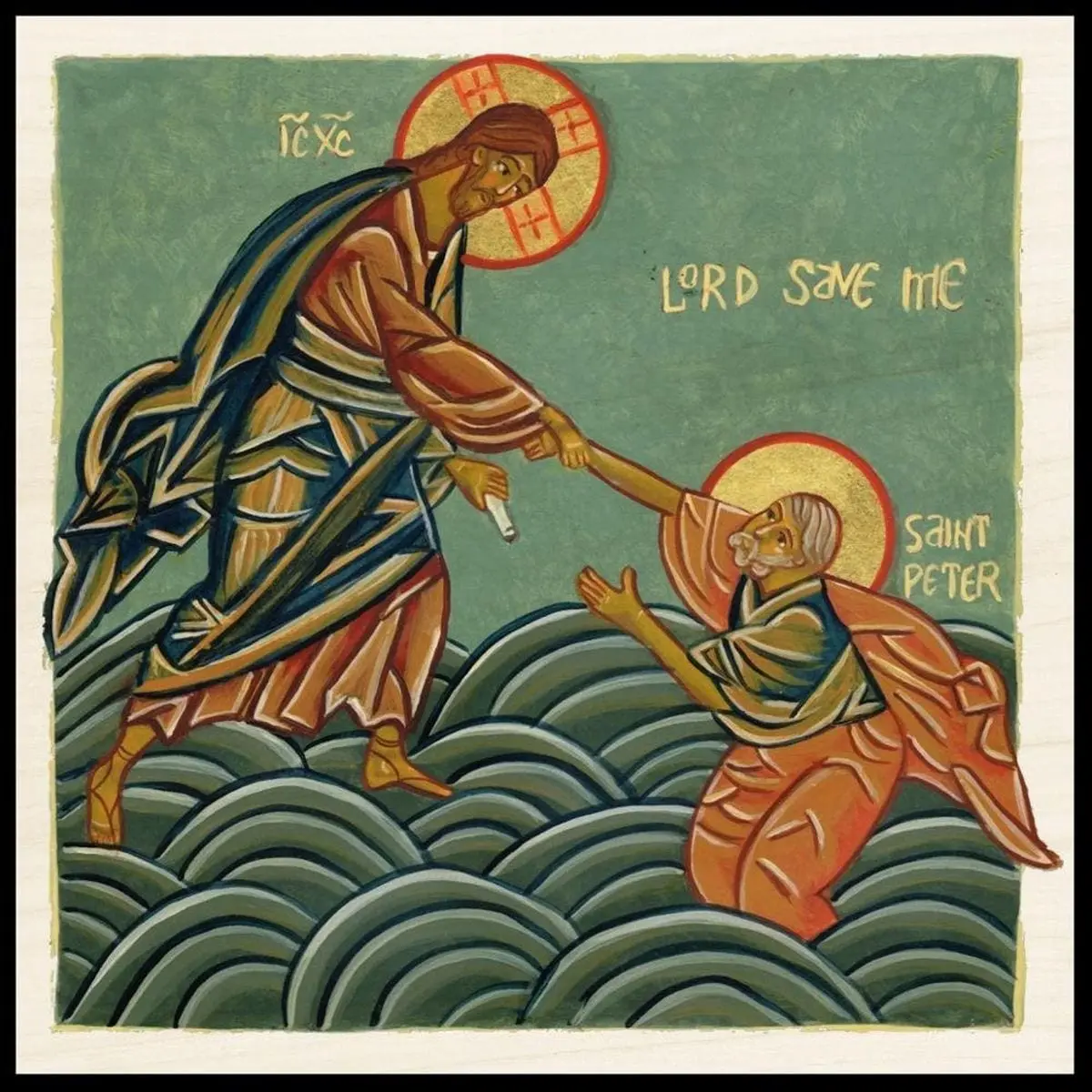
The true state of the soul is never revealed in the tranquility of the liturgy. It is revealed in the heat of the storm, the sting of correction, and the weight of chastisement. We see this archetypally in the Apostle Peter. One moment he is the recipient of divine revelation; the next, when he rebukes Christ regarding the necessity of the Cross, the Lord exposes the satanic motivation lurking beneath his apparent loyalty: "Get thee behind me, Satan." Peter's mask was stripped away to reveal a soul still ruled by human—and demonic—wisdom rather than by the Spirit.
I encountered this same dynamic in the tragic case of a brother whom I recently committed to the earth. We served together and grew up in the Lord together, yet our fellowship was severed in 2018 when I offered him a piece of counsel. His pride misconstrued that advice, and he cut me off entirely for years. Even when he reached out shortly before his death, there was nothing in my spirit for him, because the mask of his pride had remained intact until the end. His soul was revealed through that single confrontation, and the hindrance he refused to address led ultimately to a spiritual and physical destruction.
This is why the church built after man's image—characterized by masks, superficiality, and the protection of the ego, built on the personality of the human leader, avoiding confrontation to maintain a false peace, and operating through hidden passions—yields only a form of godliness that lacks the power to transform the nousNousThe faculty by which the human person perceives God. Healed, it sees; darkened, it wanders., the intellect. By contrast, the church built after Christ's image is characterized by brokenness, contrition, and the pursuit of apatheia. It is built on humble submission to the Holy Ghost, and it employs correction and chastisement as essential tools for sanctification. Its members are transparent, dispassioned souls who have died to self, and through them the Spirit effects radical ontological transformation.
The ultimate diagnostic test for spiritual maturity is one's reaction to being corrected. If correction causes a soul to snap, to retreat into anger, or to cut off the messenger, it is clear evidence that the satanic network remains strong within the personality. Until the person who resists correction is crushed under the weight of brokenness and contrition, the demons will continue to find legal residency in the hidden chambers of the soul.
Metanoia and the Noetic Defense
The strategic front of spiritual warfare is the renewal of the mind described in Romans 12:2. This is not a psychological adjustment but a profound pneumatological realignment known as MetanoiaMetanoiaA change of the nous: the whole self turning toward God, not once, but daily, through repentance and confession.. More than simple regret, metanoia is a constant coming to one's senses—modeled most vividly by the Prodigal Son who, in the depths of his famine, recognized the folly of his alienation and turned back toward his Father.
This defense must be noetic—pertaining to the nous, the eye of the soul, the faculty of spiritual perception. True warfare requires responding to temptation exactly from the location where temptation originates. Since most demonic incitements begin as logismoi, as thoughts arising in the heart or mind, the defense must be mounted in that same interior location. The believer is called to function as a marksman against the passions, identifying and mortifying each destructive impulse the moment it appears on the horizon of consciousness.
This methodology unfolds in four movements. The first is identification: recognizing a thought not as one's own, but as a demonic incitement—an impulse to lie, perhaps, or to inflate the ego. The second is rejection, the immediate and volitional refusal to yield: "For if ye live after the flesh, ye shall die: but if ye through the Spirit do mortify the deeds of the body, ye shall live." (Romans 8:13, KJV) The third is substitution, invoking the Name of the Lord to occupy the nous and leave no vacuum for the enemy to fill. The fourth is metanoia itself—a conscious changing of the mind regarding the lie, which systematically weakens the satanic network entrenched in the soul.
Every act of metanoia is an act of progress. Stagnation occurs when a thought is yielded to; progress occurs when a thought is fought and refused. By consistently changing one's mind and declining to align with the passions, the believer dismantles the strongholds that have colonized the personality—pulling down every high thing that exalts itself against the knowledge of Christ.
Lying is a Pathway to Spiritual Death
In the economy of the Spirit, truth is not merely a moral category. It is a prerequisite for fellowship with the Holy Ghost, who is the Spirit of Truth. To utter a lie is to align oneself with the father of lies, thereby opening a portal through which the spirit of death may enter.
The warning of Ananias and Sapphira in Acts 5 stands as a stark reminder that lying within the community of faith is, in reality, lying to the Holy Spirit—and the consequences are terminal, both for the individual's spiritual vitality and for their access to the divine. This danger extends to the subtler sins of the same spirit: fabricating spiritual experiences, elaborating visions, or concealing one's true condition—debts, failures, shame—to preserve a religious image. I was recently tempted to do precisely this, when my ego moved me to misrepresent a decision I had made to a Deacon, wanting to avoid the appearance of foolishness. I recognized the satanic impulse, removed the lie, and spoke plainly. The Deacon laughed. It was a small price to pay for the preservation of my fellowship with the Spirit.
Integrity, properly understood, operates at every level of the interior life. It begins with honesty in the mind—refusing to believe the lies one tells oneself about one's own goodness. It extends to honesty in prayer, which means abandoning the vows made in the wilderness, those desperate promises to God in times of trouble that one has no intention of keeping once refreshed. It continues in honesty of conduct—admitting faults, financial struggles, and ignorance without the shield of the ego. And it is completed in honesty of experience: refusing to fabricate visions, and honoring the Holy Ghost by being a witness rather than a producer.
A person who habitually lies loses the capacity to discern true spiritual visions from demonic fabrications. He becomes a ventricle for spirits of confusion. By choosing frankness and integrity—even at the cost of embarrassment—the believer honors Christ and keeps open the line of communication with the Holy Ghost. Lying leads downward into darkness; truth facilitates the ascension of the soul toward God.
The Strong Tower: The Name of Jesus
Because the believer faces highly sophisticated beings who have lost their power but not their wits, human strength is fundamentally insufficient for this warfare. The chasm between the earth-bound soul and the heavenly God cannot be bridged by psychological willpower or carnal effort. In this context, the Name of Jesus is not a magical formula. It is a strong tower of ontological refuge: "The name of the Lord is a strong tower: the righteous runneth into it, and is safe." (Proverbs 18:10, KJV)
The prayer in the Name of Jesus—the ancient invocation, Lord Jesus Christ, Son of God, have mercy on me—serves as the primary defensive technology for the struggling soul. To call upon the Name noetically, from the depths of the heart, is to force the presence of the Mediator into that interior space at the very moment of temptation. Human nature is too weak to anchor itself; it requires the Name to still the soul and occupy the ground that the enemy seeks to take.
The Name of Jesus acts as a Mediator that facilitates the soul's passage through the very chasm that Satan seeks to inhabit. While the adversary positions himself between the believer and God to obstruct the path, the Name clears the atmosphere of the soul. It is the only weapon that causes these sophisticated beings to retreat, for within that Name is the full memory of their definitive fall—a fall which our Lord Himself witnessed as lightning from heaven. When the soul and the mind congregate around the Name, the presence of Christ is invoked, and the passions are deprived of the energy they require to inflame the soul. One does not win against spirits with flesh. One wins by running into the Strong Tower of the Name.
The Christ-Spirit and the Telos of Salvation
The ultimate goal of the ascetic struggle is a transformation so radical that the believer becomes unrecognizable to the demons and recognizable to God. This is the dispassioned life—the life in which the old personality, once a house for demonic traits, has been replaced by the Christ-spirit. This spirit is defined by the capacity for forgiveness not as a single act, but as a perpetual state of being, seventy times seven; and by the spirit of Stephen, who interceded for his enemies even as the world beat him open.
As we move forward, we must remain vigilant and sober. The spiritual life is a battle for residency. Satan is intrusive—he will press himself through any open window left by a passion or a lie. Christ, by contrast, is not intrusive. He stands at the door and knocks, honoring the will of the human landlord. To allow Him permanent residence requires a conscious, daily effort to evict the passions and invite the Holy Spirit to abide.
The struggle for spiritual progress is the process of this eviction. By resisting the Methodia of the Accuser, rejecting the religious mask, and clinging to the Strong Tower of the Name, we move from the labor and sweat of self-effort toward the divine grace of the Kingdom. The high wall of our stagnation is breached not by our own strength, but by our surrender to the One who is meek and lowly in heart. Let the years of famine be forgotten, for the pasture awaits those who find their rest in Him.
"Submit yourselves therefore to God. Resist the devil, and he will flee from you." (James 4:7, KJV)