God’s Enduring Mercifulness: Power of Repentance & Confession in Curing Sin & Sinfulness
Introduction
Sin is a grievous and self-inflicted affliction of the soul — a malady that originates not from any external force but from the exercise of the human will. Yet for all its severity, it is not an incurable condition. The central thesis of this essay, drawn from foundational scriptural teaching, is that God's boundless mercy provides a constant and accessible path to salvation through the act of sincere repentance. This path of restoration is not a recent innovation but an enduring principle woven into the very fabric of the divine-human relationship.
The pages that follow explore the theological framework of sin, the divine provision of mercy, and the transformative power of confession as evidenced through a series of scriptural paradigms. We begin with an anatomy of sin — its nature, its origin, and its effects on the soul — in order to understand the gravity of the problem. From there, we turn to its divine counterpoint: the unfailing promise of a cure through repentance, rooted in the immeasurable loving-kindness of God. Finally, we chronicle the lives of biblical figures who exemplify this path to forgiveness, culminating in a reflection on the enduring promise that lies at the heart of salvation.
The Anatomy of Sin and the Origin of Evil
To fully appreciate the radiant hope of repentance, we must first lay the theological groundwork of the problem it is designed to solve. This requires an honest examination of sin: its nature as a freely chosen evil, the role of the Adversary in its propagation, and the genesis of evil itself. Only by understanding the depth of this spiritual disease does the magnitude of its divine remedy become fully apparent.
The Nature of Sin as a Freely Chosen Evil
Sin is not an external power that seizes the soul from without. It is, rather, "a terrible thing, and the most grievous disease of the soul" — an "evil freely chosen, the product of the will." The source of transgression is found within the creature itself. The prophet illustrates this with a powerful image: God plants a "choice vine of fully tested stock," yet the vine itself, through its own malice prepense, turns to bitterness and produces evil fruit. The planter is blameless; the fault lies entirely with the creature's will.
This inward choice carries devastating consequences. To sin is to willingly grasp a burning coal — one is burned only so long as one chooses to hold it. The affliction of sin is severe, for it corrodes the soul's very fiber, cuts its spiritual sinews, crushes the spiritual bones of the mind, and darkens the light of the heart. Sin is not some alien entity that attacks from outside; it is a destructive force that springs up from within a will that has turned away from God.
The Role of the Devil and the Mandate for Human Vigilance
While the choice to sin is our own, we are not entirely alone in this struggle. There is an instigator — an external tempter identified as "the accursed devil," the "begetter of all evil." His role, however, is one of suggestion, not coercion. The devil does not prevail by force over those who resist him, and this reality places a profound responsibility on each person for spiritual vigilance. As Ecclesiastes counsels, "Should the anger of the ruler burst upon you, forsake not your place." By maintaining one's spiritual ground and shutting the door to evil suggestions, one remains beyond the adversary's reach.
The danger lies in carelessness. Admitting a lustful thought allows it to strike roots, capture the mind, and drag the soul "down into an abyss of sins." Faith alone is not a passive shield — just as a persistent root can twine itself around a stone and eventually crack it, so too can dwelling on an evil desire shatter one's faith. The mandate is therefore clear: pluck out evil by the roots before it has a chance to blossom.
The Genesis of the Adversary
The harmony of the Old and New Testaments provides a clear account of the origin of this "chief author of sin." The devil was not created evil — to believe so would be to lay the responsibility for sin at the feet of the Creator. On the contrary, he was created good: an archangel described by the prophet Ezekiel as a "seal of perfection and crown of beauty." His fall was the product of his own free choice and "haughtiness of heart," an act of rebellion rather than a flaw in his design. Ezekiel declares that evil was not brought in from without but was "found in you," begotten from within. This is the very moment the Lord describes in the Gospels: "I was watching Satan fall as lightning from heaven." Once a good servant of God, he became — through his own pride — the Adversary, and in his fall he drew many away with him.
Having established the profound problem of evil, freely chosen by both humanity and its spiritual enemy, we may now turn to the exploration of its divine remedy.
The Unfailing Hope of Repentance
Here the focus shifts from the bleak reality of sin to the radiant hope of divine mercy. The core principle of this section is that sin, while a grievous wound, is never an incurable one for the soul that turns back to God. The doctrine of repentance illuminates the mechanism of spiritual restoration and the immeasurable loving-kindness of the Divine Physician.
The Promise of a Cure
The most potent message of Scripture is one of hope: sin is not an inescapable fate. Though it is a grievous evil, it is "easy of cure for him who puts it away by repentance." This promise of restoration is grounded in powerful biblical analogies that affirm the possibility of profound transformation. He who raised up Lazarus, already four days dead, can far more easily raise a soul deadened by sin. If a serpent can shed its old skin and be renewed, we too can shed the old skin of sin. And if thorny, barren ground can be tilled and cultivated into fruitful soil, then no soul is irretrievably lost to wickedness — nature itself admits of salvation. Yet this divine potential is not automatic; it is unlocked by a crucial human response. The "proper disposition is a requisite condition": a willingness to turn away from the malady and seek the cure.
The Immeasurable Mercy of God
The foundation of this hope is the very character of God, who is revealed as a "lover of man, and a lover in no small measure." No catalogue of human failure can exhaust the depths of divine forgiveness. As the psalmist exclaims, "How great is the multitude of your sweetness, Lord!" The teaching is unequivocal: the sum of our sins, however numerous or severe, cannot surpass the magnitude of God's mercies.
Our spiritual wounds are not beyond the healing skill of the Great Physician. The only requirement for this divine intervention is to surrender with faith and confess the malady. This act of humble confession activates God's mercy. It is to follow the path of David, who declared in the Psalms: "I said, I will confess against myself my iniquity to the Lord; and you forgave the wickedness of my heart."
Scriptural Patterns of Repentance
This section moves from theological principle to historical precedent. Through a series of biblical narratives — from humanity's first parents to its most powerful kings — we see how the dynamic of mercy through repentance has been a constant feature of God's relationship with humankind. These accounts are not mere anecdotes; they are foundational paradigms of salvation.
Foundations of Forbearance: From the Fall to the Flood
The pattern of divine forbearance is established at the very dawn of human history. After the first sin, God could have exacted the penalty of immediate death. Instead, in an act of profound loving-kindness, He cast Adam out of Paradise but settled him "over against Paradise, that seeing whence and from what bliss he had fallen, he might be saved thereafter through repentance." Cain, the first fratricide, received a sentence strikingly light in comparison to his sin — an early testament to God's merciful disposition. Confronted with a world overrun by iniquity, God then demonstrated "the breadth of his loving kindness" by delaying the foreordained deluge for one hundred years, granting an entire century as a "reprieve for repentance." Had the people of that age repented, they would have experienced his mercy.
Salvation for the Outcast and the Collective
God's mercy extends beyond individuals to encompass those defined by their sin and entire peoples who have gone astray. Rahab, a woman publicly known as a harlot, stands as a powerful testament to the availability of salvation for all. By acknowledging God, she was saved — her redemption so complete that she is named in the Psalms: "I will think of Rahab and Babylon among those who know me." When the people of Israel collectively fashioned a golden calf, their sin did not defeat God's loving-kindness, for "God did not deny himself." Even Aaron the high priest participated in this great transgression, yet through the intercession of Moses he was forgiven. The argument this raises is deeply encouraging: if God did not prevent Aaron, on account of his falling away, from assuming the high priesthood, then surely He will not prevent a penitent soul from attaining salvation. And if the prayer of Moses prevailed upon the Lord, how much more will the prayer of Jesus, the only begotten Son, prevail on our behalf?
The Repentant Monarchs: A Study in Royal Humility
Perhaps the most dramatic examples of repentance are found in the lives of kings, whose falls from grace were as profound as their stations were high. King David is presented as the primary model of repentance. After his fall into adultery and murder, he was confronted by the prophet Nathan. Without excuse or indignation, the king offered an immediate and humble confession: "I have sinned against the Lord." Though he received pardon at once, David's repentance did not end there. He demonstrated its sincerity by putting on sackcloth, sitting in ashes, fasting, and weeping. It is this profound penance after the pronouncement of pardon that establishes David as the quintessential model: he shows that true repentance is not a transaction to secure forgiveness but a transformative state of being that continues long after mercy is granted.
David's example is powerfully juxtaposed with others. Ahab, an "idolater of surpassing wickedness," humbled himself with sackcloth at the mere threat of the prophet Elias. In response, the merciful God said to Elias, "Hast thou not seen Ahab humbled before me?" — as though urging the fiery spirit of the prophet to condescend toward the penitent. Jeroboam, who stood sacrificing to idols, had his hand wither; but when he pleaded, "Entreat the Lord for me," his hand was immediately restored. Most astonishing of all is the case of Manasseh, who "cut asunder Isaiah" and "filled Jerusalem with innocent blood." Yet when humbled in captivity, he repented — and the Lord heard him and restored him to his kingdom.
These historical accounts establish a consistent divine principle of mercy. Yet to fully grasp the doctrine, we must examine confession not merely as a passive appeal that receives mercy but as a potent spiritual force that can actively compel it, altering even the decrees of God.
The Active Power of Confession
This section examines repentance not as a passive plea for mercy but as a potent spiritual force capable of altering divinely ordained outcomes and overcoming seemingly insurmountable obstacles. The act of confession is revealed as a strong weapon of salvation, capable of revoking a divine sentence and quenching the very fires of judgment.
Revoking the Divine Decree: The Case of Hezekiah
The story of King Hezekiah provides a startling illustration of confession's power. Stricken with a fatal illness, he received a final sentence from the prophet Isaiah: "Give charge concerning thy house, for thou shalt die and not live." With all hope seemingly lost, Hezekiah did not despair, for he remembered the promise: "In the hour that you turn and lament, you shall be saved." Turning his face to the wall, he offered a penitent prayer, appealing to God not as a victim of circumstance but as the "legislator of life" — the true arbiter of life and death. In response, the unrepealable decree was repealed. Hezekiah was granted fifteen more years of life, with the sun turning back its course as a witness thereof. While the sun retracted its course for Hezekiah, for Christ it was eclipsed — the distinction marking the difference between the two. This event stands as a monumental testament to the power of a repentant heart to move the will of God.
Quenching the Fires of Judgment
The power of confession extends from the metaphysical to the physical realm. The account of Hananiah and his companions in the fiery furnace demonstrates that repentance can "quench even fire." Cast into a furnace with flames rising forty-nine cubits high, they were preserved not by water but by faith. As the fire raged, they offered a prayer of confession: "You are just in all you have done to us, for we have sinned and committed iniquity." Their penitence subdued the flames. This literal deliverance is presented as a paradigm for a spiritual truth: if repentance can conquer physical fire, it can surely "quench the fire of Gehenna."
The Ultimate Paradigm: The Redemption of Nebuchadnezzar
The climactic example of God's mercy is the pagan king Nebuchadnezzar — a man whose crimes were staggering in scale and impiety. He slew kings and disinterred their bodies. He burned the holy Temple to its foundations, shattered the cherubim — the sculptured images from the Holy of Holies — and trampled upon the veil of sanctification. He took the censer and carried it away to a temple of idols. For these enormous sins, he was struck down by a divine scourge meant to save him: turned into a wild beast, living in the wilderness, his body drenched with dew. This humiliation brought him to his senses. In his affliction, he testifies: "I, Nebuchadnezzar, raised my eyes to heaven, and I blessed the Most High." The moment he acknowledged God, repented of his wickedness, and recognized his own weakness, his royal dignity was restored. The argument is undeniable: if God granted pardon and a kingdom to a man guilty of such terrible crimes, He will surely grant remission to all others who turn to Him in confession.
The Apostolic Archetype and Concluding Exhortation
This final section brings our inquiry to its culmination. Through the dramatic fall and restoration of the chief apostle, the New Covenant provides the ultimate confirmation of God's unfailing mercy — and from that confirmation issues a powerful and urgent call to action.
Peter's Denial and Restoration
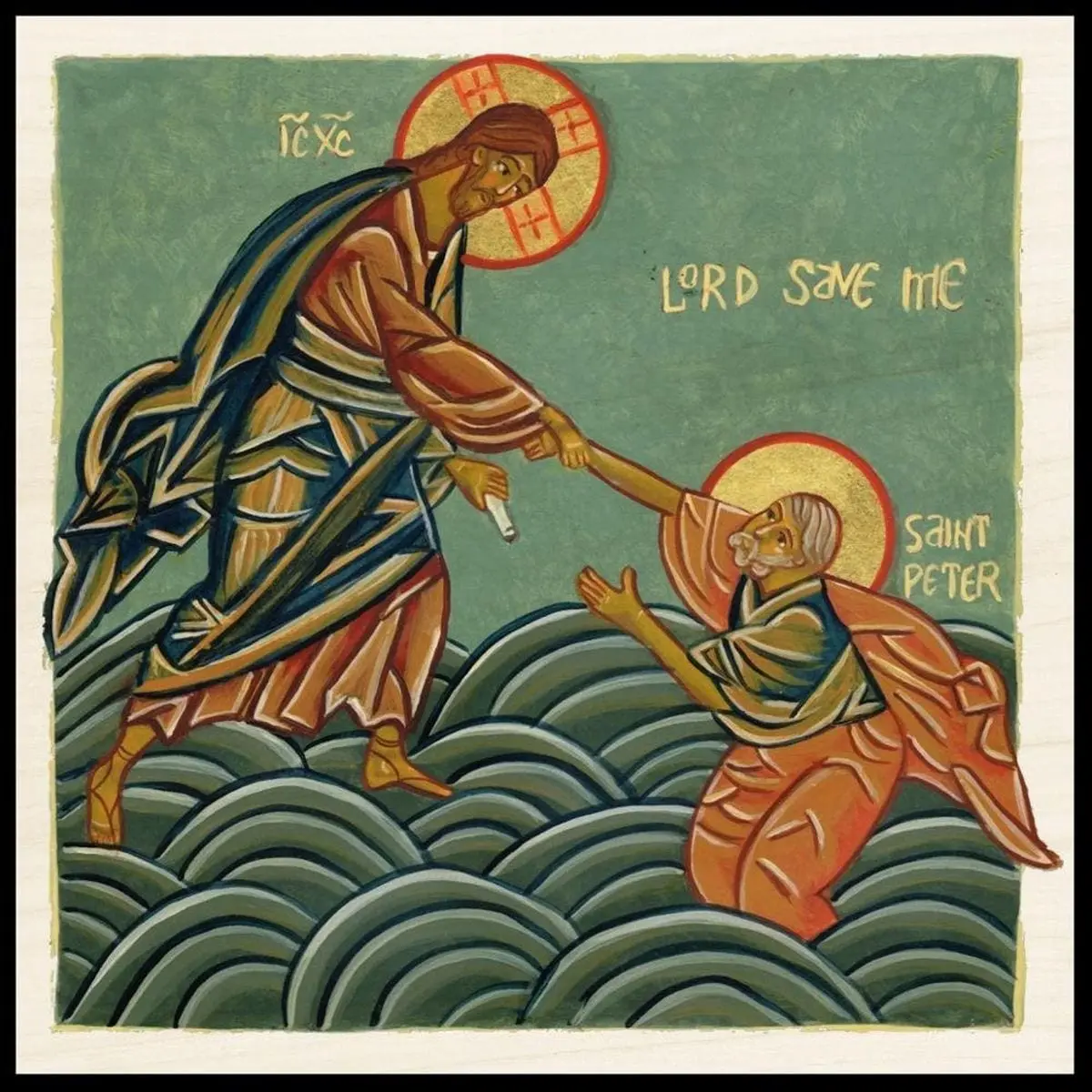
The final and perhaps most poignant biblical example is the denial of the Lord by Peter, "the chief and foremost of the apostles." Before a humble serving maid, the leader of the disciples denied his Master three times. Yet this catastrophic failure was not the end of his story. Moved to repentance, "he wept bitterly." This act of weeping was no mere display of sorrow — it revealed a heartfelt repentance, a contrition both profound and sincere. It was this depth of remorse that led not only to his full pardon but to the complete retention of his apostolic prerogative. He was not demoted or cast aside; he was restored. Peter's experience stands as the ultimate New Covenant confirmation that repentance can heal the most grievous of spiritual wounds, even the denial of Christ Himself.
Across the vast sweep of sacred history — from Adam in the garden to Peter in the courtyard, from the idolatrous King Manasseh to the pagan Nebuchadnezzar — the pattern is unwavering. Divine judgment is consistently tempered by a loving-kindness that actively seeks the restoration of the sinner. The evidence is overwhelming: God's mercy is greater than any sin, and the path to that mercy is paved with sincere confession and repentance.
The central thesis therefore holds firm: no transgression is beyond forgiveness for those who earnestly turn back to the Lord. Let us follow the examples of those who have gone before us — the kings, the prophets, the outcasts, and the apostles who found salvation in their humility. Be you also earnest in confessing to the Lord, that you may receive pardon for past sins, be made worthy of the heavenly gift, and inherit the kingdom of heaven.