The Sun of Righteousness: How Repentance & Confession Changes Us
Click to Download Edited Audio Transcript
Enoch B Mnisi, DD
Introduction
A prevalent and perilous superficiality has come to define the understanding of salvation within much of modern Western Christianity. The dominant model reduces the profound mystery of redemption to a single, transactional moment—a verbal declaration followed by an assumed state of permanent security, a soteriological finish line crossed at the very outset of the race.
This perspective, however well-intentioned, represents a serious departure from the apostolic and patristic vision of the Christian life. The argument of this essay is that a return to an authentically Christological framework reveals salvation not as a one-time judicial decree, but as a continuous, participatory communion with the living, Triune God. It is a dynamic process of being saved—a transformative journey into the divine life itself.
This reality, grounded in the unapproachable holiness of God and made possible solely through the perfect sacrifice of Jesus Christ, is accessed, activated, and sustained through the purifying spiritual act of confession.
To establish this argument, the essay will move through several foundational convictions. It begins with the absolute holiness of God—the fundamental reality that separates the creature from the Creator. From there, it presents the person and work of Jesus Christ as the unique and perfect solution, the sole basis for humanity's acceptance before the Father. It then defines confession not as a mere admission of guilt but as the indispensable agency through which the cleansing power of Christ's blood is applied to the believer. This participatory, Christ-centred model is then contrasted with the static finality of much modern soteriology. This leads into an exploration of deification as depicted in the Johannine metaphor of walking in the light, and concludes with the pneumatological foundation that makes all of it possible—the indispensable work of the Holy Spirit in enabling the confession of Christ's lordship.
Through this analysis, we will see that the altar of God is perpetually bathed in uncreated light, and the gateway to that holy place is, and has always been, the humble and transformative act of confession.
The Unapproachable Holiness of God
Any authentic theology of salvation must begin not with humanity and its need, but with God and His nature. The absolute, unapproachable holiness of God is the non-negotiable starting point for understanding the Gospel. Without a proper apprehension of this divine attribute, the cross becomes a solution to a problem poorly understood, and grace becomes a remedy for an affliction scarcely felt.
God's holiness is not simply one characteristic among many; it is the very essence of His being, the defining reality of the Triune Godhead. The Father, the Son, and the Holy Spirit share in this single, indivisible essence of holiness. As the Lord's own prayer teaches, the Father's name is to be hallowed—set apart, recognised as utterly distinct from all created things.
This divine reality stands in stark and irreconcilable opposition to the fallen state of humanity. We are, as the Psalmist David confessed, "shapen in iniquity; and in sin did my mother conceive me" (Psalm 51:5). From the moment of conception, the principle of sin has been the formative reality of our human lives. The very concept of holiness, in its absolute and uncreated purity, is therefore profoundly foreign to our nature and incomprehensible to our unaided intellect. We are creatures of the common, the profane, the temporal; He is the God of the holy, the sacred, the eternal. This fundamental ontological chasm creates the foundational dilemma of our existence: how can the unholy creature approach the holy Creator?
The dilemma sharpens when we consider God's immutable standard of acceptance. Because God is holy, He can only receive and commune with that which is also holy—it is a law of His own nature. This dismantles any notion that human effort, religious ritual, or moral striving can bridge the divide. Every offering we might bring is, by its origin in our fallen nature, rendered common and profane—an offering from the realm of darkness presented to the One who is pure light. It cannot be accepted. The Apostle Paul illustrates this divine standard with the analogy of Christ and His bride: Christ will present the Church to Himself as a "glorious church, not having spot, or wrinkle, or any such thing; but that it should be holy and without blemish" (Ephesians 5:27). Of our own accord, we cannot meet this standard.
The unapproachable holiness of God is therefore not a peripheral doctrine but the very bedrock upon which the necessity of the Gospel is built. It establishes the gravity of our condition and the impossibility of a self-generated solution, forcing us to look away from ourselves toward the only provision that could ever satisfy the divine standard—the person and work of Jesus Christ.
The Mediating Perfection of Christ: The Sole Basis for Acceptance
The chasm between a holy God and sinful humanity is so vast that only a divine intervention of unparalleled magnitude could bridge it. This intervention is the incarnation, life, and sacrifice of Jesus Christ. A robust Christology is therefore not merely a component of soteriology; it is its heart and foundation. Christ is not simply a saviour who procures a ticket to heaven—He is the very place of our acceptance, the sacred space within which God and man can meet.
The exclusivity of Christ's sacrifice is absolute. Throughout the history of creation, there has been only one offering ever truly accepted by the Father, one sacrifice that has perfectly pleased His holy nature: the offering of the body and life of His own Son. Our acceptance before God is therefore not, and can never be, based on our own merit, our repentance, or even our faith in the abstract. It is achieved by a profound spiritual act: appropriating the sacrifice and the offering of the Son of God to our lives. In doing so, we do not present our own flawed righteousness to God; rather, we are clothed in the righteousness of Christ's perfect sacrifice, and on that basis alone, we are rendered acceptable. Any other path, any other offering, any other plea is fundamentally unacceptable to the Father, for He accepts only that which has been perfected and offered by His Son.
This divine economy is made possible through the mystery of the Theanthropos—the God-man. In the person of Jesus Christ, divinity and humanity are joined without confusion or separation. Through the perfected humanity of this one unique person, God has created a way to commune with us. When the Father looks upon a believer, He does not behold our inherent imperfections, our weaknesses, or our failings; He beholds the perfections of Christ, which have been conferred upon us by faith. In the God-man, God can look upon us. In the God-man, God can speak to us with tenderness. In the God-man, God can befriend and commune with us. We are, as the scripture declares, "accepted in the beloved" (Ephesians 1:6). Our acceptance is not an overlooking of sin but a seeing of His Son. We become ontologically associated with the perfection of Christ's humanity, and in that perfection, we are welcomed into the fellowship of the Godhead.
Consequently, Jesus Christ functions as both our Sanctifier and our Sanctification—the one who makes us holy, and the holiness we present to the Father. As "the one mediator between God and men, the man Christ Jesus" (1 Timothy 2:5), He is the sole conduit through whom we can approach the divine presence. The blood of Jesus is as holy as Jesus Himself is, sharing in the essential holiness of the Father and the Spirit. When a believer is touched by this blood, they become as sanctified and as accepted as Christ Himself is. The basis of our acceptance is entirely objective, resting entirely within the person and work of Christ. The question that follows is a practical one: how is this objective reality actively applied to the experience of the individual believer? This brings us from the basis of our acceptance to the mechanism by which it is realised—the sacred act of confession.
Confession: The Activating Agency of Atonement
In the spiritual life, the bridge between the objective reality of Christ's finished work and the subjective experience of the believer is built through specific, divinely ordained means. Confession of sins is the central, indispensable act by which the cleansing and sanctifying power of Christ's blood is applied. It must be understood not as a mere psychological catharsis or a formal admission of wrongdoing, but as the primary activating agency of the atonement—the instrument of our purification, the very act that brings the power of the cross to bear upon the present reality of our fallenness.
This apostolic understanding stands in contrast to certain practices that have arisen from a spirit of theological liberalism—in particular, the popular but scripturally unfounded habit of attempting to "apply the blood of Jesus" through verbal declarations or repetitive chants. A careful study of apostolic practice reveals no precedent for such a ritual, because the apostles understood that the efficacy of Christ's blood was not experienced through self-styled declaration but through the God-ordained act of confession. Confession is the pleading of the blood. The humble acknowledgment of our sins before a holy God is the true and ancient means by which the cleansing power of Christ's sacrifice is experienced in the soul.
Confession is rightly defined, then, as the agency of cleansing, of sanctification, and of the making holy of the saints. It is through this act that the holiness of Christ, secured on the cross, is dynamically imparted to the believer. This is why a saint is at their most holy, their most pure, their most acceptable state immediately following sincere confession. In that moment, the full power of Christ's perfect sacrifice is applied, washing away every stain and rendering the soul fit for communion with God—which is the very essence of presenting our bodies as "a living sacrifice, holy, acceptable unto God" (Romans 12:1). We are made acceptable for worship precisely through the cleansing that confession activates.
This entire process rests upon the spiritual law that divine mercy is drawn to human humility. God, the scripture affirms, is near to the one who is of a contrite and a broken spirit. Pride, self-sufficiency, and the covering of sin create distance between the soul and God, while confession—in its raw honesty and admission of frailty—attracts His presence. This is powerfully illustrated in the Old Testament account of King Ahab. After committing heinous acts of murder and theft, Ahab received a severe judgment from God through the prophet Elijah. Yet when this evil king humbled himself with fasting and sackcloth, God's response was immediate and remarkable: "Seest thou how Ahab humbleth himself before me? because he humbleth himself before me, I will not bring the evil in his days" (1 Kings 21:29). The sincere acknowledgment of sin and frailty activated the mercy of God, postponing judgment and restoring, in some measure, a fallen man. Confession is therefore not an act of grovelling shame but an act of profound spiritual power—the posture that invites divine grace, the key that unlocks the treasury of God's mercy, and the gateway through which we are continually cleansed and prepared for fellowship.
Christological Participation versus Soteriological Finality
The role and necessity of continuous confession are directly tied to one's overarching understanding of salvation. Two fundamentally different theological perspectives are at work within contemporary Christianity, each producing a vastly different approach to the Christian life. The dominant view in the modern Western church is soteriological in its focus, while the perspective of the apostles and the early Church Fathers was profoundly Christological. The conflict between these two models lies at the heart of the modern spiritual malaise.
The soteriological model is salvation-oriented. Its narrative begins with a person in a state of sin, proceeds to the offer of salvation in Christ, and culminates in a moment of decision—typically a verbal confession of faith. Once this transaction is complete, the individual is declared "saved," and the primary objective is considered accomplished. The spiritual life that follows is often seen as a period of waiting for heaven, punctuated by moral maintenance and church attendance. In this framework, salvation is a past event, a secured status, a bus parked and awaiting its final destination. This perspective, while containing elements of truth, can lead to spiritual complacency, a diminished perception of God's majesty, and a fundamental misunderstanding of why access to God was granted in the first place. It mistakes the entryway for the entire estate.
The Christological model, by contrast, understands that Jesus Christ did not merely purchase salvation as a commodity—He is our salvation. Therefore, the Christian life ceases to be a static state and becomes a dynamic, continuous participation in the very life of Christ. In this apostolic view, salvation is not merely a past declaration but a present reality and a future hope, something to be "worked out with fear and trembling" (Philippians 2:12), a process of being saved. This is why the Lord Himself declared, with sobering finality, "he that shall endure unto the end, the same shall be saved" (Matthew 24:13). The early church understood salvation to be a hope precisely because it could only be known fully after reaching the end. This framework is governed by a critical principle: we must not mistake entrance for permanence.
The implications of this distinction are monumental. The Christological model demands active, continuous communion with God. The initial access granted through faith is not an end in itself; it is the beginning of a lifelong journey of participation. The very purpose of our entrance into God's presence is to partake of His life, to be transformed by His divine energies, to be conformed to the image of His Son. This process of transformation—known to the apostolic fathers as theosisTheōsisNot that we become God by nature, but that by grace we are drawn into His life: “partakers of the divine nature” (2 Peter 1:4). or deification—is entirely dependent on this ongoing participation. When participation ceases, transformation stagnates, and corruption inevitably sets in. This explains the tragic paradox of corruption within the Church itself: when believers depart from active communion, they are left with merely "a form of godliness, but denying the power thereof" (2 Timothy 3:5), possessing the language of faith without the life of God. The Christological vision, therefore, calls us away from a settled past and into a living present—a continual approach to the altar of God, made possible only by the continual cleansing of confession.
Walking in the Light & Deification
The Apostle John's first epistle provides one of the most profound depictions of the Christian life, moving beyond moral instruction to describe the very metaphysics of our communion with God. The central metaphor of walking in the light is not a call to ethical perfectionism but a description of entering the very sphere of God's being—an act that results in a fundamental transformation of our own nature.
John begins with the foundational declaration that "God is light, and in him is no darkness at all" (1 John 1:5). This is not a poetic simile; it is an ontological statement. The light which God is must therefore be uncreated in its essence, the very substance and environment of the Godhead. Scripture affirms this dual reality: God is light, and He dwells in light. This uncreated light is both His essence and His habitation—the uncreated dimension of God is His dwelling place—and it is the exclusive context for all true fellowship with Him. To claim fellowship with God while walking in darkness is, as John states plainly, a lie.
Two analogies help clarify this mystery of participation and transformation. Consider first the sun: an object placed in sunlight does not become the sun in its essence, but through participation in the sun's energies it is changed—it absorbs heat and is warmed. Even more potently, consider water in a pot placed upon a fire. As it makes contact with heat, the water begins to change its properties and take on the properties of fire. It becomes fire not in essence but through participation. In the same way, when a believer, by faith and confession, steps out of darkness and begins to walk in the light, they come under the direct influence of the uncreated energies of God. They begin to take on the properties of God's nature—not in essence, for a creature can never become the Uncreated—but through participation. This is what the Church Fathers called deification, or theosis. Since God cannot die, the believer is introduced to deathlessness. Since God cannot lie, the believer is transformed into a vessel of truth. This is not merely moral improvement; it is ontological change, wrought by communion with the source of all being.
With this understanding, the interconnected truths of 1 John 1:7–9 unfold with striking clarity. John weaves together the concepts of light, fellowship, cleansing, and confession into a single, inseparable reality. He declares: "But if we walk in the light, as he is in the light, we have fellowship one with another" (1 John 1:7)—true communion with God and with fellow believers can only happen within this divine sphere, for the meeting place is the habitation of God, which is light. He then continues: "and the blood of Jesus Christ his Son cleanseth us from all sin." Crucially, the cleansing power of the blood is activated in the light, not in darkness; the blood does not function in the realm of unconfessed sin—we must step into the light for purification to occur. And the act of stepping into that light is confession itself. When we say we have no sin, we deceive ourselves and remain in darkness. But "if we confess our sins, he is faithful and just to forgive us our sins, and to cleanse us from all unrighteousness" (1 John 1:9). Confession is the acknowledgment that we are not yet perfected, that we belong in the light to be cleansed. To refuse to confess is to make God a liar and to prove that His word—His light—is not in us.
Confession, then, is the ritual of entrance into the light. It is the ongoing act that sustains our participation in the divine life, ensuring our continual cleansing and deification. And this entire metaphysical process is made possible by the divine agent of deification—the Holy Spirit, who enables our every step toward the light.
The Spirit's Witness: The Pneumatological Basis of All Christological Affairs
The Apostle Paul, in his first letter to the Corinthians, provides the foundational principle for understanding all spiritual reality—what he terms pneumaticos, things pertaining to the Spirit. This is not merely an introduction to spiritual gifts but the definitive criterion for discerning the very presence or absence of the Spirit of God in any situation. Paul reveals that the primary, operational focus of the Holy Spirit in this age is the singular task of glorifying, venerating, and exalting the person of Jesus Christ. Every authentic work of the Spirit can and must be measured by this Christ-centred criterion.
Paul establishes a definitive, two-sided test. First, the Holy Spirit is actively present in any speech, action, or environment that confesses and glorifies Jesus as Lord. Conversely, the Holy Spirit is definitively absent from any speech, action, or environment that undermines or blasphemes Christ—that "calleth Jesus anathema" (1 Corinthians 12:3), meaning cursed. A person, regardless of their title, who utters statements that diminish the stature of Christ is not speaking by the Spirit of God. The Holy Spirit will not, and cannot, participate in the defamation of the Son. He is exclusively committed to the Son's exaltation.
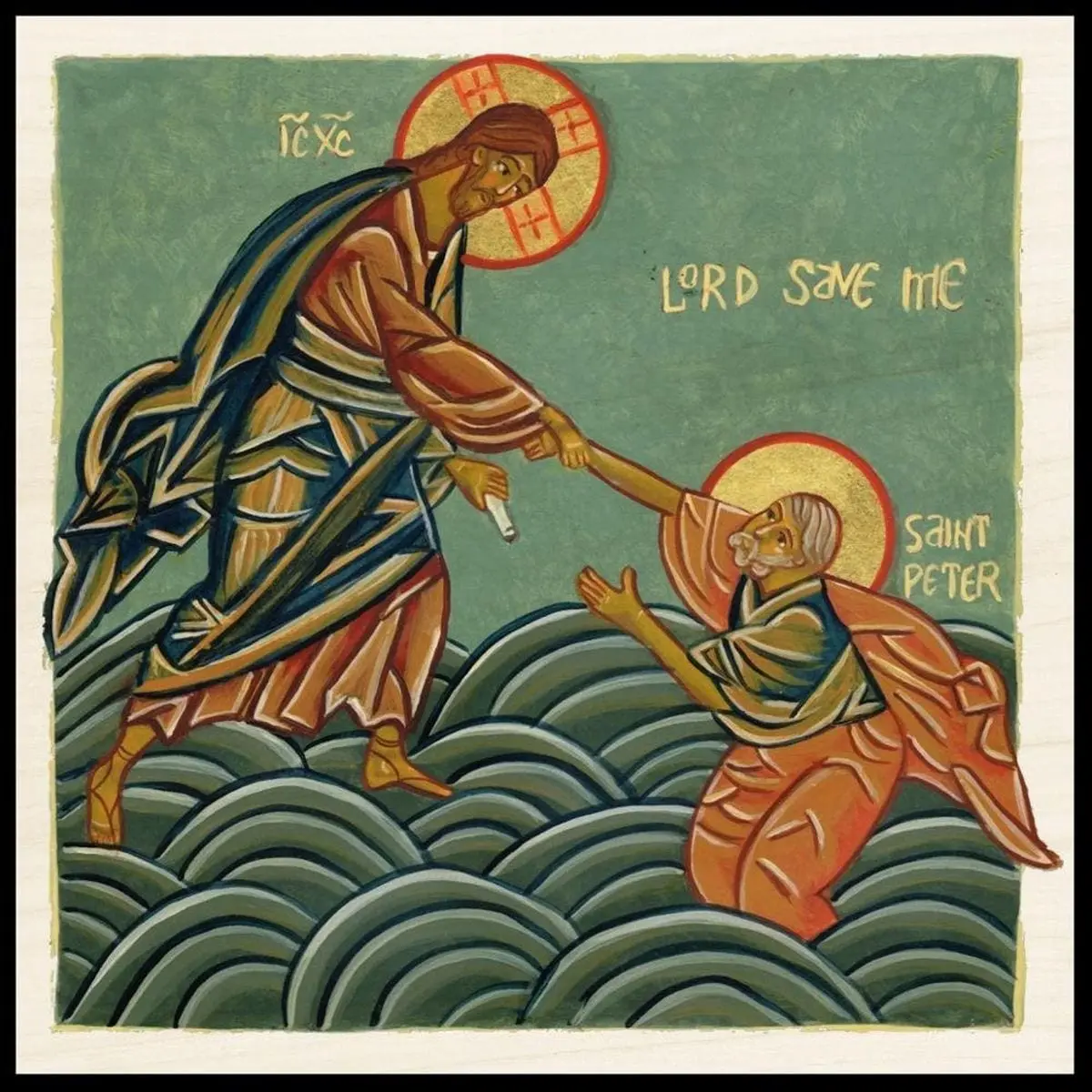
This principle illuminates the profoundly supernatural nature of confession. Paul makes the astonishing claim that "no man can say that Jesus is the Lord, but by the Holy Ghost" (1 Corinthians 12:3). The genuine acknowledgment of the lordship of a man who is also God is not a product of human reason, intellectual assent, or emotional decision—it is a direct revelation from heaven, worked in the human soul by the Holy Spirit. We see a perfect illustration of this in Matthew's Gospel, when Peter makes his great confession: "Thou art the Christ, the Son of the living God." Jesus's response confirms its divine origin: "Blessed art thou, Simon Barjona: for flesh and blood hath not revealed it unto thee, but my Father which is in heaven" (Matthew 16:16–17). The confession of Christ's identity and lordship is a heavenly transmission, made possible on earth by the agency of the Spirit. Without the Spirit's help, a human being is incapable of attesting to this mystery—one cannot even form the words on their lips with genuine spiritual reality without His inspiration.
The Spirit's influence does not stop with the confession of the tongue. Having moved the believer to confess the lordship of Christ, He begins to shape the believer's entire nature and actions to align with that lordship. The man who once stole finds he cannot steal anymore, because his conduct must cohere with the Lord he now confesses. The woman who once lied finds she cannot lie anymore, for she serves the one who is the Truth. The Spirit works to conform the believer's whole being—consciousness, speech, and behaviour—to the glorious reality they now confess. Every member of the Godhead is actively engaged in this transfiguration of mankind: the Father who reveals, the Son who is revealed, and the Spirit who enables the revelation. The Holy Spirit is therefore the divine agent of deification, empowering us to make the very confession that opens the door to participatory life in Christ.
True Communion
The argument of this essay has sought to reclaim a vision of Christian faith that is at once more demanding and infinitely more glorious than much of what is offered today. Authentic Christianity is defined not by a past declaration of faith but by a present, ongoing, and dynamic participation in the divine life of the Triune God. This is not a religion of static security but a living relationship of transformative communion—a journey from the altar of confession into the very heart of God.
This journey follows an unbreakable chain of divine logic, each link forged in the reality of God's nature and His redemptive plan. It begins with the foundational dilemma of God's absolute holiness—a perfection so complete that it renders all human offerings profane and unacceptable. The sole solution to this dilemma is the mediating perfection of Jesus Christ, whose sacrifice is the exclusive basis for our acceptance before the Father. Yet this objective work must be subjectively applied, and the sacred act of confession is the indispensable mechanism for activating the cleansing power of Christ's blood. This understanding reframes the Christian life not as the achievement of a final soteriological state but as a continuous Christological participation in the uncreated light of God's being—a process of deification whereby we are changed by partaking in His divine energies. And undergirding all of it is the enabling power of the Holy Spirit, the divine agent who alone can reveal and empower the confession of Jesus as Lord.
The call that issues from this apostolic understanding is a summons to move beyond the shallow waters of sensationalism and the hollow shell of a godliness that denies its own transformative power. It is an invitation to embrace the profound reality of communion with the Father, through the Son, by the Holy Spirit. This journey, with all its rigour and all its glory, begins and is perpetually sustained by a single, humble, yet world-altering act: the purifying and life-giving ritual of confession.
The path to God is not a formula to be recited but a life to be lived in His presence. It is in confessing our sins that we step out of darkness and into the light where He dwells. In that holy habitation, we do not merely receive forgiveness—we are ushered onto holy ground, into the very habitations of God, to partake of His life. There, standing before the altar of His mercy, we may taste by His grace of the powers of the age to come, experiencing the divine electricity of the Spirit of God as we are continuously transformed by the healing rays of the Sun of Righteousness, changed degrees by degrees into the same image, until Christ Himself is formed in us.