The Value of the Soul & Chief Duty of Man
The Soul is the Center of Divine Attention
Within the entire architecture of creation, one reality commands the undivided attention of God above all else: the human soul. This is not a philosophical curiosity or a psychological exercise, it is a matter of ultimate weight. To understand the preciousness of the soul is to grasp why the Creator places upon it a value that surpasses the combined wealth of every galaxy, every kingdom, and every material thing that has ever existed or ever will.
The soul is not a byproduct of biological complexity, nor a flicker of consciousness fated to dissolve into entropy. It is the most precious substance in the cosmos. Christ Himself frames this with a question that stops every worldly ambition in its tracks: "For what shall it profit a man, if he shall gain the whole world, and lose his own soul?" (Mark 8:36). The soul is not something we possess like a garment or a piece of property. It is what we are, a reality fashioned from God's own substance and intended for eternal communion with Him.
This matters urgently because we live in a fractured age. Sin has wounded the soul deeply, leaving it broken and disoriented, grasping for meaning in things that cannot sustain it. The purpose of this essay is to trace the movement from that fragmentation back to wholeness, to examine the soul's origin, its hunger, its chief duty, and the mystery through which it is finally made whole.
The Origin of the Soul & Why Its Origin Changes Everything
To appreciate the soul's value, we must first understand how it came into being and recognize how radically different that origin is from everything else in creation.
When God brought forth the physical world, He commanded the waters and the earth to produce living creatures. The animals emerged from the material elements of the world and for the world, bound to its cycles of birth and decay. But the human person is something altogether different. We are a bridge between the created and the uncreated. While the body is formed from the dust of the ground, the soul is a direct impartation from God Himself: "And the LORD God formed man of the dust of the ground, and breathed into his nostrils the breath of life; and man became a living soul" (Genesis 2:7).
That breath is everything. It means the soul is not a natural artifact, it is a portion of the Divine imparted into a created vessel. From this origin flow three foundational truths about the soul.
First, the soul is indestructible. What originates in the nature of God cannot be unmade by anything in the created order. The body is vulnerable to time, disease, and violence but no created force can pierce the soul. It survives every wreckage the material world can produce.
Second, the soul is eternal. It does not derive its existence from the body; rather, the body derives its life from the soul. The soul is the animator, the life-giver, and it continues its existence beyond the dissolution of the flesh.
Third, the soul is uniquely compatible with divine communion. It is the only faculty of the human person capable of direct engagement with the Uncreated, because it shares a substantial bond with its Creator.
The practical implication of all this is simple but radical: if the soul is the only eternal component of our being, then its cultivation must be the first priority of our lives. We tend to operate as though the soul needs the body but the truth is precisely the reverse. The body needs the soul. To prioritize gold, prestige, or worldly glory over the health of the soul is not merely a moral failing; it is a catastrophic error in judgment. Even the adversary understood this. When Satan offered Christ all the kingdoms of the world in exchange for a single act of soul-submission, he was, in his own twisted way, confessing the soul's supreme worth, acknowledging that one soul outweighs the entire political and material infrastructure of human history.
The Willingness of the Father: Breaking the Projection of Human Failure
One of the greatest obstacles standing between a broken soul and its restoration is not doubt about God's power, it is doubt about His desire. We have been so shaped by the unreliability of human relationships that we unconsciously impose our experience of human failure onto the character of God. We trust fragile, fallen men more readily than we trust the absolute goodness of the One who created them.
This tension is perfectly captured in the gospel encounter between Jesus and the leper. The man approached Christ with devastating honesty: "Lord, if thou wilt, thou canst make me clean" (Matthew 8:2). He did not question Christ's ability. He questioned His willingness. And Jesus answered with two words that shattered every doubt: "I will." In that moment, He was not merely healing a man's skin, He was revealing the nature of the Father. He was answering the universal cry of every wounded soul: yes, regardless of your condition, regardless of the depth of your brokenness, God is willing to make you whole.
We must honestly examine how often we treat God as though He were a fickle friend or a disappointed parent. When the people in our lives let us down — and they will — we must resist the impulse to project that disappointment onto Him. God is not the author of our pain. He is not the one who broke His promises. To see Him clearly, we must learn to separate the failures of men from the character of God.
The confidence of our prayer life depends entirely on this clarity. Tentative, faithless prayers are almost always rooted in a distorted image of God. But when we stand on the ground of what He has actually said "how much more shall your Father which is in heaven give good things to them that ask him?" (Matthew 7:11) — we discover the freedom to ask boldly. The "how much more" is the hinge. God's nature is to bless, to restore, and to give. The only thing that obstructs the flow of His grace is an unrepentant heart, because God cannot forgive what refuses to acknowledge its need.
The Fragmented Self: Sin and the Search for Worth in the Wrong Places
Sin does more than break a rule. It wounds the soul at the level of its being. When the soul wanders from the presence of God, it becomes disoriented, unable to locate its own worth, desperately seeking in external things what can only be found within. This is the spiritual condition behind every form of addiction, every hollow relationship, every status-driven ambition: a soul that has forgotten where it came from and is trying to fill an eternal vacancy with temporal things.
The woman at the well in Samaria is the perfect portrait of this condition. She had moved through one relationship after another, searching for something — for someone — who could finally make her feel whole. The shame of it had driven her to draw water at noon, when the other women would not be there to judge her with their eyes. What she was really looking for was worth. What she found, in Jesus, was something far greater: "living water" that would become in her a spring welling up to eternal life. Christ's entire conversation with her was aimed not at her behavior but at her intrinsic reality, who she actually was, beneath the shame, beneath the failed relationships, beneath the midday solitude.
This is what the soul's fragmentation does. It obscures our true hunger. We pursue achievements, relationships, possessions, and recognition, not because these things are inherently wrong, but because we are using them to answer a question they cannot address: Am I worth something? The answer to that question can only be received from the One who breathed us into existence.
This is also why the commandments of God are not arbitrary burdens. They are preservation codes, the built-in structure that keeps the soul from collapsing into anarchy. Without divine law as its guide, the soul defaults to self-destruction. We can see it clearly in communities where law has broken down: the absence of external order mirrors the absence of internal order. Lawlessness is not freedom, it is slow ruin. The fear of God is not a threat; it is the monitor that keeps the soul from burning the house down.
Spiritual Stomach: What the Soul Actually Needs
The soul has its own physiology. Just as the body requires specific nutrients to function, the soul requires its own sustenance and that sustenance is God Himself. This is not poetic language. It is a precise theological claim: God is the food of the soul. When we try to feed an eternal hunger with temporal things; degrees, money, pleasure, affirmation — the soul consumes them instantly and remains starving. An eternal appetite cannot be satisfied by finite provision.
Scripture offers three striking examples of what genuine spiritual sustenance looks like. Moses spent forty days on the mountain without food or water, not because his body had ceased to function, but because his soul was being fed from another dimension. He was feasting on the uncreated light of God's glory, and that nourishment superseded his biological need. Jesus, while speaking with the Samaritan woman, entirely forgot that He was hungry. When His disciples returned with bread, He told them: "I have meat to eat that ye know not of" (John 4:32). His food was the fulfillment of the Father's will. And Enoch, whose walk with God was so consuming, so total — simply disappeared into it. His immersion was so complete that physical existence could no longer contain it.
What these three reveal is the same truth: when the soul is genuinely fed by God, its appetites are reordered. The temporal loses its grip. The eternal comes into focus.
This brings us to one of the most dangerous confusions in the life of faith: mistaking knowledge about God for knowledge of God. Christianity has, in many expressions, elevated the intellectual study of theology above the lived experience of God's presence, as if knowing the arguments, the doctrines, and the dates were equivalent to knowing the Person. But even demons possess doctrinal knowledge, and it produces nothing in them but trembling. Knowledge without intimacy is spiritually inert.
The only conductor through which God's life flows into the soul is intimacy. When Genesis says that Adam knew his wife and life was produced, it is pointing to something more than biology, it is pointing to the kind of direct, personal contact through which something new comes into being. The soul must know its Creator in this way, not merely know facts about Him. Without this, no amount of sermon attendance or theological reading will relieve the soul's starvation.
The Psalms name this hunger with aching honesty: "As the hart panteth after the water brooks, so panteth my soul after thee, O God. My soul thirsteth for God, for the living God" (Psalm 42:1–2). The soul's thirst is eternal. The world cannot quench it. We must stop trying to use temporal things to feed an eternal hunger.
The Chief Duty of Man: Love as the First Work
If the soul is a substance derived from God, then its highest function, its chief duty is the return of love toward its source. This is not one obligation among many. It is the commandment from which all others flow.
What makes humanity unique in all of creation is precisely this: we are the only beings capable of choosing to love God. Angels obey and worship, but man can love, as a free act of the will, as a genuine direction of the soul's deepest affection. This is why God's jealousy, rightly understood, is not petty or possessive. It is the jealousy of a Creator who knows that our very life depends on where our love is directed. When affection flows toward idols — whether money, status, or even family placed above Him, we break the divine protocol that our existence depends upon.
There are clear signs that a soul has drifted from this first love. An inability to sit quietly in God's presence for even an hour without restlessness. A prayer life that feels like a formality rather than communion . Religious activity- preaching, debating, serving - performed without the fire of genuine affection underneath it. A heart that has made career, circumstance, or comfort the center of its attention, with God consulted only at the edges.
The church at Ephesus in Revelation is our cautionary mirror. They had endured, tested false teachers, and kept the faith, but they had left their first love, and Christ told them they had fallen (Revelation 2:4–5). Repentance, in this context, is not merely stopping bad behavior. It is returning, doing the first works again, rekindling the original fire of affection.
And here the logic inverts our instincts completely. We often think we need to fix our lives before we can truly love God — to sort out the marriage, the career, the character first. But the truth runs the other way: only by loving God do we become capable of being better at anything else. Loving God is the precondition, not the reward. When we return to that first love, order begins to be restored to every other dimension of our lives.
The Eucharist: Where the Fragments Become One
The ultimate expression of divine love and the most powerful means by which the fractured soul is restored, is the mystery of the Eucharist. This is the point where the will of God and the will of man converge in a single, transformative act.
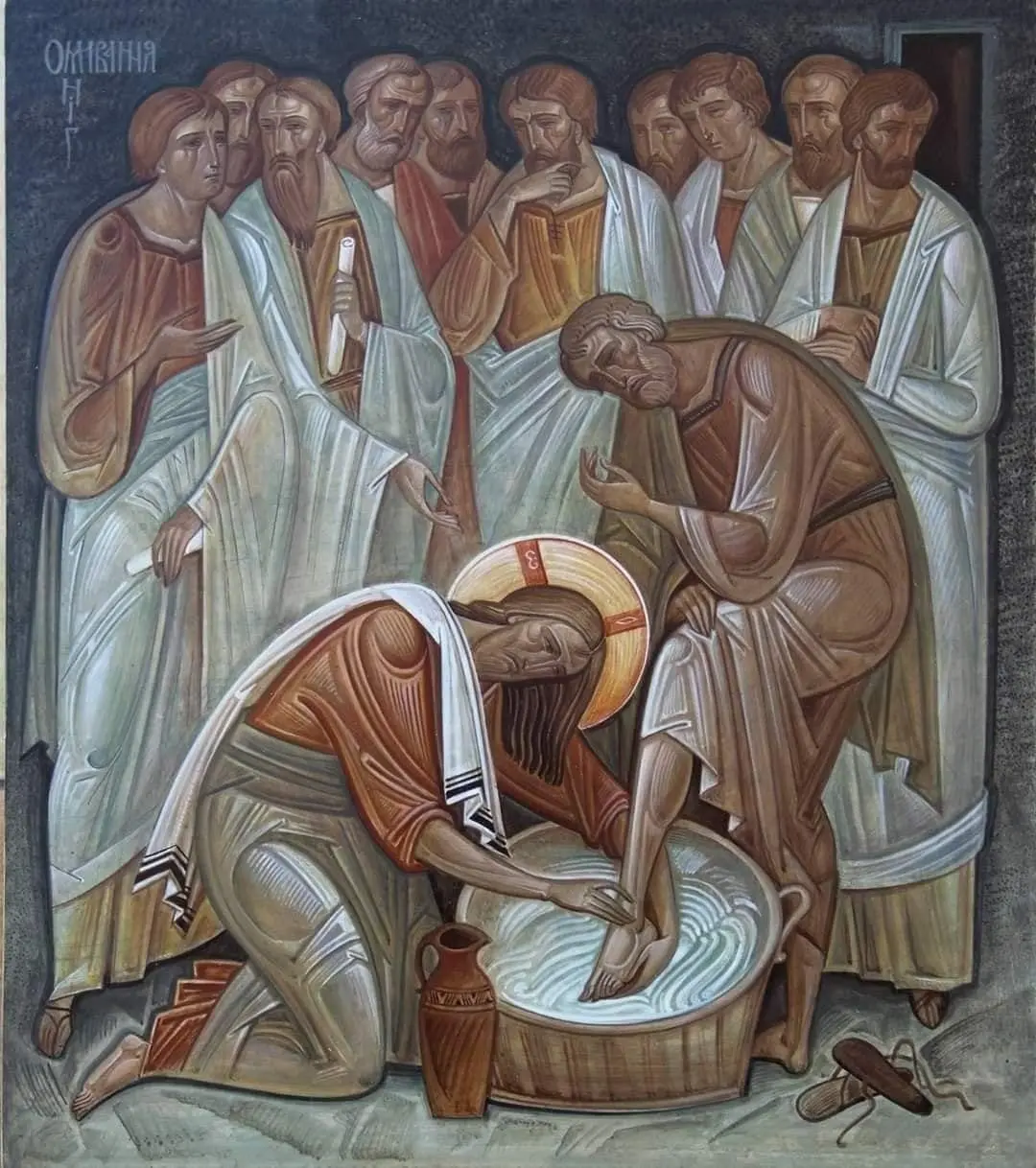
In the account of the Last Supper in Matthew 26, there is a detail that deserves careful attention: Jesus took the bread, blessed it, and gave it to His disciples — but He did not eat it Himself. He took the cup and gave it — but He did not drink. He said: "I will not drink henceforth of this fruit of the vine, until that day when I drink it new with you in my Father's kingdom" (Matthew 26:29). This is not a minor detail. It reveals that the Eucharist is a total offering. Christ did not consume His own sacrifice. He gave it entirely, as a ransom for many.
When the believer receives the Eucharist, they are not participating in a religious ritual. They are entering into the only sacrifice that is eternally acceptable to God, the sacrifice of the Son. Every patriarch, every prophet, every offering of bulls and lambs in the old covenant pointed forward to this single, unrepeatable moment. And in the Eucharist, that moment is made perpetually present.
To receive it rightly requires discernment, specifically, discernment of the Lord's body. The Eucharist represents Christ's death, not merely His resurrection. This is intentional. It was through His death, the moment when the uncreated Creator subjected Himself to the limitations of mortality - that the power of death was broken. The God-Man entered the grave and destroyed it from within. When we eat the bread and drink the cup, we are declaring to the universe that death no longer has its grip on us. We are receiving immortality and incorruptible life into bodies that are otherwise tending toward dust.
This is the great unification power. The Eucharist gathers the many broken pieces of a fragmented soul and makes them one bread. What was scattered is collected. What was divided is unified. What was dying is given life.
The Eternal Weight of the Soul
The human soul is a substance of almost terrifying preciousness - indestructible, eternal, derived from the very being of God, and capable of direct communion with the Uncreated. Its fragmentation through sin has sent it wandering through a desert of material plenty, searching for value in things that were never designed to provide it. Its spiritual hunger remains unsatisfied until it is fed by the only food suited to its nature: God Himself.
The chief duty of man is not religious performance. It is the cultivation of love, a first love, freely given, directed toward God as the primary orientation of the soul's existence. And the primary means of the soul's healing is the Eucharist, where the sacrifice of the Son becomes our sustenance, our unity, and our life.
There is no lost time with God. He is the Redeemer of times and seasons. However far we have wandered into lawlessness, however many years the famine has consumed, the Father has not moved. He is still where He always was willing, waiting, and overflowing with the desire to restore what sin has taken. The returning soul does not find a reluctant God who must be persuaded. It finds a Father running to meet it.
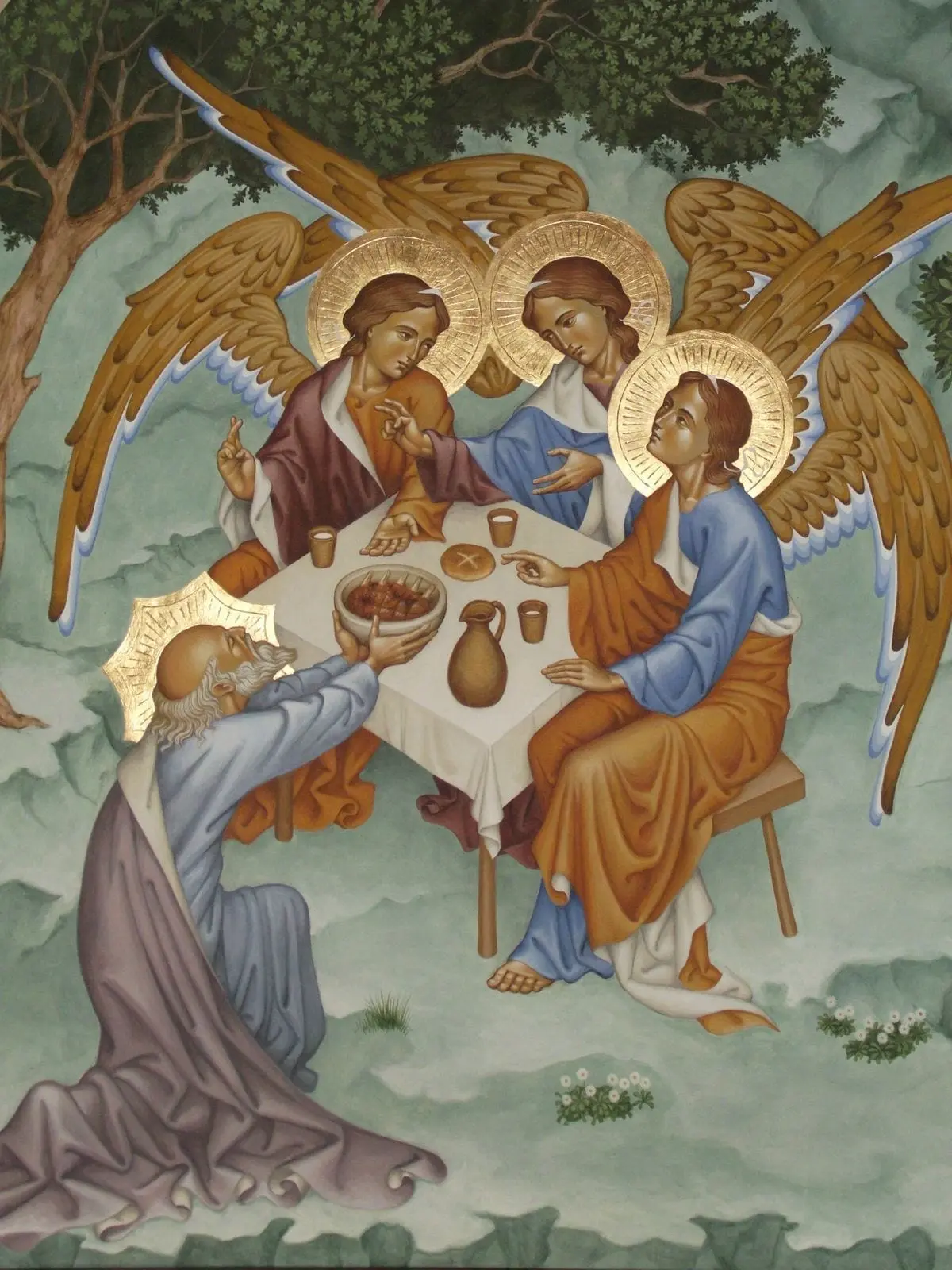
When we understand that our trials are temporary but our souls are eternal, we gain perspective that nothing in the world can take from us. The soul's journey is a journey home, back to the first works of love, back to the table where its hunger is finally, permanently satisfied. There, in His presence, the soul finds its only true law, its only lasting food, and its only real home.